






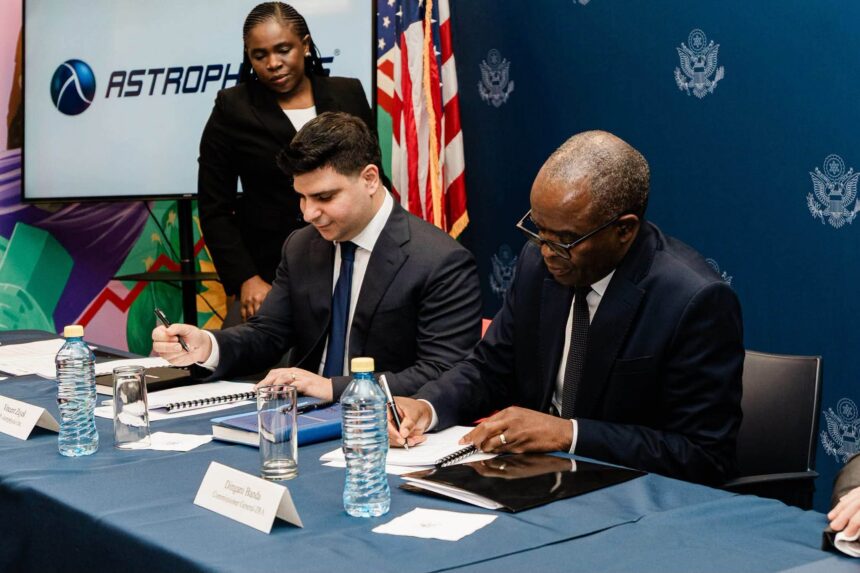
The Zambia Revenue Authority (ZRA) has entered into a Memorandum of Understanding (MoU) with United States-based technology company Astrophysics Inc. to strengthen security and operational efficiency at the Livingstone Border Post. The agreement is expected to introduce advanced security technology that will support border management, compliance and the protection of Zambia’s supply chains. The partnership comes at a time when modern border posts increasingly rely on technology to improve the movement of legitimate goods and people while identifying potential security and compliance risks. ZRA Director General Dingani Banda said the initiative demonstrates the Authority’s commitment to using technology and data-driven processes to improve its operations. The development also supports Zambia’s broader efforts to modernise tax administration and trade facilitation through technology.
Speaking during the MoU signing ceremony on Monday, Banda said effective border security requires stronger compliance measures and the efficient use of modern technology. He explained that ZRA recognises the importance of using technological solutions to improve the way border operations are managed and monitored. According to Banda, the Authority’s focus extends beyond revenue collection to include safeguarding the supply chain and supporting secure and efficient trade. Data-driven processes can help border authorities make better-informed decisions by improving access to relevant information and strengthening risk assessment. The partnership with Astrophysics Inc. therefore represents an important step towards enhancing the capabilities available at one of Zambia’s key border crossings.
Banda said the agreement is also aligned with guidance from President Hakainde Hichilema, who has emphasised the need for Zambia to leverage technology in transforming tax administration and trade facilitation. The President’s focus on digital transformation has placed greater attention on modern systems that can improve government services, strengthen efficiency and support economic activity. For ZRA, adopting advanced technology at border facilities can contribute to more effective customs administration while helping legitimate businesses move goods through the country more efficiently. Technology can also provide officials with improved tools for identifying irregularities and responding to potential risks. The MoU with Astrophysics Inc. reflects this wider national objective of using innovation to improve public administration and facilitate trade.
The Livingstone Border Post has strategic importance because of its role in facilitating movement and trade between Zambia and neighbouring countries. Border facilities must manage a wide range of activities, including the movement of commercial cargo, vehicles and travellers, while ensuring that national laws and customs requirements are followed. This creates a need for security systems that can support officials without unnecessarily slowing legitimate cross-border activity. Advanced inspection and security technology can strengthen the ability of border authorities to detect concealed or undeclared items while supporting faster and more informed assessments. The introduction of such technology at Livingstone could therefore contribute to both border security and smoother trade operations.
Astrophysics Inc. is known for developing advanced security screening and inspection technologies designed for use in airports, ports, border crossings and other high-security environments. Its involvement in the Livingstone Border Post initiative brings specialised technological capabilities into Zambia’s efforts to modernise border management. The use of advanced screening equipment can help authorities improve the detection of prohibited, restricted or undeclared items while reducing reliance on slower manual inspection processes. Such systems can also support a more systematic approach to risk management by giving trained officers additional information when evaluating cargo and other border traffic. The partnership consequently has the potential to strengthen security while improving the efficiency of customs and border operations.
For the Zambia Revenue Authority, improved technology can also support stronger compliance across the trading environment. Effective customs administration depends on accurate information, consistent procedures and the ability to identify transactions or movements that require additional attention. Data-driven systems can help authorities analyse information more effectively and direct resources towards areas where the greatest risks may exist. This approach can reduce unnecessary interventions for compliant traders while allowing officials to focus more closely on suspicious or high-risk activities. The result could be a border environment that combines stronger enforcement with improved predictability for businesses involved in legitimate international trade.
The agreement also highlights the growing relationship between border security and economic development. Efficient borders are important for businesses because delays can increase transportation costs, disrupt supply chains and affect the availability of goods in domestic markets. At the same time, weak border controls can create opportunities for smuggling, fraud and other activities that undermine legitimate businesses and reduce government revenue. By strengthening technological capabilities, ZRA can work towards addressing both challenges at the same time. The Livingstone Border Post initiative therefore has significance beyond security because it forms part of the wider effort to create a more efficient and reliable trading environment.
The emphasis on data-driven processes is particularly important as governments around the world modernise their customs and revenue systems. Traditional border management methods can be strengthened when officials have access to reliable information and technologies that allow them to assess risks more quickly. Data can help authorities understand trade patterns, identify unusual activity and improve the allocation of inspection resources. When combined with appropriate human oversight, technology can make border management more targeted and effective. ZRA’s approach suggests that Zambia is seeking to integrate technological tools into its broader strategy for improving compliance, revenue administration and trade facilitation.
The partnership between ZRA and Astrophysics Inc. also demonstrates the role that cooperation with international technology companies can play in supporting public sector modernisation. Advanced security systems require more than the installation of equipment, as their effectiveness depends on proper implementation, trained personnel and appropriate operational procedures. The MoU provides a framework for cooperation between the Zambian revenue authority and the United States company as the two parties work towards improving security capabilities at the border. Successful implementation could provide useful experience for future technology-driven initiatives at other strategic border facilities. It could also contribute to Zambia’s broader objective of building modern border infrastructure that responds to changing security and trade requirements.
The agreement comes as Zambia continues to pursue reforms aimed at improving the efficiency of tax administration and facilitating legitimate trade. Modernising border operations can help create better conditions for businesses while strengthening the government’s ability to protect public revenue. For traders, improved systems can potentially reduce unnecessary delays and provide greater consistency in the processing of goods. For government agencies, better technology can strengthen oversight and provide additional tools for tackling non-compliance. The success of the Livingstone initiative will therefore be measured not only by the technology introduced but also by how effectively it improves daily border operations.
The MoU between the Zambia Revenue Authority and Astrophysics Inc. represents a significant development in Zambia’s efforts to strengthen border security through technology. It reflects ZRA Director General Dingani Banda’s emphasis on compliance, efficient technology use and data-driven processes while supporting President Hakainde Hichilema’s call for greater technological transformation in tax administration and trade facilitation. Equipping the Livingstone Border Post with advanced security technology could strengthen the protection of Zambia’s supply chain while supporting legitimate trade and improving operational efficiency. The initiative also demonstrates how technological investment can serve both security and economic objectives when integrated into effective border management systems. As implementation progresses, the partnership will be closely watched for its potential to create a more secure, efficient and technology-driven border environment for Zambia.