




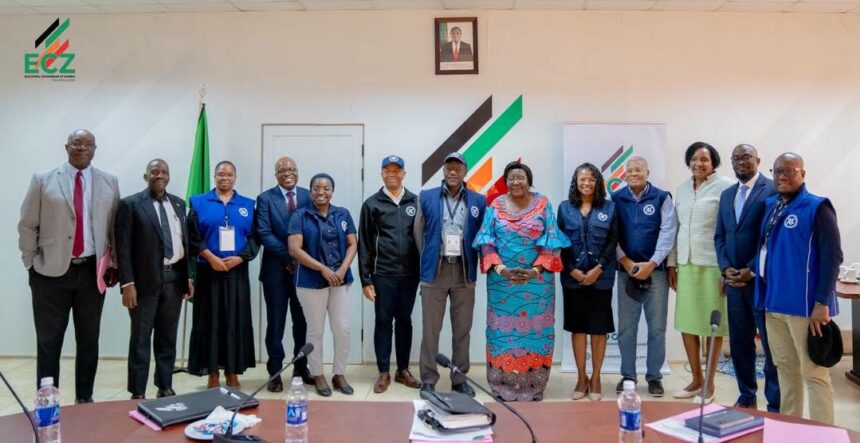
The Electoral Commission of Zambia (ECZ) has intensified stakeholder engagements ahead of the 2026 General Election, meeting political parties, candidates and international election observers as preparations for the polls continue. The Commission held meetings with participating political parties and candidates on Friday, August 7, 2026, as part of its ongoing efforts to keep key electoral stakeholders informed. The ECZ also received the Southern African Development Community Election Observer Mission (SEOM) for a courtesy call during the same period. On Saturday, August 8, the Commission continued its engagements by meeting international election observer groups representing several regional and international organisations. These engagements demonstrate the importance of communication, transparency and cooperation as Zambia moves closer to the 2026 General Election.
The meeting with participating political parties and candidates provided an opportunity for the ECZ to engage directly with those taking part in the electoral process. Political parties and candidates play an important role in elections because they interact directly with voters and participate in the various stages of the electoral process. Providing them with timely information can help reduce uncertainty and ensure that electoral requirements are clearly understood. The discussions also gave participants an opportunity to seek clarification on key processes and raise matters requiring further explanation from the Commission. Such engagement can contribute to a more informed and orderly electoral environment as political parties and candidates prepare for polling day.
The ECZ also met with the SADC Election Observer Mission when the mission paid a courtesy call to the Commission. Election observer missions play an important role in providing an independent perspective on electoral preparations and the conduct of elections. Their engagement with electoral authorities allows observers to understand the systems, procedures and measures being put in place before voting takes place. The courtesy call also provided an opportunity for the ECZ to share information about the country’s preparations and respond to questions from the regional mission. Cooperation between electoral authorities and observer missions can strengthen confidence in the electoral process by ensuring that observers have access to relevant information.
On Saturday, August 8, 2026, the ECZ continued its stakeholder meetings by engaging international election observers from several regional and international organisations. Among those involved were representatives from the Great Lakes Region, ECF-SADC, the European Union, the Commonwealth, SADC Election Observation Mission, the African Union and COMESA. The participation of these organisations reflects the broad regional and international interest in Zambia’s upcoming General Election. Each observer group brings its own institutional experience and understanding of electoral processes across different countries and regions. Their involvement also provides an opportunity for stakeholders to follow developments and assess preparations based on established electoral principles and standards.
The meetings formed part of the ECZ’s continued stakeholder engagement programme ahead of the 2026 General Election. Regular engagement is important because elections involve many different groups, including electoral officials, political parties, candidates, observers, civil society organisations and voters. Each group has different responsibilities and interests, making clear communication essential throughout the electoral cycle. By maintaining contact with stakeholders, the Commission can provide updates on preparations and address questions before they become larger concerns. Continued dialogue can also help stakeholders understand their respective roles and contribute more effectively to the electoral process.
A key purpose of the meetings was to update stakeholders on the state of preparedness for the 2026 elections. Electoral preparations involve several processes that must be coordinated before voters can cast their ballots. These include administrative planning, voter-related processes, logistics, polling arrangements, election personnel and communication with participating stakeholders. Keeping political parties and observers informed about these preparations can help create a clearer understanding of how the election will be conducted. It also allows the Commission to provide clarifications on important electoral procedures and ensure that stakeholders receive information directly from the responsible electoral authority.
The engagements also support the ECZ’s commitment to transparency and inclusiveness. Transparent communication allows stakeholders to understand the steps being taken to prepare for the election and provides opportunities for questions and clarification. Inclusiveness ensures that political parties, candidates, observers and other relevant groups have opportunities to participate in discussions concerning the electoral process. This approach can help build trust among participants and encourage constructive engagement when concerns arise. It also recognises that credible elections depend not only on the work of the electoral commission but on the cooperation and responsible participation of the wider electoral community.
International and regional observer missions can also contribute to broader confidence in the electoral process. Their presence allows external organisations to follow preparations and observe how electoral procedures are implemented. The ECZ’s engagement with these missions before election day gives observers an opportunity to understand the country’s electoral framework and preparations in advance. It also creates a channel through which the Commission can explain its processes and provide information relevant to the observers’ work. Continued engagement throughout the electoral period can support informed observation and contribute to a more comprehensive assessment of the election.
The ECZ’s meetings with political parties, candidates and observers come as Zambia prepares for a major national democratic exercise. Elections require careful coordination because decisions and activities carried out before polling day can directly affect the experience of voters and participants. Political parties and candidates need clear information to organise their campaigns and comply with electoral requirements, while observers need access to accurate information to understand the electoral environment. The Commission therefore has an important role in maintaining communication with all relevant stakeholders. These engagements demonstrate an effort to keep the electoral process open to dialogue while continuing with the practical work required to prepare for the polls.
The Electoral Commission of Zambia has reaffirmed its intention to work closely with political parties, candidates, observers and other electoral stakeholders as preparations for the 2026 General Election continue. The meetings held on August 7 and August 8 demonstrate the Commission’s continued focus on stakeholder participation, information sharing and electoral transparency. Engagement with organisations including SADC, the African Union, the European Union, the Commonwealth and COMESA also highlights the regional and international attention surrounding Zambia’s electoral process. By providing updates, clarifying electoral procedures and maintaining communication with stakeholders, the ECZ is seeking to create conditions for a credible and peaceful election. As the country moves closer to polling day, sustained cooperation between the Commission and all electoral stakeholders will remain essential to supporting an inclusive, transparent and orderly 2026 General Election.