






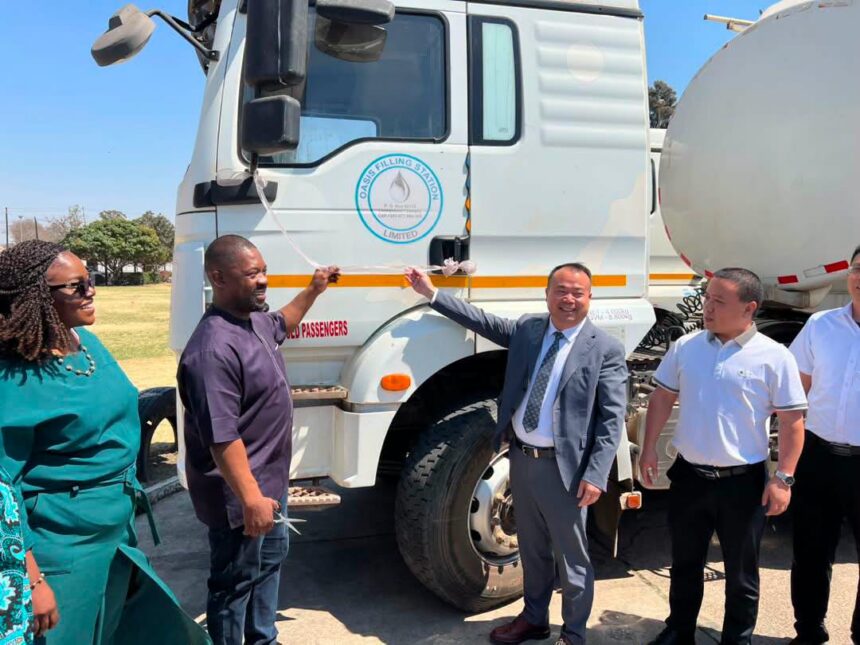
Government has taken a significant step towards transferring 100 fuel tankers to beneficiary youth cooperatives under the Fuel Tanker Empowerment Programme. The development marks an important stage in a programme designed to tackle youth unemployment while increasing the participation of young Zambians in the petroleum sector. Ministry of Youth, Sport and Arts Permanent Secretary Mr. Kangwa Chileshe officiated at the handover ceremony held yesterday. The event brought the programme closer to its intended outcome of placing productive assets directly in the hands of youth-led businesses. Government says the initiative is intended to help young people establish sustainable enterprises, create employment and contribute to Zambia’s economic development.
The 100 fuel tankers have been returned to the Ministry of Youth, Sport and Arts by the oil marketing companies that had been managing the fleet on behalf of Government. Their return represents a major transition in the implementation of the programme because the tankers can now be prepared for transfer to the 100 beneficiary youth cooperatives. The Ministry is currently facilitating the necessary arrangements to ensure that the assets are transferred smoothly and that the cooperatives are able to take responsibility for their operations. The handover process is expected to give the beneficiaries greater control over the productive assets allocated to them. It also represents the fulfilment of a key objective of the programme, which was to create opportunities for young people to participate directly in the petroleum value chain.
The Fuel Tanker Empowerment Programme was launched in 2020 with the objectives of addressing youth unemployment, strengthening local participation in the petroleum sector and promoting the retention of profits within Zambia. The programme was designed around the idea that access to productive assets can give youth cooperatives an opportunity to build businesses rather than depend solely on traditional employment opportunities. By placing fuel transportation assets under the ownership of youth cooperatives, Government sought to create a pathway for young entrepreneurs to participate in a sector that requires substantial capital investment. The programme also has the potential to support income generation for beneficiary cooperatives while creating additional employment opportunities. Its broader objective is to ensure that young Zambians can participate meaningfully in economic activities and contribute to national wealth creation.
The 100 fuel tankers were procured from Kinglong Zambia Limited through a hire purchase arrangement. Under the agreement, Government paid 50 percent of the total cost while the remaining balance was scheduled to be paid over a three-year period. The tankers were delivered in two phases, with the first batch arriving in 2021 and the second batch following in 2022. After delivery, the assets were allocated to 100 youth cooperatives as part of the Government’s empowerment strategy. The procurement and financing arrangement allowed the programme to secure the required fleet while creating a structured mechanism for settling the cost of the assets over time.
Following the allocation of the tankers, the fleet was managed by eight oil marketing companies on behalf of Government and the beneficiary cooperatives. The companies were responsible for operating the fleet while making monthly remittances that contributed towards servicing the loan, making payments to beneficiary cooperatives and settling amounts owed to the supplier. This arrangement allowed the tankers to generate revenue while the financing obligations associated with their acquisition were being addressed. It also provided an operational structure during the period before the cooperatives could take full control of the assets. The eventual return of the fleet to the Ministry therefore marks a shift from the management arrangement involving oil marketing companies towards direct ownership and responsibility by the beneficiary cooperatives.
The implementation of the Fuel Tanker Empowerment Programme experienced delays before becoming fully operational. According to the Ministry, the programme became fully operational in 2024 after the acquisition of the requisite licences and the signing of Memoranda of Understanding with the participating oil marketing companies. These steps were necessary to establish the regulatory and operational framework required for the tankers to operate within the petroleum sector. Although the delays affected the implementation timeline, the programme eventually progressed to the point where the fleet could be used commercially. The completion of this stage enabled the project to generate the operational experience and financial flows required before the eventual transfer of the assets.
The project concluded in June 2026, paving the way for the handover of the tankers to the beneficiary youth cooperatives. The conclusion of the project represents a major milestone after several years of procurement, allocation, licensing, operational management and financial arrangements. Government must now ensure that the transfer process is properly coordinated so that the cooperatives can take possession of the tankers without unnecessary disruption. The Ministry is facilitating the necessary modalities for the smooth transfer of the assets, with the aim of ensuring that the beneficiaries can use them productively. The success of this stage will depend not only on the physical handover of the tankers but also on the ability of the cooperatives to manage the assets as sustainable businesses.
Speaking at the ceremony, Permanent Secretary Kangwa Chileshe urged the beneficiary cooperatives to treat the fuel tankers as productive assets capable of generating long-term economic value. The cooperatives are expected to use the tankers to establish sustainable businesses, create employment and support wealth creation in their communities. Responsible management of the assets will be essential because the tankers represent a substantial investment by Government and an opportunity for the beneficiaries to build commercially viable enterprises. The cooperatives will need to maintain the vehicles properly, manage their finances carefully and comply with all relevant petroleum and transport regulations. Their ability to turn the assets into sustainable sources of income will be an important measure of the programme’s long-term impact.
Kinglong Motors General Manager Mr. Wu Ming also highlighted the completion of the financial obligations associated with the project. He indicated that Government had successfully completed payments for the 100 fuel tankers supplied by Kinglong Motors Zambia Limited under the hire purchase arrangement. The completion of the payments clears an important financial obligation and paves the way for the fully paid-for assets to be handed over to the beneficiary youth cooperatives. Mr. Wu Ming described the fuel tankers as productive assets that are expected to support sustainable businesses, create employment and promote wealth creation. His remarks reinforce the expectation that the value of the project will ultimately be measured by the economic activity and opportunities generated by the tankers.
The handover also reflects Government’s wider focus on youth empowerment, entrepreneurship and economic participation. Zambia has a large youth population, making the creation of meaningful economic opportunities an important policy priority. Programmes that provide productive assets can give young entrepreneurs a foundation from which to develop businesses and generate income. However, the long-term success of such initiatives depends on effective asset management, financial discipline, business planning and compliance with industry requirements. By urging the beneficiary cooperatives to use the tankers productively, Government is placing responsibility on the recipients to turn the empowerment investment into sustainable enterprises.
The transfer of the 100 fuel tankers to youth cooperatives could also have an impact beyond the direct beneficiaries. Successful businesses operating the fleet could create employment for drivers, administrative workers, mechanics and other service providers connected to fuel transportation. Increased participation by local businesses in the petroleum sector could also contribute to keeping a greater share of economic value within Zambia. The programme therefore has the potential to support individual cooperatives while contributing to broader economic activity if the assets are managed effectively. The beneficiaries will now have an opportunity to build businesses that can grow beyond the initial Government support and create lasting economic benefits.
The movement towards handing over the 100 fuel tankers marks an important milestone in Zambia’s Fuel Tanker Empowerment Programme. From their procurement through a hire purchase arrangement and delivery in 2021 and 2022 to their management by eight oil marketing companies and the eventual completion of the project in June 2026, the tankers have passed through several stages before reaching this point. Government’s completion of payments to Kinglong Motors Zambia Limited has cleared the way for the fully paid-for assets to be transferred to the beneficiary youth cooperatives. The next stage will be critical because the cooperatives must transform the tankers into sustainable businesses that generate income, create jobs and support wealth creation. If managed responsibly, the 100 fuel tankers can become an important platform for youth entrepreneurship and greater local participation in Zambia’s petroleum sector, supporting Government’s broader goal of enabling young people to contribute meaningfully to national development.