





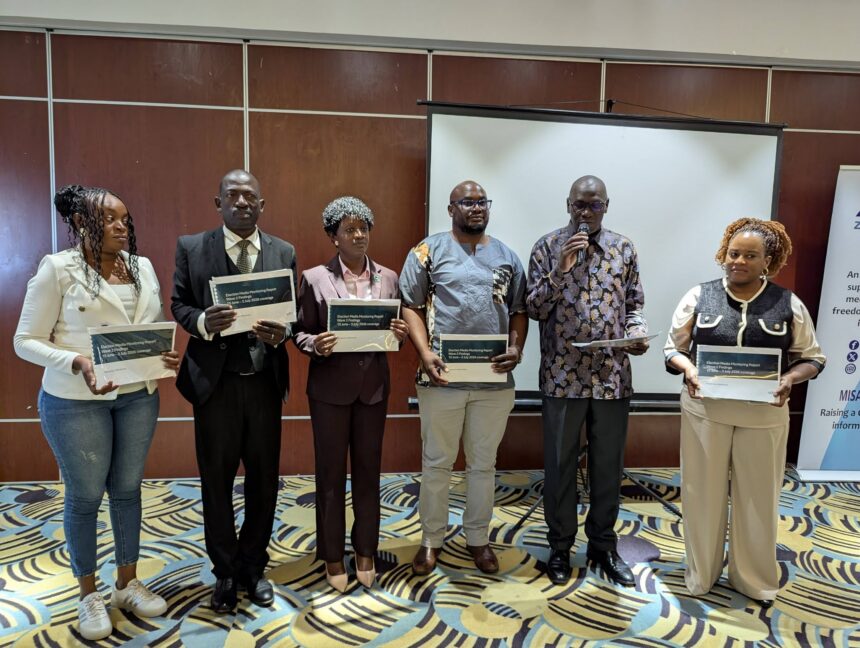
As Zambia prepares for the 13 August 2026 general elections, government officials, media practitioners, and democratic institutions are intensifying efforts to promote responsible journalism and strengthen public confidence in the electoral process. A significant step in this direction was taken today when the Ministry of Information and Media Permanent Secretary, Mr. Thabo Kawana, officiated at the launch of the Media Institute of Southern Africa (MISA Zambia) Second Election Media Monitoring Report in Lusaka. The report provides valuable insights into the state of election reporting and offers recommendations aimed at improving media coverage throughout the election period. It also reinforces the important role that journalists and media organizations play in supporting democracy by ensuring the public has access to accurate, balanced, and reliable information. The launch highlighted the shared responsibility of government, the media, political stakeholders, and citizens in safeguarding the integrity of Zambia’s democratic process.
Speaking during the event, Mr. Kawana called on the media, political parties, and members of the public to uphold the highest standards of professionalism, responsibility, and integrity as the country approaches polling day. He emphasized that every stakeholder has an important role to play in maintaining peace, encouraging informed public participation, and protecting the credibility of the electoral process. Responsible communication becomes particularly important during elections, when misinformation can quickly influence public opinion and create unnecessary tensions. By promoting honesty, transparency, and respect, all participants can contribute to a peaceful and credible election environment. The message underscored the need for collective action in preserving democratic values throughout the campaign period.
A key focus of the discussions was the responsibility of journalists to provide accurate, balanced, fair, and ethical election coverage. Media professionals were encouraged to strengthen editorial oversight and ensure that every report is supported by thorough fact-checking before publication or broadcast. Accurate reporting helps voters understand political issues, evaluate candidates, and make informed decisions at the ballot box. Ethical journalism also reduces the risk of spreading false information that could undermine public trust or fuel unnecessary conflict. By maintaining high professional standards, journalists continue to serve as trusted sources of information during one of the country’s most important democratic events.
The launch also reaffirmed that the media remains one of the most important pillars of democratic governance. Through responsible reporting, journalists inform citizens, promote accountability, and provide a platform for public dialogue on issues affecting the nation. During election periods, this role becomes even more significant because the information presented by the media can shape public understanding of electoral processes, policies, and campaign developments. Fair and objective reporting strengthens confidence in democratic institutions while encouraging greater public participation. Ensuring that voters receive credible information contributes directly to transparent and peaceful elections.
Another major issue discussed during the event was the growing influence of digital platforms and artificial intelligence on the information landscape. While technological advancements have made it easier for people to access news and engage in public discussions, they have also accelerated the spread of misinformation and disinformation. False reports, manipulated content, and misleading social media posts can quickly circulate online, creating confusion and potentially influencing public opinion. The launch highlighted the importance of equipping journalists with the tools and skills needed to verify digital content before sharing it with audiences. Media organizations are increasingly expected to adopt stronger verification processes to maintain public confidence in their reporting.
Political stakeholders and members of the public were also urged to exercise responsibility when communicating through traditional and digital platforms. Officials emphasized that individuals should verify information before sharing it, particularly during election periods when inaccurate reports can spread rapidly. Every citizen has a role to play in preventing the circulation of false information that could disrupt peaceful democratic processes. Encouraging responsible digital behavior helps reduce the impact of misinformation while promoting constructive public debate based on verified facts. The call for responsible communication reflects the growing importance of media literacy in today’s digital society.
The report further encourages media organizations to prioritize balanced, inclusive, and issue-based election coverage throughout the campaign period. Rather than focusing solely on political rivalry or sensational headlines, journalists were encouraged to provide meaningful reporting that helps voters understand policies, governance issues, and national development priorities. Particular emphasis was placed on ensuring fair representation of women, young people, persons with disabilities, and other underrepresented groups in election coverage. Inclusive journalism allows diverse voices to be heard while strengthening democratic participation across society. Such reporting contributes to a more informed electorate and supports equal opportunities for all citizens to engage in national discussions.
The importance of promoting peace throughout the election period was another central message delivered during the launch. Political stakeholders, media organizations, and citizens were encouraged to reject violence and instead promote dialogue, tolerance, mutual respect, and constructive engagement. Peaceful elections depend not only on effective electoral management but also on responsible communication that avoids inflammatory language and misinformation. The media has a particularly important role in reporting responsibly while avoiding content that could heighten tensions. Building a culture of peaceful political participation remains essential for protecting Zambia’s democratic traditions.
Government also reaffirmed its continued commitment to supporting media professionalism, protecting media freedom, and safeguarding information integrity. These commitments reflect the recognition that independent and responsible journalism is fundamental to democratic governance and accountable leadership. The MISA Zambia Second Election Media Monitoring Report was described as an important contribution that provides practical insights into improving election reporting across the country. Its findings offer an evidence-based foundation for future interventions aimed at strengthening credible journalism, improving media performance, and supporting informed public discourse. Officials also commended MISA Zambia, BBC Media Action, and their partners for their continued efforts in strengthening democratic governance through comprehensive media monitoring.
The launch of the MISA Zambia Second Election Media Monitoring Report represents another important milestone in Zambia’s preparations for the 13 August 2026 general elections. The report reinforces the need for ethical journalism, responsible communication, inclusive reporting, and strong editorial standards in an increasingly complex digital information environment. By encouraging collaboration among government, media organizations, political stakeholders, and the public, the initiative seeks to strengthen confidence in both the media and the electoral process. As the country moves closer to election day, the recommendations contained in the report provide valuable guidance for promoting accurate information, peaceful participation, and informed decision-making. Ultimately, responsible journalism and credible public communication will remain essential pillars in ensuring that Zambia’s 2026 elections are transparent, inclusive, peaceful, and trusted by all citizens.