






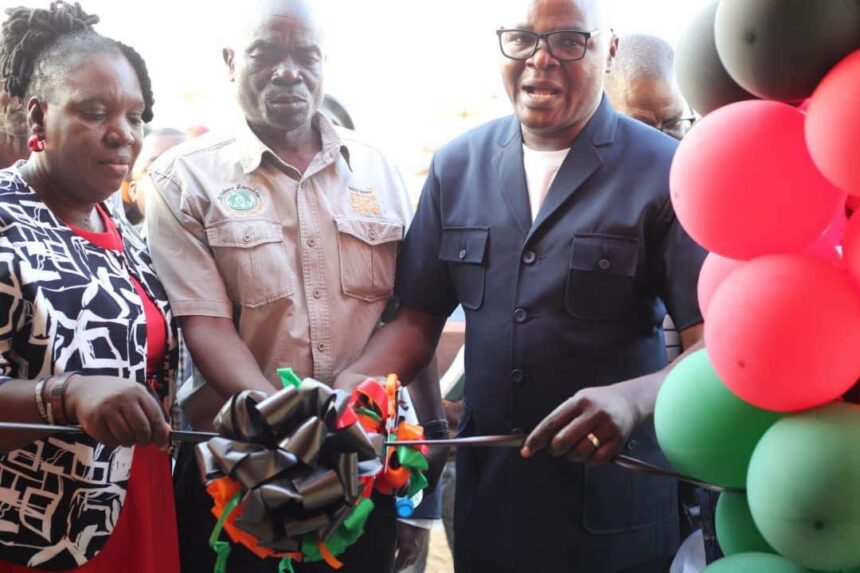
The Zambian Government has officially commissioned the Mthira Kubili Truck Park in Kasenengwa District, Eastern Province, marking a significant investment in local economic development, employment creation and revenue generation. The modern facility, owned by the Kasenengwa Town Council, is expected to become a major economic hub along the busy Great East Road while strengthening the district’s financial sustainability. Designed to operate around the clock, the truck park represents a practical example of how local authorities can use strategic infrastructure to drive growth and improve public services. Government officials say the project demonstrates the success of decentralization by giving local councils greater responsibility and resources to implement development projects that directly benefit their communities. The commissioning reflects Zambia’s continued efforts to empower local authorities and stimulate economic activity in rural districts.
The Mthira Kubili Truck Park was constructed at a cost of K2.1 million and has the capacity to accommodate more than 60 trucks every day. Its location along the Great East Road places it on one of Zambia’s busiest transport corridors, making it an important stop for commercial vehicles transporting goods within the country and across the region. By providing a secure and organized facility for truck operators, the project is expected to improve the movement of goods while supporting businesses that rely on road transport. Increased truck traffic through the facility will also create opportunities for small businesses, food vendors, service providers and entrepreneurs operating in the surrounding area. As commercial activity grows, the local economy is expected to experience increased business opportunities and stronger economic participation.
Funding for the truck park was provided through the Zambia Devolution Support Programme (ZDSP) using performance-based capital grants supported by the World Bank through the Ministry of Local Government and Rural Development (MLGRD). The programme is designed to strengthen local governance by providing councils with financial resources to implement infrastructure projects that address community priorities. Rather than relying solely on central government funding, local authorities are encouraged to identify development needs and deliver projects that generate lasting economic and social benefits. The truck park illustrates how targeted investment in infrastructure can help councils become more financially independent through increased local revenue collection. It also highlights the role of international development partnerships in supporting Zambia’s decentralization agenda.
Speaking during the commissioning ceremony, Ministry of Local Government and Rural Development Permanent Secretary for Technical Services, Mr. Nicholas Phiri, described the truck park as an important milestone in the Government’s grassroots development strategy. He said the facility represents more than just physical infrastructure because it has the potential to transform the economic landscape of Kasenengwa District. According to Mr. Phiri, the truck park will serve as a strategic local hub that stimulates trade, creates employment opportunities and strengthens economic activity throughout the district. Improved commercial activity is expected to increase business confidence while encouraging further investment in the area. Such developments contribute directly to the Government’s broader objective of promoting inclusive growth across all regions of Zambia.
Mr. Phiri also emphasized the transformative impact of the Zambia Devolution Support Programme, describing it as clear evidence of the benefits of decentralization. He explained that communities previously depended on decisions and resources flowing from central government, often resulting in delays in addressing local development needs. Through the ZDSP’s performance-based capital grants, councils now have greater authority to make decisions that respond directly to the priorities of their residents. This approach allows development projects to be implemented more efficiently while increasing accountability at the local level. The truck park therefore serves as a practical demonstration of how decentralization can improve service delivery and accelerate community development.
During his address, the Permanent Secretary stressed that the successful completion of the Mthira Kubili Truck Park demonstrates the Kasenengwa Town Council’s ability to respond effectively to the needs of the people it serves. He noted that the project reflects a local authority that is listening to community concerns and delivering meaningful development outcomes. Mr. Phiri urged residents, businesses and stakeholders to work together to protect the new facility from vandalism and ensure that it is properly maintained. Preserving public infrastructure is essential for maximizing its long-term economic benefits and ensuring that future generations continue to benefit from the investment. Responsible management of the truck park will help maintain its value as an important public asset.
Acting Council Secretary for Kasenengwa Town Council, Mr. Fredrick Peneshi, highlighted the strategic importance of the truck park’s location along the Great East Road. He explained that the facility is expected to immediately begin generating revenue for the local authority by capturing income from commercial transport activities along one of Zambia’s key trade routes. Increased revenue will strengthen the council’s financial position and improve its ability to deliver essential public services to residents. The project is also expected to create employment opportunities for local people through both direct operations and related business activities. As transport services expand, surrounding businesses are likely to benefit from increased customer traffic and economic activity.
The establishment of the truck park is expected to produce wider economic benefits beyond revenue generation alone. Truck drivers and transport companies require accommodation, food, vehicle maintenance, fuel and other support services, creating opportunities for local entrepreneurs and small businesses. Increased commercial activity can encourage the growth of retail shops, restaurants, repair services and logistics businesses in the surrounding community. These developments help diversify the local economy while creating additional sources of household income. Over time, the truck park has the potential to become an important driver of regional economic development and investment.
The project also serves as a model for other rural districts seeking sustainable ways to strengthen local government finances. By investing in infrastructure that responds to local economic opportunities, councils can generate recurring income while supporting business growth and employment creation. Facilities such as truck parks demonstrate that strategic infrastructure investments can provide lasting economic returns while reducing dependence on external funding. The Mthira Kubili Truck Park illustrates how local resources and geographical advantages can be transformed into long-term development assets. This approach aligns with the Government’s vision of building financially resilient local authorities that actively contribute to national economic growth.
The commissioning of the Mthira Kubili Truck Park marks a significant achievement for Kasenengwa District and highlights the positive impact of decentralization, strategic infrastructure investment and effective local governance. With its ability to accommodate more than 60 trucks each day, generate revenue, create jobs and stimulate trade along the Great East Road, the facility is expected to become an important economic engine for the district. Support from the Zambia Devolution Support Programme and the World Bank has enabled the successful delivery of a project that demonstrates the value of empowering local authorities to lead development initiatives. As the truck park begins full operations, it is expected to strengthen the local economy while improving the council’s financial sustainability. The project stands as an example of how targeted public investment can create lasting opportunities for communities and contribute to Zambia’s broader development goals.