







To mark World Environment Day 2026, the Provincial Water Sanitation and Hygiene and Education (PWASH) Team in Southern Province led a school-based climate action programme aimed at building environmental awareness among young learners. The initiative aligned with global efforts to strengthen climate resilience and encourage practical environmental responsibility at community level. It focused on education, participation and direct action within a school setting to ensure learners connect knowledge with real environmental impact. The programme also reinforced the importance of early climate education in shaping long-term behavioural change. Through this initiative, Southern Province positioned schools as active spaces for climate awareness and sustainability learning.
The event brought together 100 learners who took part in structured climate change awareness sessions designed to explain the causes and impacts of environmental degradation. Learners discussed issues such as deforestation, rising temperatures, soil erosion and changing rainfall patterns. The sessions also encouraged participants to identify practical solutions they can apply in their daily lives, including waste management and tree conservation. Educators guided discussions to ensure learners understood how local environmental challenges link to global climate trends. The engagement helped build a foundation of environmental knowledge that supports informed decision making among young people.
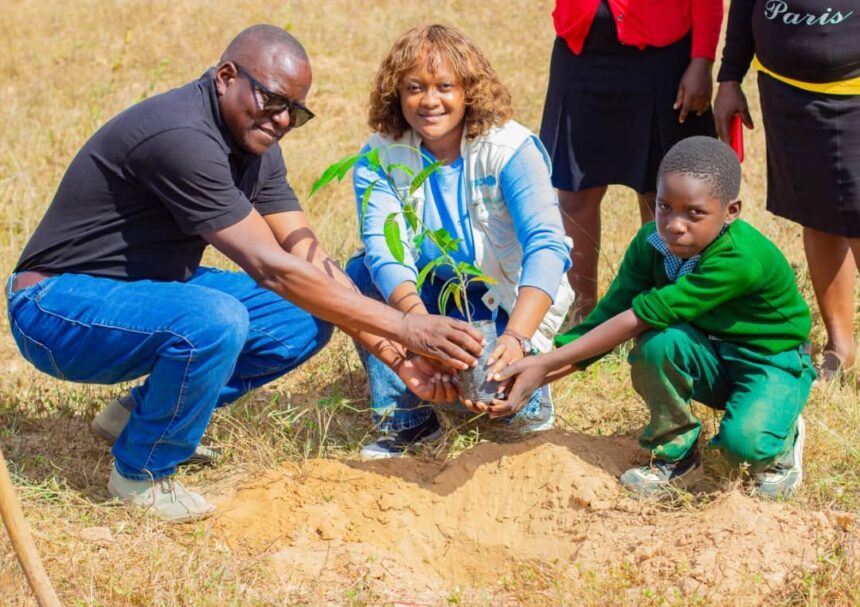
A key feature of the programme was hands-on tree planting within school grounds, where learners planted mango and guava grafts as part of a practical environmental restoration effort. This activity allowed participants to translate classroom learning into direct environmental action. Each tree planted represented a contribution to improving air quality, restoring soil health and increasing green cover in the school environment. The choice of fruit trees also added long-term value by supporting nutrition and biodiversity within the school ecosystem. Learners worked in groups to ensure proper planting techniques were followed for long-term survival of the seedlings.
The initiative highlighted the role of schools as critical platforms for environmental education and community transformation. Teachers and facilitators emphasized that climate action does not require large-scale interventions to begin, but consistent small actions that accumulate over time. The involvement of young learners was seen as essential in building a generation that understands environmental responsibility from an early age. The programme also demonstrated how education systems can integrate sustainability practices into everyday learning activities. This approach supports broader national and global climate goals focused on resilience and adaptation.
Unicef Zambia WASH Officer Rabbeca Malesu emphasized the importance of engaging learners in practical climate action. She noted that climate responsibility begins with simple, consistent actions that children can understand and practice. She further explained that involving learners in tree planting helps them connect environmental education with lived experience. According to her, this approach builds both awareness and hope for a sustainable future. Her remarks reinforced the value of combining knowledge with action in addressing environmental challenges.
The participation of 100 learners reflected strong interest and commitment to environmental protection among young people in Southern Province. Each tree planted during the event was described as a symbol of hope and resilience in the face of climate change. The initiative also highlighted the importance of local action in contributing to global environmental objectives. Schools involved in the programme demonstrated readiness to support ongoing environmental activities beyond the commemorative event. This included maintaining planted trees and continuing climate education within school curricula.
The World Environment Day 2026 commemoration in Southern Province underscored the growing importance of youth participation in climate solutions. It showed that environmental awareness can be effectively strengthened through practical, school-based programmes that combine education with action. The PWASH Team’s initiative created a model for integrating sustainability into learning environments in a way that is both accessible and impactful. With continued support from education and development partners, such programmes can help build stronger climate resilience at community level. The event concluded with a shared commitment to nurturing environmentally responsible citizens who will contribute to a greener and more sustainable future.