


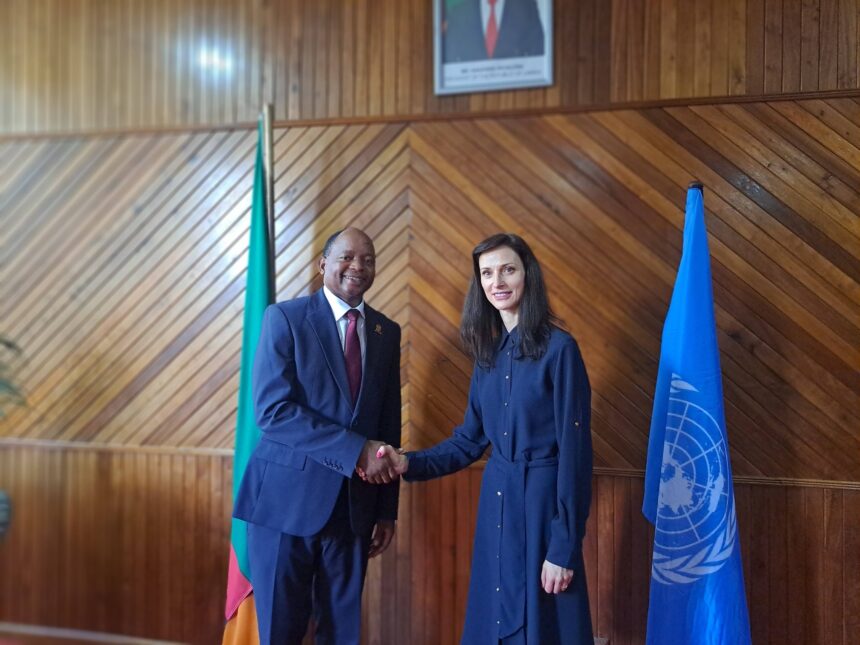
Zambia has reaffirmed its commitment to media freedom and international cooperation following a courtesy call on the Minister of Information and Media and Chief Government Spokesperson Hon. Cornelius Mweetwa MP by UNESCO Assistant Director-General for Communication and Information Ms Mariya Gabriel. The engagement highlighted shared priorities between Zambia and UNESCO in strengthening press freedom, improving media standards and supporting democratic governance through open communication. The meeting also reflected Zambia’s growing role in global discussions on media development and information integrity. Both parties emphasized the importance of collaboration in addressing challenges facing the modern media environment. The discussions come at a time when the global information space is rapidly changing due to digital transformation and increased content production across multiple platforms.
During the meeting, Government reaffirmed its commitment to strengthening media freedom and deepening its long-standing collaboration with UNESCO. Hon. Cornelius Mweetwa expressed appreciation for UNESCO’s continued partnership with Zambia, particularly in supporting initiatives that promote press freedom and professional journalism. He specifically highlighted the successful hosting of the global conference on press freedom, describing it as a landmark achievement that placed Zambia at the center of international media dialogue. The Minister noted that press freedom remains a cornerstone for national unity, peace and development, stressing that a free and vibrant media allows citizens to actively participate in governance processes. He further emphasized that when information flows freely and responsibly, societies are better equipped to make informed decisions that support democratic growth.
The Government also drew attention to the evolving media landscape shaped by rapid technological advancements. Hon. Mweetwa noted the increasing need to clearly distinguish professional journalism from unverified and misleading content circulating on digital platforms. He explained that the rise of social media and digital communication tools has transformed how information is produced and consumed, creating both opportunities and risks for public discourse. In response, he called for enhanced collaboration with UNESCO in training and professional development programs for journalists. Such initiatives, he said, are essential in ensuring that media practitioners uphold high ethical and professional standards while adapting to new technologies. The Government also reiterated its commitment to safeguarding journalists and expanding democratic space, highlighting that Zambia has recorded unprecedented levels of media freedom in recent years.
Ms Mariya Gabriel, Assistant Director-General for Communication and Information at UNESCO, underscored the importance of global cooperation in addressing emerging challenges in the media and communication sector. She noted that Zambia’s role in hosting the global conference on press freedom sends a strong message of unity and commitment to international standards. According to her, such platforms are essential for building shared understanding and collective responses to issues affecting media systems worldwide. She emphasized the need for stronger collaboration among governments, international organizations and media stakeholders to build trust in the public information space. Ms Gabriel further highlighted that shared experiences and partnerships remain critical in addressing misinformation, disinformation and other challenges affecting the credibility of journalism globally.
UNESCO also commended Zambia for its hospitality and active engagement in advancing global discussions on press freedom. Ms Gabriel stated that Zambia’s participation and leadership in such forums demonstrate a commitment to fostering sustainable, inclusive and peaceful societies. She emphasized that a strong and independent media is essential for promoting transparency, accountability and public trust in institutions. According to UNESCO, continued investment in media development and journalist training will be vital in ensuring that the information ecosystem remains reliable and resilient. The organization also reiterated its readiness to support Zambia in strengthening media systems and promoting access to credible information.
The courtesy call between Hon. Cornelius Mweetwa and UNESCO Assistant Director-General Ms Mariya Gabriel highlighted a shared vision for a stronger, freer and more professional media environment in Zambia and beyond. The discussions reinforced the importance of press freedom as a foundation for democracy, unity and national development. Both sides acknowledged the growing challenges posed by digital transformation while emphasizing the need for cooperation in journalist training and media capacity building. Zambia’s continued commitment to expanding democratic space and safeguarding media practitioners was clearly reaffirmed during the engagement. The meeting ultimately strengthened ties between Zambia and UNESCO and set the stage for deeper collaboration in shaping a responsible and inclusive global information landscape.