






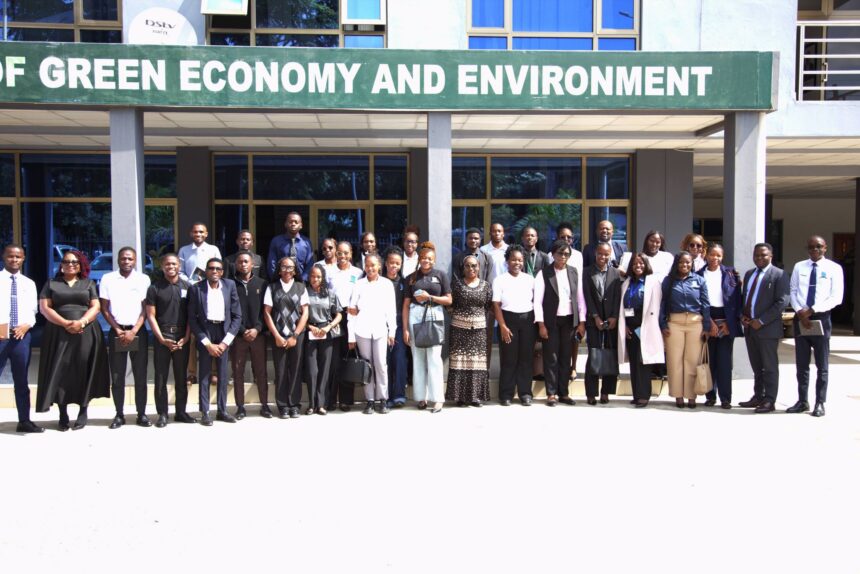
On 27 May 2026, the Ministry of Green Economy and Environment hosted third and fourth year students from the Copperbelt University School of Business in a programme designed to deepen understanding of career opportunities within the green economy. The engagement focused on linking academic training in business studies with emerging roles in environmental sustainability and climate-related industries. The visit formed part of ongoing efforts to prepare young people for a changing job market shaped by climate action and sustainable development priorities. It also highlighted the government’s commitment to bridging the gap between education and practical employment pathways. The initiative reflected a growing recognition that the future economy will depend heavily on green skills and innovation.
The students were introduced to how the green economy is structured and how it operates across different sectors in Zambia. Officials explained how environmental protection, renewable energy, sustainable agriculture, and waste management are creating new forms of employment. The ministry emphasized that business students are not limited to traditional corporate roles but can also contribute to environmental planning, green financing, and sustainable enterprise development. The engagement also showed how private sector growth is increasingly aligned with environmental responsibility. Students were encouraged to view sustainability as a core part of modern business strategy rather than a separate field. This approach aimed to expand their understanding of where their skills can be applied.
The Ministry of Green Economy and Environment used the platform to demonstrate how policy frameworks support green job creation. Officials outlined national strategies that promote low-carbon development and responsible resource use. They also explained how government initiatives are designed to attract investment into environmentally friendly industries. The discussion included how public and private partnerships are essential in scaling up green projects. Students were shown how economic growth and environmental protection can work together when properly coordinated. This message reinforced the idea that sustainability is central to Zambia’s long-term development planning.
The engagement also focused on practical career pathways available within the green economy. These included opportunities in environmental consultancy, sustainable finance, climate risk analysis, and corporate sustainability management. Students were encouraged to consider how their business studies could support environmental reporting and green investment decision-making. The ministry highlighted that demand for professionals with both business and environmental knowledge is increasing globally. This trend creates new opportunities for graduates who are willing to adapt and expand their skill sets. The session aimed to prepare students for a labour market that is rapidly evolving due to climate change and sustainability requirements.
Officials stressed the importance of innovation and entrepreneurship in driving the green economy forward. Students were encouraged to think about starting businesses that address environmental challenges such as waste management, renewable energy access, and sustainable supply chains. The ministry explained that youth-led enterprises can play a major role in achieving national environmental goals. It also emphasized that government policies are increasingly supportive of green startups and environmentally responsible investments. This creates an enabling environment for young entrepreneurs to develop solutions that are both profitable and sustainable. The discussion encouraged students to see themselves as future contributors to economic transformation.
The engagement also highlighted Zambia’s broader commitment to integrating environmental sustainability into national development. The Ministry of Green Economy and Environment continues to promote awareness among young people as part of its long-term strategy. By targeting university students, the ministry aims to ensure that future professionals are equipped with relevant knowledge and skills. This approach supports national goals of building a resilient and environmentally responsible economy. It also strengthens collaboration between government institutions and higher education providers. The visit from Copperbelt University students reflected the importance of early exposure to emerging economic sectors.
The interaction concluded with a strong message about the importance of aligning education with future job market demands. Students were encouraged to take advantage of opportunities within the green economy and to apply their academic knowledge in practical ways. The ministry reaffirmed its commitment to supporting youth development through training, awareness, and policy support. The engagement demonstrated how business education can play a critical role in shaping sustainable development outcomes. As Zambia continues to expand its green economy agenda, such initiatives are expected to play a key role in preparing the next generation of professionals.