






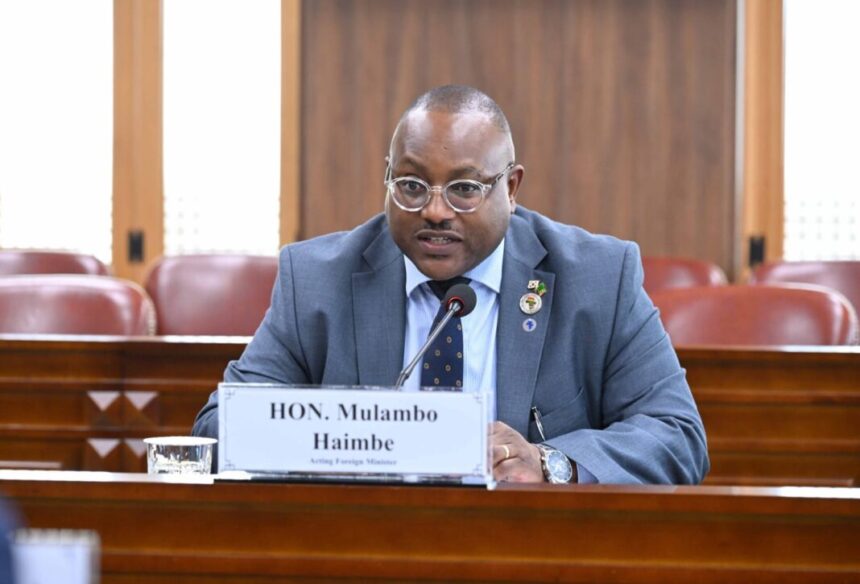
Zambia is expanding its global influence through a series of high level international engagements that are driving investment, trade, and economic cooperation. Minister of Foreign Affairs and International Cooperation Mulambo Haimbe has confirmed that recent visits and diplomatic efforts in Belgium, Sweden, Equatorial Guinea, and Japan have delivered measurable progress. These engagements are part of a focused economic diplomacy strategy designed to position Zambia as a competitive destination for global investors. The government is actively using diplomacy as a tool to unlock economic opportunities and strengthen partnerships that support national development. This approach reflects a shift toward proactive engagement with key global markets and institutions.
In a Ministerial Statement delivered in Parliament, Haimbe explained that Zambia’s participation in international forums is centered on promoting trade, attracting investment, and building strategic alliances. One of the key highlights was Zambia’s participation in the Africa Political Outlook Summit held in Brussels, Belgium. During the summit, the country showcased its commitment to value addition in critical minerals, expansion of renewable energy, and regional industrialisation. Zambia also promoted the Zambia Democratic Republic of Congo battery value chain project, which aims to position the region as a major player in global battery production. These initiatives are designed to move the country up the value chain and reduce dependence on raw material exports. The focus on industrialisation aligns with long term economic growth goals.
Zambia also used the platform in Brussels to highlight major infrastructure developments that support regional trade and logistics. Projects such as the Lobito Corridor were presented as key enablers of economic integration and efficient trade routes. The corridor is expected to improve connectivity between Zambia and international markets, making it easier to transport goods and reduce costs. By promoting such projects, Zambia is positioning itself as a central hub for trade within Southern and Central Africa. These efforts are critical for attracting investors who rely on strong infrastructure for business operations. Improved logistics can also enhance competitiveness in export markets.
Bilateral engagements with European Union officials during the visit resulted in strengthened cooperation under the EU Global Gateway Strategy. This framework focuses on supporting sustainable infrastructure and development projects in partner countries. Zambia’s discussions with EU leaders have opened up new opportunities for investment in energy, infrastructure, and critical minerals. These sectors are central to the country’s economic transformation agenda. The engagement also reinforces Zambia’s role as a reliable partner in global development initiatives. Increased cooperation with the EU is expected to bring both financial resources and technical expertise.
Zambia’s engagement with Sweden marked another important milestone in its diplomatic efforts. A working visit to Stockholm led to the signing of a Memorandum of Understanding on political consultations between the two countries. This agreement establishes a structured platform for regular dialogue and cooperation. During the visit, both countries held their first round of political consultations, focusing on energy, transport, and agriculture. These sectors are key drivers of economic growth and food security. Strengthened ties with Sweden are expected to support knowledge exchange and investment in these areas.
The country also reaffirmed its commitment to the Organisation of African, Caribbean and Pacific States, a key platform for cooperation among member states. Zambia expressed support for reforms aimed at improving the organisation’s effectiveness and global influence. This engagement reflects the country’s broader commitment to multilateral cooperation and collective development. Active participation in such organisations allows Zambia to contribute to policy discussions that shape international trade and development frameworks. It also strengthens the country’s voice on global issues that affect emerging economies. This approach supports balanced and inclusive growth.
Zambia’s diplomatic efforts extended to Asia, where the country recently hosted the Foreign Affairs Minister of Japan during a high level official visit. The engagement focused on deepening cooperation in mining, agriculture, infrastructure development, and investment. Japan reaffirmed its commitment to encouraging its companies to invest in Zambia, particularly in the critical minerals sector. This aligns with global demand for minerals used in clean energy technologies and manufacturing. The partnership also supports Zambia’s industrialisation agenda by attracting technology and expertise. Stronger ties with Japan are expected to enhance economic diversification.
These international engagements are already contributing to increased investor confidence in Zambia’s economy. By actively engaging with global partners, the government is creating a positive perception of the country as a stable and attractive investment destination. The focus on strategic sectors such as energy, infrastructure, and mining ensures that investments align with national priorities. This approach also supports job creation and economic growth across multiple industries. Improved international visibility strengthens Zambia’s position in competitive global markets. It allows the country to attract long term investments that drive sustainable development.
The results of these diplomatic efforts highlight the effectiveness of Zambia’s economic diplomacy strategy. By combining political engagement with clear economic objectives, the country is building strong partnerships that deliver tangible benefits. The engagements in Europe, Africa, and Asia demonstrate a balanced approach to international relations. Each partnership contributes to a broader goal of economic transformation and resilience. The government’s focus on collaboration ensures that Zambia remains connected to global trends and opportunities. This strategy is essential for navigating an increasingly interconnected world.
Zambia’s recent international engagements have strengthened its global standing and created new pathways for investment and cooperation. Through targeted diplomacy, the country has secured stronger partnerships, increased visibility, and improved access to global markets. The emphasis on critical minerals, infrastructure, and renewable energy reflects a clear vision for economic growth. As these partnerships continue to develop, Zambia is well positioned to translate diplomatic success into tangible economic outcomes. The country’s proactive approach to international relations is setting a strong foundation for sustained development and global competitiveness.