







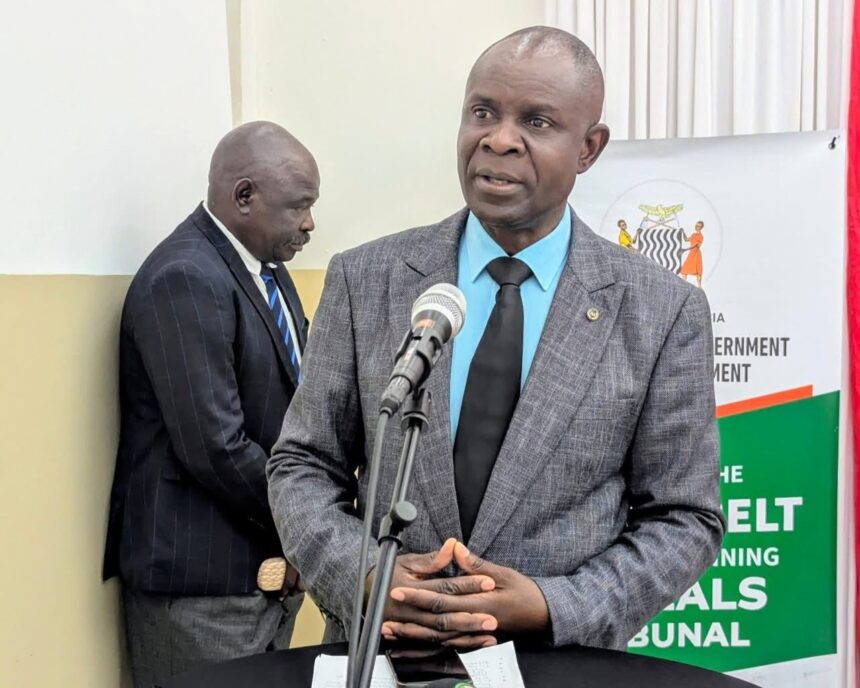
The Ministry of Local Government and Rural Development has officially inaugurated the Copperbelt Planning Appeals Tribunal following the swearing-in of its members at the Ndola High Court. The inauguration marks a key milestone in strengthening land administration and urban planning governance in the country. The Tribunal was formally launched by Gift S. Sialubalo, who emphasized the importance of accountability and fairness in planning decisions. This development reflects the government’s broader commitment to improving transparency in land use management and ensuring that planning systems operate efficiently. It also signals a renewed focus on building institutions that can support orderly and sustainable urban growth.
The Copperbelt Planning Appeals Tribunal has been established under the Urban and Regional Planning Act No. 3 of 2015, which provides the legal foundation for regulating land development and planning decisions in Zambia. The Tribunal serves as an independent body mandated to review decisions made by planning authorities, including matters related to development permissions, subdivision of land, rezoning applications, and enforcement actions. This structure is designed to ensure that individuals, developers, and institutions have access to a fair and impartial review process when disputes arise. It also strengthens oversight by ensuring that planning authorities operate within the law and follow established procedures. By providing a formal appeals mechanism, the Tribunal helps reduce conflicts and promotes consistency in planning decisions.
During the inauguration, Gift S. Sialubalo highlighted that the creation of the Tribunal represents a deliberate step toward strengthening governance in land development and management. He stressed that no planning decision should be beyond scrutiny and that all stakeholders must have access to fair hearings when disputes occur. His remarks underscored the importance of justice in urban planning systems, particularly in rapidly growing areas such as the Copperbelt Province. He also noted that the Tribunal will promote accountability among planning authorities by ensuring that their decisions can be reviewed independently. This approach is expected to improve trust between citizens and institutions responsible for land administration.
The Minister further emphasized the Tribunal’s role in supporting orderly development across urban and peri-urban areas. He stated that improved oversight would help reduce the occurrence of illegal developments, which have become a challenge in several fast-growing towns. By enforcing compliance with planning regulations, the Tribunal is expected to contribute to better land use coordination and improved infrastructure planning. This includes ensuring that developments align with approved layouts and environmental standards. Such measures are critical for preventing unplanned settlements and ensuring that urban expansion remains sustainable and well regulated.
Public awareness was also identified as a key priority during the launch, with Gift S. Sialubalo urging citizens to understand their rights within the planning system. He stressed the importance of educating the public on planning procedures, appeal processes, and the role of the Tribunal in resolving disputes. Increased awareness is expected to empower communities to engage more effectively with planning authorities and seek redress when necessary. It also helps reduce misinformation and improves compliance with planning regulations. A well-informed public contributes to smoother implementation of development policies and stronger institutional trust.
Members of the newly inaugurated Tribunal have been urged to perform their duties with integrity, professionalism, and impartiality. Timely handling of cases was highlighted as essential to ensuring that disputes are resolved efficiently and do not delay development processes. The credibility of the Tribunal will depend on its ability to deliver fair and consistent rulings based on evidence and legal principles. This responsibility places significant importance on maintaining independence and avoiding external influence in decision making. The expectation is that the Tribunal will become a trusted institution for resolving planning disputes across the Copperbelt region.
The Ministry of Local Government and Rural Development continues to advance broader reforms aimed at strengthening Zambia’s planning framework. These reforms include ongoing reviews of the Urban and Regional Planning Act as well as the development of updated planning standards to guide development across the country. Ministry of Local Government and Rural Development remains committed to improving institutional capacity and ensuring that planning systems support sustainable urban growth. These efforts are intended to address challenges such as rapid urbanization, informal settlements, and infrastructure pressure. By modernizing planning laws and institutions, the government aims to create a more efficient and transparent development environment.
The inauguration of the Copperbelt Planning Appeals Tribunal represents a significant step toward promoting orderly, transparent, and sustainable urban development in Zambia. With its mandate to provide independent review of planning decisions, the Tribunal is expected to strengthen governance and improve accountability in land administration. The leadership of Gift S. Sialubalo reflects a clear policy direction focused on fairness, compliance, and institutional reform. As urban areas continue to expand, the role of the Tribunal will become increasingly important in shaping balanced and well regulated development. Its establishment marks a practical move toward building stronger planning systems that serve both current and future generations.