






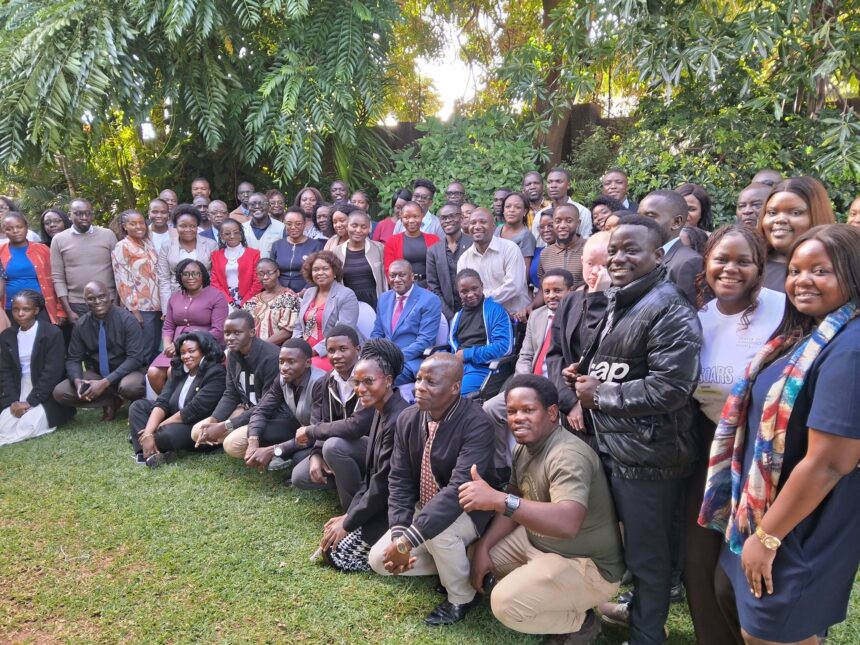
The Ministry of Health Zambia, in collaboration with its cooperating partners under the Adolescent Health Technical Working Group (ADH-TWG), recently held the annual review for 2025 and planning meeting for 2026. The session provided a platform to evaluate progress, assess evidence, and identify gaps in adolescent health programming across the country. Dr. Kennedy Lishimpi, Permanent Secretary (TS), emphasized the importance of youth participation, noting that adolescents and young people play a critical role in shaping responsive and effective health interventions. The meeting highlighted that meaningful engagement of young people is central to achieving outcomes that reflect their needs and priorities. By reflecting on achievements and challenges, stakeholders aimed to set strategic priorities that will strengthen health services and broader support systems for adolescents.
Discussions focused on the implementation of the Adolescent Health Strategic Plan 2022-2026, which addresses not only clinical services but also the social determinants affecting young people. Education, poverty, gender inequality, and social norms were identified as key factors influencing health outcomes among adolescents. Participants shared data, evidence, and experiences to evaluate progress and inform planning for 2026. The meeting also emphasized the need for multisectoral approaches, bringing together health, education, social protection, and community stakeholders to address these interconnected challenges. Through coordinated efforts, the Ministry and its partners aim to improve access to quality health services, promote adolescent wellbeing, and ensure equitable outcomes across all regions of Zambia.
The session concluded with a focus on strategic planning for 2026, emphasizing actionable interventions and measurable targets. Priority areas include expanding youth-friendly health services, strengthening community engagement, addressing harmful social norms, and improving monitoring and evaluation of adolescent health programs. Dr. Lishimpi reaffirmed the government’s commitment to coordinated action, noting that addressing adolescent health challenges requires sustained investment and collaboration across sectors. The meeting also encouraged continuous dialogue with young people to ensure that programs remain inclusive, relevant, and effective. By integrating evidence-based practices and youth perspectives, Zambia aims to achieve significant improvements in adolescent health outcomes in the coming years.
This annual review and planning meeting demonstrates Zambia’s commitment to strengthening adolescent health through strategic, evidence-driven, and inclusive approaches. By engaging young people and coordinating multisectoral interventions, the country is addressing both immediate health needs and the broader social determinants that shape adolescent wellbeing. The Ministry of Health Zambia and its partners are poised to implement targeted actions in 2026 that enhance service delivery, equity, and youth participation. These efforts reinforce the government’s dedication to fostering a healthy, empowered, and resilient adolescent population. Through sustained commitment and collaboration, Zambia is set to achieve measurable progress in improving adolescent health outcomes and ensuring that young people have a voice in shaping programs that affect their lives.