







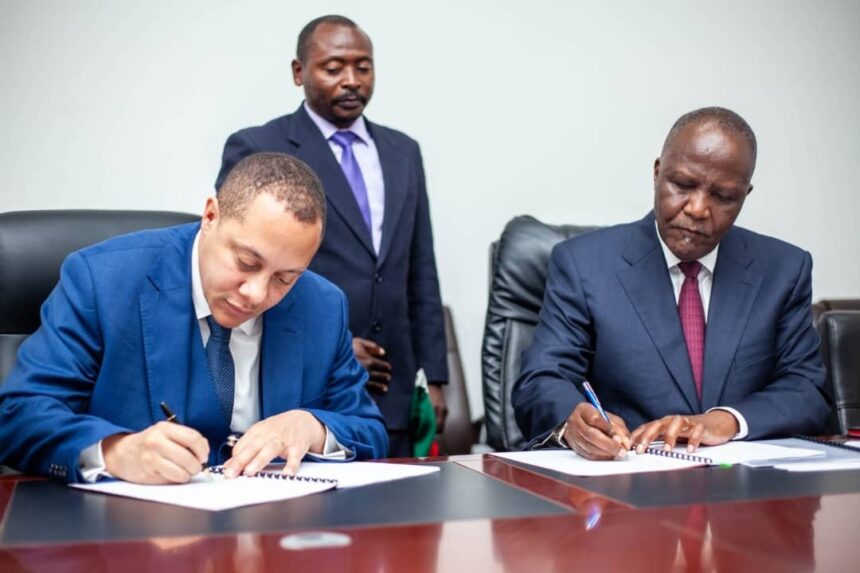
The Ministry of Technology and Science has signed a Memorandum of Understanding with Obrizum Group Ltd to collaborate on a pilot project that will integrate Artificial Intelligence into Zambia’s education system. The agreement, signed in Lusaka, represents a strategic step toward using advanced technology to improve the quality, accessibility and effectiveness of education across the country. The initiative will focus on introducing AI driven learning tools in secondary schools and later expanding to Technical Education, Vocational and Entrepreneurship Training institutions. Government leaders view the partnership as part of a broader national effort to modernize education and equip students with skills required in a technology driven global economy. By embracing artificial intelligence, Zambia aims to create a learning environment that responds to the needs of individual students while strengthening the overall education system.
Speaking during the signing ceremony, the Chief Executive Officer of Obrizum Group Ltd, Dr. Chibeza Agley, welcomed the opportunity to work with the Government of Zambia through the Ministry of Technology and Science. He explained that the collaboration will focus on piloting innovative AI powered learning solutions designed to transform the education experience for both learners and teachers. The project will initially target secondary school learners before expanding to students in Technical Education, Vocational and Entrepreneurship Training institutions and their instructors. According to Dr. Agley, technology enabled learning has the potential to improve efficiency in classrooms and deliver better educational outcomes. He added that the initiative will also help prepare students for the demands of modern workplaces where digital skills and technological literacy are increasingly essential.
Minister of Technology and Science Hon. Felix C. Mutati MP emphasized that the partnership aligns with the government’s commitment to strengthening the education sector under the leadership of President Hakainde Hichilema. He explained that the introduction of free education reflects the national policy that every child in Zambia must have access to learning opportunities. The government has already taken major steps to expand the education system through investments in infrastructure and the recruitment of thousands of teachers across the country. These measures have increased access to education and strengthened classroom capacity in both urban and rural communities. The integration of artificial intelligence now represents the next stage of reform focused on improving the quality of learning outcomes.
Minister Mutati highlighted that technology can play a critical role in reducing educational inequalities across Zambia. He explained that AI based learning platforms can ensure that the quality of education does not depend on a student’s geographical location. Artificial intelligence systems can personalize learning by adapting lessons to match the pace and abilities of each student. This approach allows learners in rural areas to benefit from the same advanced learning tools available in more developed regions. The technology also enables teachers to gain deeper insights into student progress and challenges, helping them provide targeted support that improves academic performance.
The Minister further explained that artificial intelligence can assist teachers by analyzing learning data and identifying areas where students require additional support. Educators can then tailor their teaching strategies to address these specific needs and strengthen overall learning outcomes. This data driven approach creates a more responsive classroom environment where students receive attention based on their individual learning styles and abilities. The result is a shift away from the traditional one size fits all model of education toward a system that adapts to each learner. Such changes are expected to help students build stronger skills while preparing them to contribute effectively to the country’s social and economic development.
Minister Mutati noted that Zambia has already established a strong foundation for education reform through increased access to schooling. The government is now focusing on improving the quality and efficiency of education delivery. AI driven systems can help reduce the cost of delivering personalized learning while achieving stronger academic outcomes. These technologies can also assist in curriculum delivery, student assessment and progress monitoring. By adopting innovative digital tools, Zambia aims to ensure that education resources are used effectively while maintaining high standards of teaching and learning.
The Minister praised the partnership with Obrizum Group Ltd and described the pilot initiative as a significant step toward modernizing Zambia’s education sector. He expressed confidence that the collaboration will introduce globally competitive learning solutions that match the standards of leading educational institutions. Obrizum Group brings advanced technological expertise linked to Cambridge University, which strengthens the credibility and potential impact of the project. With proper implementation, Zambian students will gain access to learning tools that are used in world class education systems. This exposure will help prepare graduates for international opportunities and a rapidly evolving digital economy.
The pilot project is scheduled to begin in mid April 2026 and will serve as a testing phase for the introduction of artificial intelligence in classrooms. During this period, the Ministry and Obrizum Group will evaluate how effectively the technology improves teaching methods, student engagement and academic performance. Lessons learned from the pilot will guide future expansion across more schools and higher learning institutions in Zambia. The initiative reflects a forward looking approach that recognizes the importance of technology in shaping the future of education. By investing in innovation today, the country aims to build a skilled and competitive workforce for tomorrow.
The agreement between the Ministry of Technology and Science and Obrizum Group Ltd marks a meaningful milestone in Zambia’s education transformation journey. Artificial intelligence offers new possibilities for improving learning quality, expanding access and empowering teachers with better tools. Through this collaboration, Zambia is taking practical steps toward building a modern education system that meets the needs of the twenty first century. If the pilot project delivers the expected results, the initiative could reshape how education is delivered across the country. This partnership demonstrates a strong commitment to ensuring that Zambian students receive the knowledge and skills required to succeed in a rapidly changing world.