


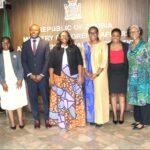

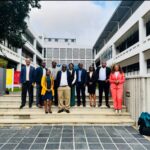


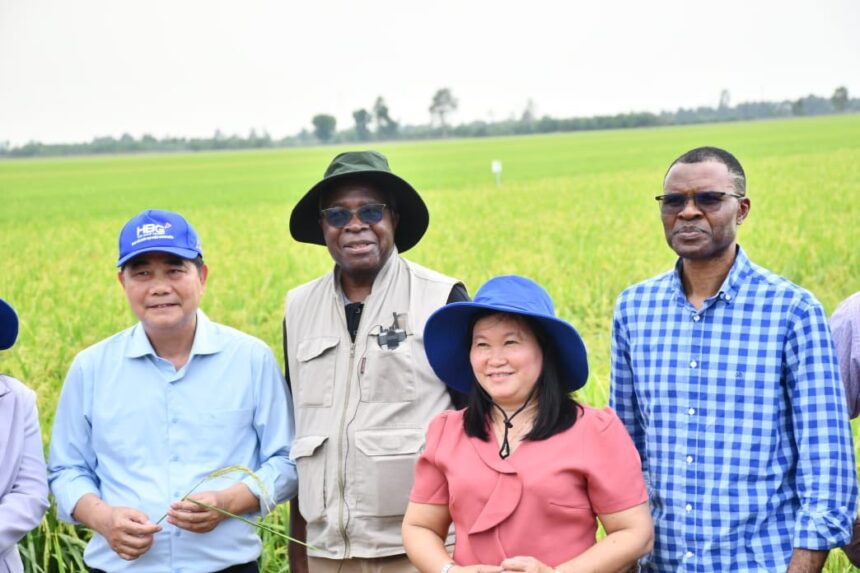
A high-level Zambian government delegation recently visited Can Tho City, Vietnam, to study the country’s highly successful agricultural systems, particularly in rice cultivation. The visit aims to identify strategies and practices that can be adapted to enhance Zambia’s own agricultural productivity and food security. Leading the delegation is Finance and National Planning Minister Dr. Situmbeko Musokotwane, who emphasized the importance of learning from countries with proven expertise in modern farming techniques. The delegation also includes Agriculture Minister Mr. Reuben Mtolo, Head of the Presidential Delivery Unit Ms. Kusobile Kamwambi, Finance Permanent Secretary Mr. Mulele Maketo Mulele, Ministry of Agriculture Permanent Secretary for Technical Services Mr. John Mulongoti, ZDA Director General Mr. Albert Halwampa, and PPDF Director General Mr. Andrew Chipwende. Zambia’s Ambassador to Malaysia, Ambassador Mumba, accompanies the team to facilitate diplomatic engagement and knowledge sharing.
During the visit, the delegation observed various rice production methods, irrigation systems, and supply chain management techniques that have contributed to Vietnam becoming one of the world’s leading rice exporters. They met with local farmers, agricultural researchers, and government officials to gain insights into integrated approaches that combine mechanization, sustainable practices, and community involvement. The delegation studied crop rotation, pest management, and water resource optimization techniques that could help Zambia increase yields while minimizing environmental impact. Vietnam’s success in linking smallholder farmers to export markets through cooperative structures was highlighted as a model that could be replicated in Zambia. Members of the delegation took detailed notes and collected data to inform policy recommendations for scaling up rice production and improving rural livelihoods at home.
The study visit also included visits to processing facilities and rice research centers where advanced technologies, such as mechanized planting, automated milling, and precision farming, are employed. Discussions focused on how Zambia can adopt similar technologies while ensuring affordability and accessibility for local farmers. The delegation explored training programs and knowledge transfer initiatives that support farmer education and skill development. They also examined government policies, subsidies, and financial models that have incentivized agricultural growth in Vietnam. Understanding the role of public-private partnerships in the Vietnamese agricultural sector was a key part of the learning process, offering lessons on collaboration between government, industry, and farmers.
The outcomes of this visit are expected to inform Zambia’s strategic plan for agricultural development, particularly in rice production, which is a critical component of food security and economic growth. The delegation plans to propose policy reforms, investment in infrastructure, and targeted support programs based on their observations in Vietnam. They aim to enhance productivity, reduce import dependency, and create sustainable income streams for smallholder farmers. Lessons on irrigation, mechanization, and market linkages will guide pilot projects that can be expanded nationally. This initiative reflects Zambia’s commitment to leveraging international best practices to strengthen its agricultural sector.
The Zambian delegation’s study visit to Can Tho City represents a proactive effort to learn from Vietnam’s agricultural successes and adapt effective strategies to the Zambian context. The knowledge gained from observing advanced rice production techniques, processing methods, and policy frameworks will play a significant role in shaping Zambia’s future agricultural policies. By focusing on sustainability, technology adoption, and farmer empowerment, Zambia seeks to boost production, enhance food security, and stimulate rural economic growth. The collaboration and insights gained from this visit highlight the value of international exchange in driving national development objectives. The delegation’s findings will likely serve as a foundation for strategic interventions that strengthen the country’s agricultural landscape.