


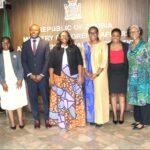





Minister of Community Development and Social Services, Hon. Doreen Sefuke Mwamba, has reaffirmed Zambia’s commitment to strengthening international cooperation while ensuring that country-led programmes remain central to global efforts to eradicate hunger and poverty. Speaking in Doha, Qatar, during the Global Alliance Leaders’ Meeting on Reinventing International Cooperation for Fighting Hunger and Poverty, Hon. Mwamba emphasized the importance of aligning global actions with national priorities. The meeting was held ahead of the official opening of the United Nations Second World Summit on Social Development (WSSD2).
Hon. Mwamba described the theme, “Reinventing International Cooperation for Fighting Hunger and Poverty: Putting Country Programmes at the Centre,” as timely and forward-looking. She noted that effective global action must reflect national realities and priorities to achieve sustainable results. She commended the Global Alliance for convening the high-level dialogue at a critical time when hunger and poverty continue to threaten global progress toward the Sustainable Development Goals (SDGs).
The Minister highlighted Zambia’s development agenda, which focuses on empowering communities and building inclusive national systems supported by strong partnerships. She outlined the country’s progress over the past decade in expanding social protection and development interventions. Notably, Zambia’s Social Cash Transfer Programme now reaches over 35% of the national population and 66% of poor households. The programme has contributed to reductions in extreme poverty and improvements in food security.
Hon. Mwamba explained that the programme has evolved through the Cash-Plus approach, which combines cash assistance with complementary support in nutrition, livelihoods, education, and climate resilience. This holistic approach is designed to help beneficiaries transition permanently out of poverty. Despite these achievements, the Minister acknowledged ongoing challenges, including limited fiscal space and the increasing impact of climate-induced shocks. She emphasized that these challenges reinforce the need for renewed, predictable, and inclusive international cooperation aligned with national development priorities.
The Minister further noted that platforms such as the Global Alliance provide valuable opportunities for joint financing, knowledge exchange, and strengthening domestic resource mobilization capacities. The WSSD2 summit brings together world leaders, policymakers, and development partners to reimagine international cooperation and accelerate collective action toward achieving the 2030 Agenda for Sustainable Development.
Zambia’s participation in these discussions underscores the country’s commitment to building inclusive systems that empower communities, reduce poverty, and promote sustainable development, while contributing to global efforts to achieve food security and social progress.