





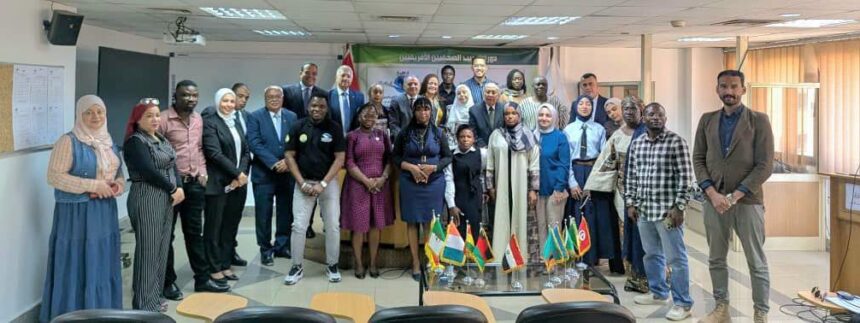
The 63rd Training Course for Young African Journalists has officially commenced in Cairo, Egypt, bringing together journalists from across the African continent for three weeks of professional development, knowledge exchange and networking. The programme is being held under the “Mahfouz Al-Ansari Session” in honour of Mr. Mahfouz Al-Ansari, the former President of the Union of African Journalists, and recognises his longstanding contribution to the advancement of journalism in Africa. The latest training course provides young journalists with an opportunity to strengthen their skills while engaging with important issues shaping the media industry and the continent. A total of 18 journalists from 15 African countries are participating in the programme alongside five Egyptian journalists. Three heads of journalists’ unions from Côte d’Ivoire, Cameroon and Senegal are also taking part, adding valuable leadership and professional perspectives to the discussions.
The three-week programme is designed to create a platform where African journalists can exchange experiences and learn from different media environments across the continent. Participants will have the opportunity to discuss the challenges facing modern journalism while exploring practical approaches to improving reporting, storytelling and professional standards. The presence of journalists from different African countries also encourages cross-border collaboration and creates opportunities for participants to develop professional networks that can continue beyond the training programme. Such interaction is particularly important as journalists increasingly cover issues that affect multiple countries and communities across Africa. By bringing together young journalists and experienced media leaders, the course aims to support a stronger and more connected African journalism community.
Artificial intelligence is among the major issues receiving attention during the training, reflecting the rapid changes taking place across the global media industry. Participants will examine both the opportunities and challenges created by AI, including its potential to improve newsroom productivity, support research and assist journalists with data analysis. At the same time, the programme will consider concerns surrounding accuracy, misinformation, transparency, editorial responsibility and the changing role of journalists as AI tools become more widely used. Journalism ethics in the era of artificial intelligence will form another important part of the discussions, encouraging participants to consider how professional standards should guide the use of emerging technologies. The focus on AI highlights the need for African journalists to understand new digital tools while maintaining accuracy, accountability and public trust.
The training will also address several major issues affecting Africa and its people, including healthcare, economic development and conflict. One area of discussion will be the role of the United Nations in addressing health challenges in Africa, giving participants an opportunity to examine how international organisations respond to public health concerns on the continent. Economic challenges facing African countries will also receive attention as journalists explore the importance of informed reporting on development, investment and economic policy. Another key topic will be the protection of journalists during conflicts and wars, an issue that remains critical for media professionals working in difficult and dangerous environments. These discussions can help participants better understand the responsibilities and risks associated with reporting on sensitive issues while strengthening their ability to serve audiences responsibly.
Sports journalism will also form part of the programme, highlighting the growing importance of sports media across Africa. Sports journalists play an important role in documenting major competitions, profiling athletes and examining the wider social and economic impact of sport. As African sporting events attract increasing international attention, journalists need strong reporting, interviewing, digital media and storytelling skills to meet the expectations of modern audiences. The course will provide participants with an opportunity to explore the development of sports journalism and consider how the sector can continue to grow. This focus adds another dimension to the programme by recognising the diverse areas in which African journalists contribute to public information and national conversations.
Egyptian-African relations will feature among the wider themes examined during the training, giving participants an opportunity to explore connections between Egypt and other African countries. The programme will also examine the El Alamein Economic Summit and its relevance to economic discussions involving Africa. Participants are expected to consider how journalists can provide audiences with accurate and meaningful coverage of political, economic and social developments. Combating misinformation will be another important area of focus as false and misleading information continues to challenge news organisations and audiences in the digital age. The programme will also explore the role of African culture in promoting unity and cooperation among African peoples, reinforcing the importance of journalism in strengthening understanding across national and cultural boundaries.
The course extends beyond classroom-based learning through practical workshops designed to give participants direct experience with modern journalistic methods. Data journalism will be among the areas covered, helping journalists understand how data can be collected, analysed and presented to strengthen news reports. Participants will also examine the role of media in serving local communities and consider how journalists can produce relevant coverage that responds to the needs of the people they serve. These practical sessions are important because modern journalism requires more than traditional reporting skills, particularly as audiences increasingly consume news through digital platforms. By combining theoretical discussions with practical training, the programme gives participants an opportunity to develop skills that they can apply in their respective newsrooms.
The training programme will also expose participants to Egypt’s media institutions, development projects and cultural heritage through a series of professional, educational, cultural and historical visits. The journalists are expected to visit Media Production City and the New Administrative Capital as part of the programme, gaining insight into Egypt’s media infrastructure and development initiatives. Visits to notable landmarks in Cairo and Alexandria will provide participants with additional opportunities to learn about the country’s history and cultural heritage. The programme will also include a visit to the Grand Egyptian Museum, one of Egypt’s major cultural attractions. These activities are intended to broaden the participants’ understanding of Egypt while strengthening the cultural and professional connections established during the training.
The participation of journalists from 15 African countries makes the 63rd Training Course a significant platform for continental engagement among young media professionals. The involvement of journalists’ union leaders from Côte d’Ivoire, Cameroon and Senegal further strengthens the programme by bringing organisational and leadership experience into the discussions. Participants can learn from one another’s professional experiences while gaining a deeper understanding of the different challenges facing newsrooms across Africa. The programme also creates opportunities for journalists to identify common challenges and explore ways of working together on issues that affect communities across borders. Stronger professional relationships among African journalists can contribute to greater knowledge-sharing and collaboration within the continent’s media sector.
The 63rd Training Course for Young African Journalists is therefore expected to make a meaningful contribution to the professional development of its participants while honouring the legacy of Mahfouz Al-Ansari. Its broad programme combines journalism ethics, artificial intelligence, data journalism, economic issues, conflict reporting, health, sports, misinformation and African culture. The inclusion of practical workshops and educational visits adds further value by allowing participants to connect classroom knowledge with real-world experiences. As the three-week programme progresses, the journalists will have opportunities to strengthen their professional competencies and build relationships with colleagues from across Africa. The training ultimately reflects the importance of investing in young journalists who can contribute to accurate, ethical and impactful journalism across the African continent.