




The Government of the Republic of Zambia has welcomed S&P Global Ratings’ decision to upgrade the country’s long- and short-term foreign-currency sovereign credit ratings from ‘SD/SD’ (Selective Default) to ‘CCC+/C’ with a stable outlook. This upgrade formally confirms Zambia’s exit from default status and marks a significant milestone in the nation’s economic recovery.
S&P’s decision reflects international confidence in Zambia’s reform programme under President Hakainde Hichilema. The rating acknowledges steady fiscal discipline, strengthened policy credibility, and decisive measures to address the debt overhang that has constrained economic activity since 2020.
The upgrade also highlights progress in restructuring Zambia’s external debt. Agreements have been reached with official and commercial creditors representing around 94 percent of debt within the restructuring framework. Only a small portion of commercial debt remains under negotiation, and S&P notes that risks from holdout creditors are contained due to strong safeguards, including comparability-of-treatment principles under the G20 Common Framework and most-favoured-creditor clauses in restructured Eurobonds.
S&P underscores that Zambia’s macroeconomic and institutional landscape is improving. Fiscal consolidation is projected to reduce government debt to 78.5 percent of GDP by 2028. Interest costs as a share of revenue are expected to ease, while inflation is forecast to return to single digits by 2026. The country’s foreign reserves have recovered to US$5.2 billion, supported by IMF disbursements, project inflows, and central bank interventions. Forward projections indicate continued accumulation of reserves driven by higher copper exports, favourable terms of trade, and rising investor confidence.
The mining sector remains central to Zambia’s growth outlook. Copper production grew by 17.8 percent year-on-year in the first half of 2025, benefiting from reforms in licensing, predictable regulation, energy stabilisation, and improved investor engagement. The sector accounts for 14 percent of GDP, 70 percent of export earnings, and up to a quarter of government revenue. With global copper prices projected to average US$10,500 per metric tonne between 2025 and 2028, the sector is expected to support fiscal revenues, external balances, and investor confidence. The government aims to reach 3 million metric tonnes of annual production by 2031, boosted by investment in copper, cobalt, nickel, and other strategic minerals.
S&P also recognises Zambia’s resilience following the severe 2024 drought. Diversification into renewable energy, solar and battery storage, thermal generation, and off-grid solutions helped limit economic impact. Collaborative efforts with the private sector are strengthening resilience and supporting long-term industrialisation and competitiveness.
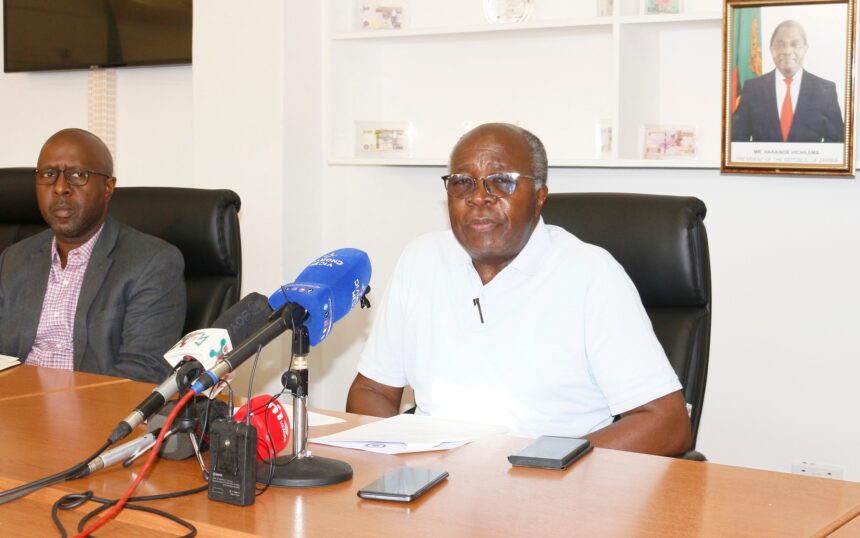
Minister of Finance Dr. Situmbeko Musokotwane emphasised that the upgrade validates Zambia’s economic reforms, governance credibility, and the determination of its people. He highlighted the country’s pioneering role under the G20 Common Framework and acknowledged the support of creditors, partners, civil society, and the private sector in navigating the debt restructuring process.
The government reaffirmed its commitment to sustaining fiscal discipline, completing debt restructuring, expanding energy capacity, strengthening social protection, and supporting private-sector-led growth. S&P noted that further rating improvements are possible if debt ratios decline faster than projected, fiscal balances improve, GDP growth accelerates, and reserves accumulate ahead of current forecasts.
The S&P upgrade signals Zambia’s transition from a legacy of unsustainable borrowing to restored financial stability, reduced refinancing risks, and improved market standing, laying a foundation for sustainable growth and shared prosperity.