







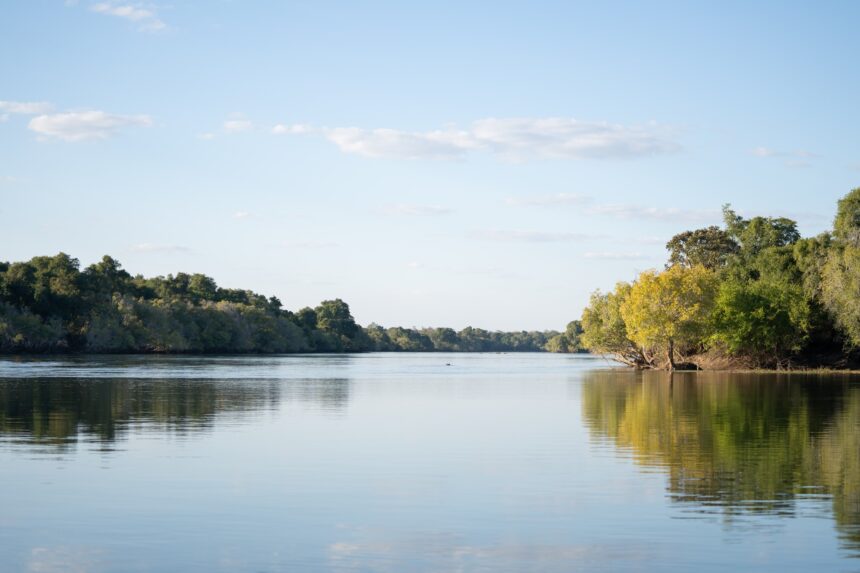
Greater Kafue Landscape Limited (GKLL) has reported that the February acid spillage has not had negative effects on marine life within the Kafue River inside Kafue National Park. Operations manager Jed Bird said that while elevated acid levels were recorded in other areas, waters around Mapunga and neighboring camps remained unaffected.
“Where the Kafue enters the national park upstream of that, Mushingashi and further, there were certain fish species die-offs. But yeah, no ill effects of the spill in the park. Which was obviously very positive,” Bird said. He attributed the minimal impact to the timing of the spill and rainfall patterns, which diluted the acid as it flowed into the park.
Bird made the remarks during an international fishing competition that brought together over 80 anglers from Zambia, Zimbabwe, South Africa, and Namibia. The event recorded over 2,600 fish caught under a catch-and-release format, exceeding last year’s numbers and indicating a healthy fish population in the park’s waters.
Mapunga Bush Camp director Greg Geldenhuys confirmed that no dead fish have been observed in the area, crediting quick government intervention for the positive outcome. “We have not seen one dead fish from this spill. Simply because the Government did very well by taking action very, very quickly. The waters here are not contaminated,” he said.
The acid spill occurred after a tailings dam collapse on the Copperbelt Province, releasing toxic waste into the Chambeshi and Mwambashi rivers, which feed into the Kafue River. The incident raised concerns about the impact on both animal and human life that rely on the river for water and agriculture.
Government measures since February have included applying lime to affected water bodies to neutralize the acid. Last month, the Ministry of Green Economy confirmed that pH levels in most sampled sites were returning to safe limits. Minister Mike Mposha reported that 22 out of 23 sites tested between June and July were within permissible pH levels, representing 95.7 percent compliance.
The findings offer reassurance that Kafue National Park’s ecosystem has largely been protected, and ongoing monitoring continues to ensure the river’s health and biodiversity remain stable.