







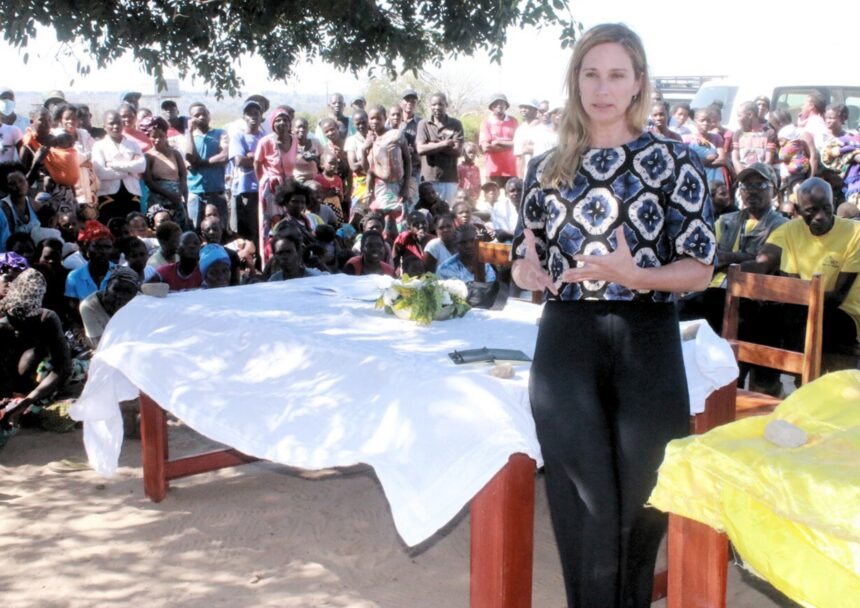
The Ministry of Community Development and Social Services, in partnership with UNICEF, has launched Phase II of the United Nations Joint Programme on Social Protection (UNJSP-II) to strengthen child safeguarding and address social welfare challenges across Zambia.
Speaking at a media workshop in Kabwe on Tuesday, Senior Community Development Officer Mzamose Zulu highlighted key initiatives under the programme aimed at empowering vulnerable groups, particularly women and farmers.
One initiative, the Supporting Women’s Livelihood (SWL) intervention, provides loans to women entrepreneurs without requiring collateral. “We have the second programme which is the Livelihood and Empowerment Support Scheme, supporting women’s livelihood initiatives. This dual project aims to empower women economically while enhancing social protection coverage,” Zulu said.
The UNJSP-II programme focuses on improving access to social services, protecting children from abuse and neglect, and providing support to vulnerable families. It integrates financial inclusion measures with social protection mechanisms to ensure sustainable development outcomes.
Zulu noted that empowering women and smallholder farmers is central to the programme’s success. By providing financial support, training, and technical assistance, UNJSP-II seeks to reduce poverty and promote self-reliance among disadvantaged groups.
The programme also strengthens collaboration between government departments, local authorities, and international partners to ensure coordinated delivery of social welfare services. UNICEF will continue to provide technical support, monitoring, and evaluation to measure impact and inform policy decisions.
Phase II of UNJSP-II builds on the achievements of the first phase, which improved social protection coverage, expanded child-focused services, and increased economic opportunities for women in rural and urban areas. The Ministry emphasized that sustained implementation of the programme will contribute to Zambia’s broader goals of reducing inequality, protecting children, and promoting inclusive development.
The launch marks a renewed commitment to social protection, ensuring that vulnerable populations have access to financial support, social services, and mechanisms that safeguard their rights and well-being.