




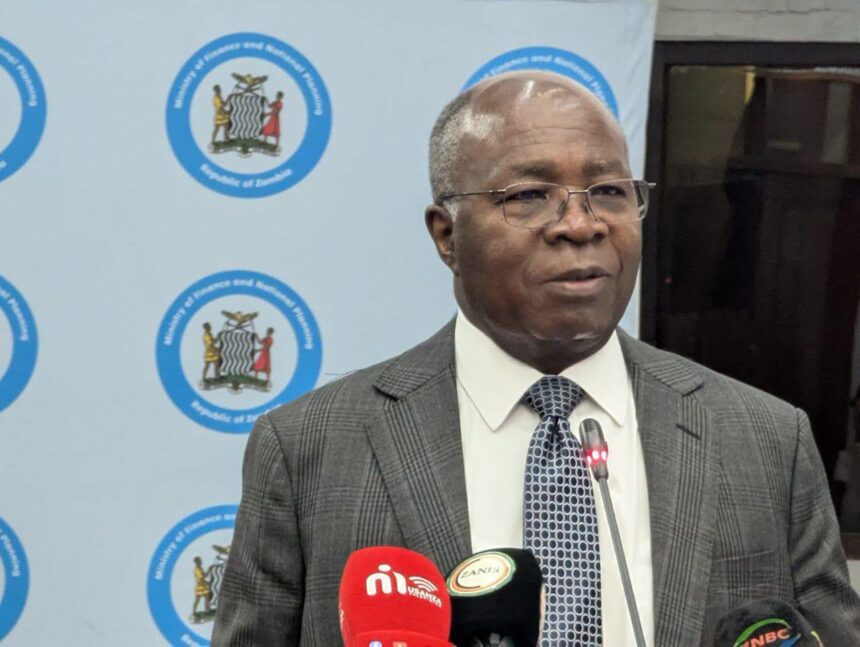
Zambia’s 2027 National Budget will represent a collective and agreed position of Cabinet rather than the work of the Ministry of Finance and National Planning alone, Minister of Finance and National Planning Dr. Situmbeko Musokotwane has emphasised. The minister made the remarks yesterday during the official opening of an orientation meeting for Cabinet Ministers on the national budget and other government developmental programmes in Lusaka. He stressed that every minister has a responsibility to understand the budget process, manage public resources responsibly and contribute to the implementation of government priorities. The meeting was convened following the appointment of Cabinet Ministers by President Hakainde Hichilema on 28 October 2026. It is intended to familiarise the newly appointed ministers with the government’s budgetary processes and broader developmental agenda as preparations for the 2027 National Budget gather momentum.
Dr. Musokotwane explained that the national budget should not be viewed as a document prepared exclusively by the Ministry of Finance and National Planning. Instead, it reflects decisions and priorities agreed upon collectively by Cabinet, with every ministry contributing according to its responsibilities and national development objectives. He emphasised that government must present a unified position when the budget is taken to Parliament. This means ministers must understand the policies, programmes and financial allocations contained in the budget before they are presented for parliamentary consideration. A coordinated Cabinet position is important because the national budget determines how public resources will support government operations, development programmes and service delivery across the country.
The minister reminded Cabinet Ministers that each of them is responsible for running a government ministry and must therefore have a firm understanding of how public finances are managed. He noted that managing a ministry involves more than overseeing administrative activities and implementing policies. Ministers must understand the financial requirements of their portfolios, the resources allocated to different programmes and the rules governing public expenditure. This knowledge is necessary to ensure that government funds support approved priorities and deliver meaningful results. He also stressed that ministers must take responsibility for understanding their budgets rather than depending entirely on technical officials to explain financial matters.
As part of the orientation programme, Dr. Musokotwane announced that a more detailed technical session with Permanent Secretaries had been scheduled for 30 October 2026. The session is expected to guide ministers through the structure and technical components of the national budget. It will also examine how government revenue is estimated and how available resources are distributed among competing national priorities. Understanding these processes will help ministers appreciate the financial limitations facing government and the need to make informed spending decisions. The technical engagement is also expected to strengthen cooperation between political leadership and senior government officials responsible for financial planning and administration.
One of the key messages from Dr. Musokotwane’s address was the importance of Cabinet unity in the preparation and presentation of the 2027 National Budget. He emphasised that ministers must speak with one voice and defend government policies and programmes when engaging Parliament. This responsibility extends beyond debates in the National Assembly to include committee meetings, where government expenditure receives detailed examination. Ministers are expected to explain the reasoning behind their proposed allocations and demonstrate how the resources will support their respective mandates. A unified government position can also help ensure consistency between national development priorities, ministerial plans and the financial commitments presented to lawmakers.
The minister further observed that some of the most critical scrutiny of the national budget takes place within Parliamentary Committees. These committees examine the proposed expenditure of individual ministries and provide an opportunity for lawmakers to question government officials about how public funds will be used. Each minister will be expected to appear before the relevant committees, present their portfolio budget and defend the proposed allocations. This process places significant responsibility on ministers to understand the details of their financial plans. It also gives Parliament an important role in examining whether government spending proposals are reasonable, justified and aligned with the country’s development priorities.
Dr. Musokotwane urged ministers to familiarise themselves with their budgets in detail, from the smallest allocations to the largest expenditure commitments. He advised them to task Permanent Secretaries, Directors and Controlling Officers with explaining every budget line. According to the minister, parliamentary scrutiny can extend to individual allocations, meaning ministers should not overlook seemingly minor items when preparing for committee appearances. A strong understanding of the budget will help ministers respond confidently to questions and explain why particular programmes require specific levels of funding. It will also encourage greater accountability within government institutions by ensuring that senior officials understand and take responsibility for the financial plans under their supervision.
The Finance Minister also explained that ministers can propose changes to spending priorities when they believe other areas require greater attention. However, such adjustments must remain within the approved budget ceiling and follow the appropriate formal procedures through Parliament. This provides some flexibility for ministries to respond to their most pressing needs without disregarding the overall financial limits established by government. Ministers must nevertheless understand their existing allocations before proposing any changes. The process highlights the importance of balancing ministerial priorities with fiscal discipline and the need to manage public resources within approved limits.
Public financial management and compliance with government regulations also featured prominently in the minister’s address. Dr. Musokotwane cautioned ministers against ignoring the rules governing procurement, contracting and public expenditure. He noted that failure to comply with these requirements has previously resulted in arrests and court cases. His warning highlights the legal and administrative responsibilities attached to managing public funds. Ministers must ensure that their ministries follow established procedures when awarding contracts, purchasing goods and services and authorising expenditure. Strong financial controls are essential in protecting public resources, preventing irregularities and maintaining confidence in the management of government finances.
The forthcoming technical orientation was also expected to examine the distinction between compulsory government expenditure and discretionary spending. Compulsory expenditure includes obligations such as public sector emoluments, debt servicing and social protection programmes. These commitments must be considered when government determines how much money remains available for other development priorities. The remaining discretionary allocation must then be distributed among competing programmes and projects according to their importance and available resources. Understanding this structure will help ministers appreciate why budget decisions require careful planning and realistic assessments of government revenue.
Revenue estimation is another important part of the national budget process because it determines the financial resources available to government. The government must assess expected revenue before deciding how much it can allocate to ministries, public services and development programmes. These estimates influence spending decisions and help establish the limits within which government institutions must operate. Ministers who understand how revenue is generated and projected will be better positioned to plan their programmes realistically. They will also gain a clearer understanding of the relationship between government income, expenditure commitments and the country’s broader fiscal position.
The orientation meeting comes at an important time as Zambia prepares for the presentation of its 2027 National Budget. The budget is expected to outline the government’s spending priorities and provide the financial framework for implementing its policies and development programmes during the coming financial year. Its preparation requires coordination across government institutions because each ministry has different responsibilities and resource requirements. The involvement of all Cabinet Ministers is therefore important in ensuring that proposed allocations reflect agreed national priorities. The process also provides an opportunity to strengthen accountability by requiring ministers to take ownership of the programmes and expenditure plans under their supervision.
Dr. Musokotwane reaffirmed that the 2027 National Budget will be presented to Parliament on 6 November 2026. The presentation will mark an important stage in the national budget process, allowing lawmakers to examine the government’s financial proposals and consider the allocations intended for different sectors. Ministers will need to demonstrate a clear understanding of their respective budgets as Parliament begins its scrutiny. Their ability to explain spending priorities, justify allocations and respond to questions will be essential throughout the parliamentary process. The scheduled presentation also places pressure on ministries to complete their preparations and ensure that their proposed programmes are consistent with the agreed Cabinet position.
The minister’s message reinforces the importance of collective responsibility, financial discipline and accountability in the management of public resources. By orienting Cabinet Ministers on the budget process, government aims to ensure that political leaders understand both the opportunities and limitations associated with public finances. The emphasis on detailed budget knowledge also signals the importance of stronger ministerial oversight and closer cooperation with Permanent Secretaries and other senior officials. As Zambia moves towards the presentation of the 2027 National Budget, the focus will be on ensuring that government spending reflects agreed priorities and supports national development objectives. Ultimately, the success of the budget will depend not only on the allocations presented to Parliament but also on how effectively ministries manage resources, implement programmes and deliver results for the people of Zambia.