



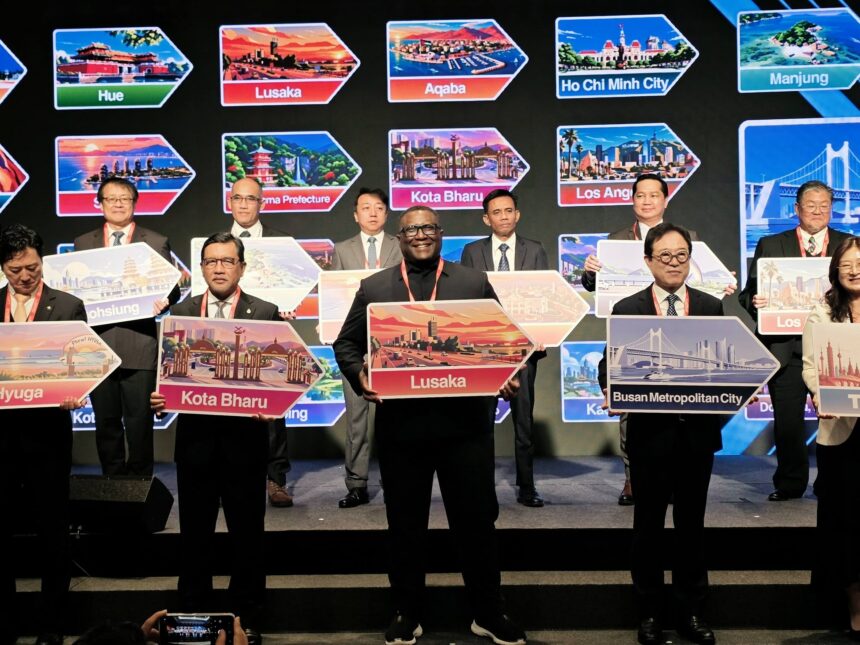
Lusaka City Mayor Mr. Chitambala Mwewa has held a bilateral meeting with Busan Vice Mayor Mr. Oh Seok-Keun to explore opportunities for cooperation in cultural exchange, business development and waste management. The meeting took place on the sidelines of the ongoing 2nd Global City Tourism Summit in Busan, Republic of Korea, where city leaders and tourism stakeholders are discussing innovative approaches to urban tourism and sustainable city development. The engagement provided an opportunity for Lusaka and Busan to identify shared priorities and explore ways to strengthen relations between the two cities. Both cities stand to benefit from exchanging knowledge, experiences and practical approaches to urban management. The discussions also highlighted the growing importance of international partnerships in creating cleaner, more attractive and economically vibrant cities.
Speaking during the meeting, Mr. Mwewa expressed his appreciation for the opportunity to engage with Busan’s city leadership. He noted that the bilateral discussions offered a platform for Lusaka and Busan to explore areas of mutual interest and share experiences in managing and developing urban centres. The Mayor emphasised the value of city-to-city partnerships in creating opportunities for cooperation, investment and knowledge exchange. Such partnerships can help local authorities learn from approaches that have been tested in different economic, social and environmental settings. They can also create opportunities for both cities to identify practical solutions to shared urban challenges while building stronger international relationships.
Cultural exchange emerged as one of the key areas of interest during the discussions. Lusaka and Busan have an opportunity to showcase their respective cultural identities, heritage and tourism attractions through initiatives that encourage greater understanding between their communities. Cultural cooperation can involve sharing knowledge about local traditions, supporting cultural events and creating opportunities for artists and other cultural practitioners to engage across borders. These activities can help introduce residents and visitors to the distinct identities of both cities while strengthening their tourism appeal. By promoting cultural exchange, Lusaka and Busan could develop closer connections that extend beyond official meetings and encourage longer-term cooperation between their communities.
Business relations also featured prominently in the engagement, with the two leaders exploring ways to create stronger economic links between Lusaka and Busan. International city partnerships can provide a platform for businesses to learn about new markets, identify potential partners and explore investment opportunities. Stronger links between the two cities could also support the exchange of knowledge on business development, urban services and approaches to attracting investment. For Lusaka, engagement with international cities offers an opportunity to learn from different development experiences and explore ideas that may support local economic growth. Any future cooperation would need to be developed through practical initiatives that respond to the needs of businesses and residents in both cities.
Waste management was another important area discussed during the bilateral meeting. As cities grow, local authorities face increasing demands to collect, transport and manage waste while maintaining clean public spaces and protecting the environment. Sharing best practices can help city administrations examine different approaches to waste collection, recycling, public education and the efficient use of municipal resources. For Lusaka, engagement with Busan could provide an opportunity to learn from relevant urban waste management practices and assess which approaches may be suitable for local conditions. Cooperation in this area could support efforts to improve cleanliness, environmental sustainability and the overall quality of life for residents, depending on the initiatives developed by the two cities.
Effective waste management is closely connected to sustainable urban development and the quality of public spaces. Clean streets, well-maintained neighbourhoods and responsible waste disposal practices can improve the experience of residents while making a city more attractive to visitors and investors. Local authorities also need to consider public participation, reliable waste collection services and appropriate infrastructure when developing long-term solutions. International cooperation can support these efforts by creating opportunities to share technical knowledge and compare different methods of addressing urban waste challenges. The discussions between Lusaka and Busan therefore reflect the importance of treating waste management as a key part of building liveable and environmentally responsible cities.
Tourism development provided a wider context for the meeting, which took place during the 2nd Global City Tourism Summit in Busan. The summit brings together city leaders and tourism stakeholders to explore innovative ways of developing urban tourism and supporting sustainable city growth. For participating cities, such gatherings offer opportunities to exchange ideas on attracting visitors, improving urban experiences and making better use of cultural and historical assets. Lusaka and Busan can use these discussions to consider how their distinctive attractions and identities could contribute to stronger tourism profiles. Cooperation in tourism may also create opportunities to connect cultural promotion with business development and improved urban services.
The potential partnership also highlights the importance of positioning cities as destinations with experiences that extend beyond conventional sightseeing. Cultural heritage, local events, community traditions and distinctive urban environments can all contribute to a city’s tourism offering. By sharing experiences in promoting these assets, Lusaka and Busan could explore ways to increase awareness of their respective attractions and encourage greater cultural understanding. Stronger tourism links can also support local businesses that provide accommodation, food, transport, entertainment and other visitor services. However, lasting benefits would depend on the development of clear cooperation plans, effective promotion and initiatives that create value for both communities.
International partnerships have become an important part of how cities explore solutions to complex development challenges. Urban authorities often face similar concerns involving population growth, infrastructure, environmental management, investment and the need to create attractive places for residents and visitors. Cooperation between cities can provide access to practical experience and new ideas while helping local leaders understand how other administrations approach these issues. The Lusaka and Busan meeting demonstrates how bilateral engagement can bring several development priorities into one discussion. By focusing on cultural exchange, business relations and waste management, the two cities have identified areas where further dialogue could support their respective development ambitions.
The meeting between Lusaka City Mayor Chitambala Mwewa and Busan Vice Mayor Oh Seok-Keun marks an opportunity to explore stronger relations between Zambia’s capital and the South Korean port city. Their discussions highlighted shared interests in cultural cooperation, economic connections, improved waste management and sustainable tourism development. The engagement also reinforced the value of international dialogue in helping cities learn from one another and identify approaches to common challenges. The next step will be to determine which ideas can be developed into practical initiatives that deliver measurable benefits for residents, businesses and visitors. If supported by continued engagement and clear implementation plans, cooperation between Lusaka and Busan could contribute to stronger city relations and more sustainable urban development.