







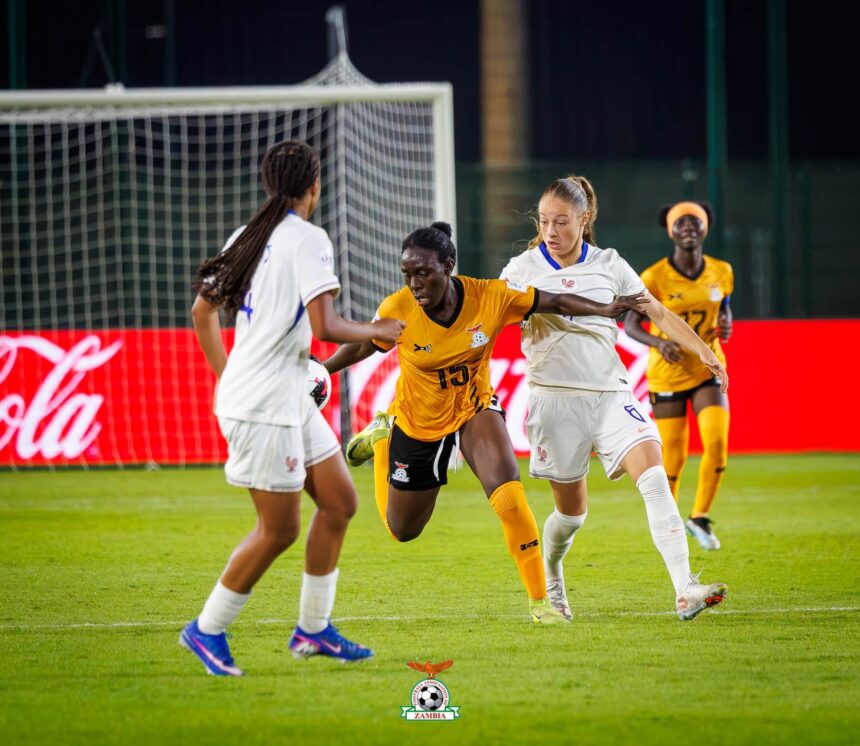
Zambia’s Copper Princesses brought their FIFA U-17 Women’s World Cup campaign to an end after suffering a narrow 1-0 defeat to France in their final Group D match. The result marked a disappointing finish for the young Zambian side, who had hoped to end their tournament journey on a positive note. Despite the loss, the match provided another opportunity for the players to test themselves against strong international opposition and gain valuable experience at one of women’s youth football’s biggest stages. Facing France required concentration, discipline and determination, as every mistake could prove costly in a match where qualification hopes and tournament ambitions were at stake. For Zambia, the final whistle brought the end of their campaign, but the lessons gained from competing at the FIFA U-17 Women’s World Cup could prove important for the future of the national team.
The Copper Princesses entered the decisive Group D encounter knowing that their performance against France would shape the final chapter of their tournament experience. France presented a difficult challenge, bringing the technical ability, tactical organisation and competitive intensity expected from a team competing at the highest level of youth international football. Zambia needed to remain organised at the back while finding opportunities to threaten the French defence. Matches at this level often depend on small details, including defensive positioning, decision-making under pressure and the ability to make the most of scoring opportunities. The narrow margin of defeat reflected a contest in which the final score left Zambia without the result they needed to continue their World Cup journey.
France’s 1-0 victory underlined the importance of efficiency in tournament football. A single goal was enough to separate the two teams, leaving Zambia with little room to recover once the match moved beyond their reach. For the French side, securing the win provided a positive result in their final Group D fixture, while Zambia had to confront the disappointment of an early exit from the competition. Although the scoreline tells the basic story of the match, it does not capture every challenge faced by the players throughout the contest. The physical demands of international football, the pressure of representing a country and the need to make quick decisions all form part of the experience for young athletes competing on the world stage.
For Zambia, the defeat should also be viewed within the broader context of developing women’s football in the country. The Copper Princesses represent an important stage in the national football pathway, giving emerging players the opportunity to develop their skills before potentially progressing to higher levels of competition. International tournaments expose young footballers to different playing styles and help them understand the standards required to compete consistently against established football nations. Experiences against teams such as France can reveal areas that need improvement, from defensive organisation and attacking movement to composure in possession and the execution of chances. These lessons become more valuable when players, coaches and administrators use them to guide training, preparation and future development programmes.
The FIFA U-17 Women’s World Cup also provides a valuable platform for young players to demonstrate their abilities beyond their domestic competitions. Performing at an international tournament can help players build confidence, strengthen their understanding of tactical responsibilities and learn how to manage pressure in important matches. For Zambia’s young footballers, the experience of competing against different opponents can contribute to their long-term growth, even when the final results do not meet expectations. Progress at youth level is rarely measured by a single match or tournament alone, as individual development and the ability to apply lessons over time also matter. The challenge now is to ensure that the experience gained during the competition supports the next stage of each player’s football journey.
The result against France will understandably leave the Copper Princesses disappointed, particularly because their World Cup campaign ended with a defeat by the narrowest possible margin. However, the team can still take important lessons from the demands of competing in Group D and the experience of facing international opposition. Coaches will have opportunities to assess the team’s strengths, identify weaknesses and work on the details that can make a difference in future tournaments. Continued investment in youth development, quality coaching, competitive opportunities and support for women’s football will be important if Zambia hopes to build on the experience of its young players. The defeat also serves as a reminder that reaching the world stage is an achievement, but remaining competitive requires sustained preparation and development.
As the FIFA U-17 Women’s World Cup diary closes on Zambia’s final Group D fixture, the 1-0 loss to France stands as the defining result of the Copper Princesses’ tournament exit. It was a difficult ending for a team that represented Zambia in an international competition designed to showcase the next generation of women’s football talent. Yet the end of a World Cup campaign does not have to mark the end of progress for the players involved. The experience gained in France’s challenge, the pressure of a decisive group match and the demands of international competition can all contribute to future improvement. For the Copper Princesses, the task ahead is to turn disappointment into motivation, carry the lessons forward and continue working towards a stronger return to the international stage.