






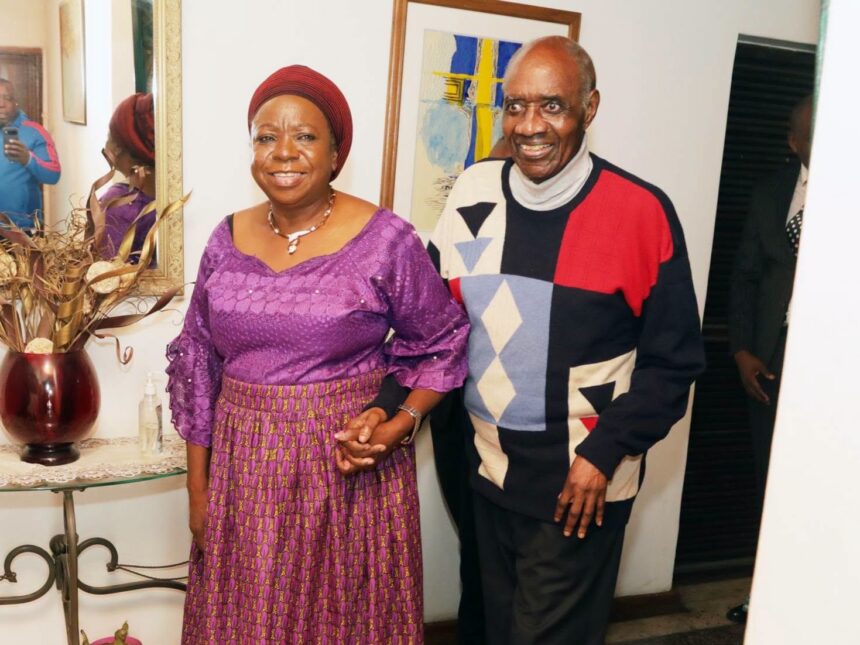
Vice President Dr W.K. Mutale Nalumango has reflected on Zambia’s political history, democratic journey and the importance of peaceful transitions of power following a courtesy visit to veteran statesman and seasoned politician Vernon Johnson Mwaanga. The engagement provided an opportunity for the two political figures to reflect on their shared experiences and the events that have shaped Zambia’s multiparty democracy. Nalumango described the meeting as deeply enriching and nostalgic, particularly as they revisited their years in the Movement for Multiparty Democracy (MMD). Their discussion also focused on the values that continue to shape Zambia’s democratic institutions. The meeting highlighted the enduring importance of political experience, wisdom and dialogue across generations.
Vernon Johnson Mwaanga, widely known as VJ, has played an important role in Zambia’s political history and has built a reputation through decades of political and electoral experience. His understanding of electoral processes has made him a respected voice in discussions surrounding democracy and elections. During the courtesy call, Nalumango reflected on the guidance and political insight she has personally received from the veteran politician over the years. Their conversation allowed them to revisit previous elections and important political moments that they experienced during Zambia’s democratic development. According to Nalumango, Mwaanga has demonstrated a remarkable ability to analyse political trends and understand changes in voter sentiment.
The meeting also served as a reminder of the role experienced political leaders can play in helping future generations understand the country’s political development. Zambia’s multiparty democratic history has been shaped by different political movements, elections, leadership transitions and periods of intense political competition. Having served through various stages of this journey, Mwaanga brings a perspective shaped by extensive experience with electoral politics and national affairs. Nalumango’s reflections suggest that conversations with senior statesmen can provide valuable lessons for leaders navigating the country’s current political environment. Such engagements can also encourage greater appreciation for the institutional foundations that support democratic governance.
A central theme of the discussion was the importance of respecting the will of the people and protecting peaceful transitions of power. Nalumango described Mwaanga as a defender of democracy who has consistently valued peaceful political change. This principle remains particularly important in countries where elections can generate strong political competition and differing public expectations. Respect for election outcomes, democratic institutions and the choices made by citizens forms an important part of maintaining political stability. The discussion therefore extended beyond Zambia’s past and considered the values that should continue guiding its democratic future.
Nalumango also emphasised that their conversation was not simply about revisiting political memories. The two leaders discussed broader principles such as peace, unity, tolerance, respect for citizens and the protection of democratic institutions. These values remain relevant as Zambia continues to strengthen its democratic culture and political institutions. Political differences are a normal part of a multiparty system, but they can be managed through dialogue, respect and commitment to constitutional principles. The meeting therefore offered an opportunity to reflect on how political leaders can contribute to a culture in which disagreements do not undermine national unity.
The Vice President also expressed gratitude for the warm reception and the wisdom shared during the meeting. She said Mwaanga’s encouragement and assurance of continued support for President Hakainde Hichilema and herself were deeply appreciated. The gesture also demonstrated the relationship that can exist between political figures from different generations and backgrounds. While political careers may develop during different periods of Zambia’s history, shared national interests can create lasting bonds. Nalumango described Mwaanga as a brother, friend and valuable repository of Zambia’s political history.
The engagement also carried a personal significance for Nalumango because of the helicopter accident experienced during the 2026 campaign period. She expressed gratitude to God for sparing her life during the incident. It was particularly meaningful for her to learn that Mwaanga had been praying for President Hichilema and Nalumango during that difficult period. The revelation added a personal dimension to an otherwise political and historical conversation. It also underscored the importance of personal relationships, solidarity and support during challenging moments in public life.
The continued relationship between Nalumango and Mwaanga reflects the importance of dialogue between generations of political leaders. Zambia has experienced significant political changes since the introduction of multiparty politics, with different leaders and political movements contributing to the country’s development. Experienced statesmen such as Mwaanga can provide historical context that helps current leaders understand how earlier political decisions shaped the present. At the same time, current leaders have the responsibility of applying those lessons to the challenges facing the country today. Maintaining respectful engagement across generations can therefore strengthen political understanding and encourage continuity in democratic values.
Mwaanga’s contribution to Zambia’s political discourse extends beyond individual elections and political parties. His long involvement in public affairs has given him insight into electoral processes, political trends and the changing expectations of citizens. Nalumango’s account of their conversation highlights the value she places on that experience and the lessons that can be drawn from it. Political knowledge gained over decades can help leaders identify patterns and better understand how voters respond to national issues. Such experience remains valuable in a democratic system where citizens ultimately determine the direction of the country through their participation in elections.
The courtesy visit also highlighted the role of friendship and mutual respect in Zambia’s political environment. Despite differences in age and the different chapters of the country’s political journey that they have experienced, Nalumango said their commitment to Zambia and democracy continues to unite them. This shared commitment provides common ground for political engagement even when individuals have different experiences and perspectives. It also demonstrates that political relationships can develop beyond party structures and electoral contests. For Zambia, such relationships can contribute to a broader culture of dialogue and national cohesion.
Nalumango’s message to Mwaanga was ultimately one of gratitude and appreciation for his contribution to the country. She prayed that God would continue to bless the veteran statesman and grant him many more years of good health and wisdom. Her remarks recognised not only his political experience but also his contribution to Zambia’s broader democratic journey. The courtesy call provided a moment to honour that legacy while reflecting on the responsibilities of leaders today. As Zambia continues its democratic journey, the lessons of experienced statesmen remain relevant in promoting peace, tolerance, respect for citizens and strong democratic institutions.