






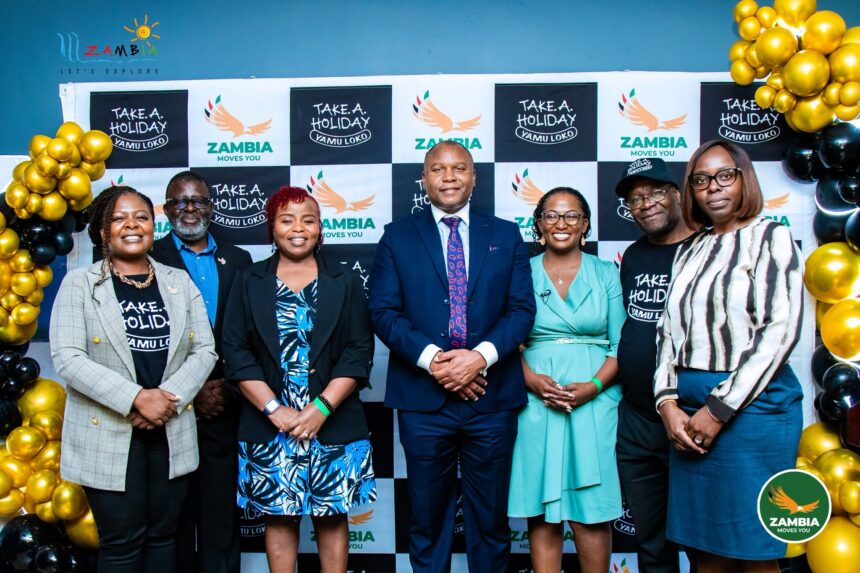
The Zambian Government has reaffirmed its commitment to strengthening domestic tourism as part of a wider strategy to diversify the economy, attract investment and create more employment opportunities. The renewed focus was highlighted at the premiere of the Holiday Yamu Loko television series, where Ministry of Tourism Permanent Secretary Evans Muhanga outlined the importance of increasing awareness of tourism products across all ten provinces. Government wants greater destination visibility to translate into actual travel, tourism spending, business growth and jobs. The strategy places local travellers at the centre of efforts to build a stronger and more inclusive tourism industry. By encouraging Zambians to explore destinations within their own country, authorities hope to expand the economic benefits of tourism beyond traditional tourist areas.
Muhanga said domestic tourism remains a critical part of Zambia’s tourism growth strategy, with the country targeting 20 percent growth in domestic tourism during 2026. The target forms part of broader ambitions that include attracting 2.5 million international tourists in 2026 as Zambia works towards reaching five million international tourist arrivals by 2031. Achieving these targets will require the country to increase awareness of its tourism attractions and develop demand for destinations across all ten provinces. The Permanent Secretary stressed that Zambia must continue expanding the geography and diversity of its tourism economy. This approach could help reduce the concentration of tourism activity in a limited number of established destinations while creating opportunities in communities across the country.
The Government’s focus on awareness is based on the expectation that people are more likely to travel when they know what destinations and experiences are available. Zambia has a wide range of tourism offerings, including wildlife, cultural heritage, landscapes, adventure activities and local experiences. Increasing awareness of these attractions can encourage residents to plan holidays within the country instead of travelling abroad for leisure. It can also help international visitors discover destinations beyond the country’s most widely recognised attractions. A stronger domestic tourism market could provide tourism businesses with a more consistent customer base throughout the year.
Muhanga explained that increased tourism activity can generate spending across several parts of the economy. Travellers spend money on accommodation, transportation, food, entertainment, tours, cultural experiences and other tourism-related services. That spending supports hotels, lodges, restaurants, transport operators, tour companies, activity providers, artisans and other businesses that form part of the tourism value chain. Increased demand can also encourage entrepreneurs to establish new businesses or expand existing operations in areas with tourism potential. Tourism can therefore create economic activity well beyond the attraction that initially brings visitors to a particular destination.
The economic impact of stronger domestic tourism could be particularly important for local communities. When tourists spend money in local economies, businesses have opportunities to increase revenue and sustain employment. Workers in hospitality, transport, food services, entertainment, guiding and other tourism-related sectors can benefit from increased demand. Small businesses and community enterprises can also gain opportunities to supply products and services to visitors. This makes tourism an important contributor to enterprise development, job creation and inclusive economic growth, particularly when tourism opportunities reach communities outside major urban centres.
The Government’s approach also reflects the role tourism can play in Zambia’s broader economic diversification agenda. The country has traditionally relied heavily on sectors such as mining, making diversification an important component of long-term economic development. Tourism provides an opportunity to develop a wider range of economic activities while promoting Zambia’s natural and cultural assets. Stronger tourism demand can support investment in accommodation, transportation, entertainment, infrastructure and other services. Expanding the tourism economy across all ten provinces could therefore help create new sources of income and economic activity in different parts of the country.
The Zambia Tourism Agency is also placing greater emphasis on domestic tourism as part of the national strategy. Speaking on behalf of the agency, Vice Board Chairperson George Kaumba said the Zambia Tourism Agency is prioritising domestic tourism by creating greater awareness of local destinations. The agency is using promotional campaigns to encourage Zambians to discover and experience attractions within their own country. This focus recognises that domestic travellers can play an important role in sustaining tourism businesses and supporting communities. A stronger culture of domestic travel could also help make tourism a more regular part of everyday life for Zambians.
Kaumba said the Take a Holiday Yamu Loko campaign was designed to make domestic tourism an integral part of the Zambian lifestyle. The campaign seeks to encourage people to consider local destinations when planning holidays, weekend trips and other leisure activities. Its focus also extends beyond travellers by supporting businesses and communities across the tourism value chain. Creating a stronger connection between local travellers and tourism businesses could increase demand for services while encouraging businesses to improve their offerings. The campaign therefore forms part of a wider effort to build a sustainable domestic tourism market rather than relying solely on international visitors.
The premiere of the Holiday Yamu Loko television series provides another platform for promoting Zambia’s tourism destinations and experiences. Television and other forms of storytelling can help audiences discover attractions that they may not have previously considered visiting. By presenting tourism through engaging local content, the campaign can make destinations more familiar and encourage people to explore different parts of the country. Greater exposure can also help tourism operators attract new customers and build interest in lesser-known locations. The series therefore supports the broader objective of turning tourism awareness into actual travel and economic activity.
Zambia’s domestic tourism target of 20 percent growth in 2026 will require cooperation between Government, the Zambia Tourism Agency, tourism businesses, communities and travellers. Awareness campaigns can generate interest, but visitors also need accessible destinations, reliable transport, quality accommodation, competitive pricing and engaging tourism experiences. Tourism businesses will need to respond to increased demand by maintaining service standards and developing products that appeal to local travellers. Communities can also play a role by preserving cultural and natural attractions while participating in tourism-related enterprises. A coordinated approach will be essential if Zambia wants domestic tourism growth to produce lasting economic benefits.
The international tourism targets add another important dimension to the strategy. Zambia aims to attract 2.5 million international visitors in 2026 and ultimately reach five million international tourist arrivals by 2031. Achieving those numbers will require continued investment in destination marketing, tourism infrastructure, accessibility and product development. At the same time, a strong domestic tourism market can provide stability for businesses while Zambia works to expand its international visitor base. Developing both markets could help create a more resilient tourism industry capable of supporting businesses and jobs throughout the year.
Government’s renewed emphasis on domestic tourism signals a broader attempt to ensure that Zambia’s tourism economy benefits all ten provinces. Increasing awareness of local attractions is only the first step, as the ultimate goal is to convert that awareness into travel, spending, investment and employment. The Holiday Yamu Loko campaign and television series provide platforms for encouraging Zambians to explore their own country while supporting businesses and communities. With a 20 percent domestic tourism growth target for 2026 and ambitions to reach five million international arrivals by 2031, Zambia is positioning tourism as an increasingly important part of its economic diversification strategy. If these efforts are matched by investment, strong tourism services and wider participation across communities, the sector could make a significant contribution to enterprise development, job creation and inclusive economic growth.