






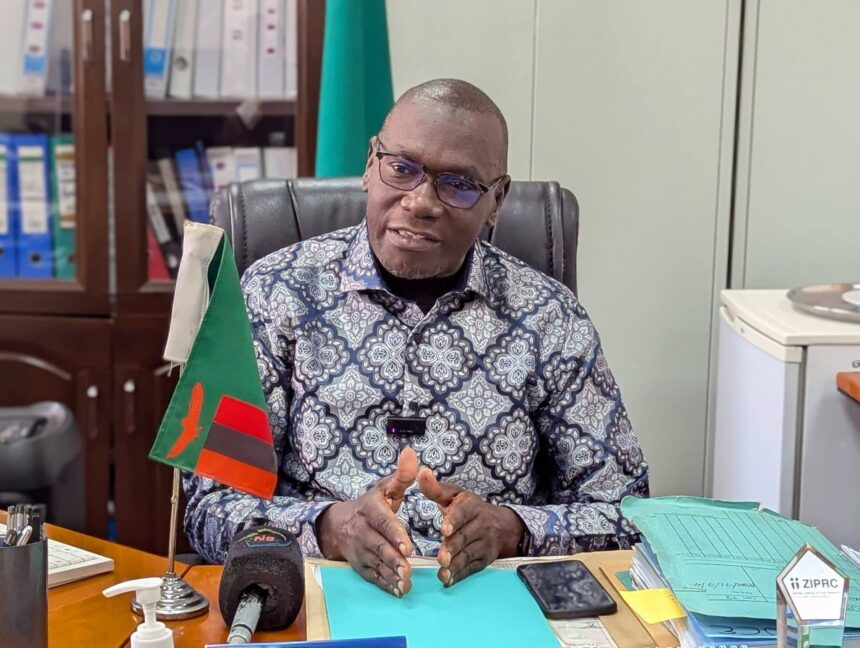
The Government of Zambia has reported significant progress in its Social Cash Transfer programme following a briefing by Information and Media Permanent Secretary Mr. Thabo Kawana. The update was delivered to members of the press and focused on improvements in social protection delivery and broader fiscal management reforms. The announcement highlighted how recent policy decisions have strengthened the country’s ability to support vulnerable citizens. It also pointed to improved coordination across key social sectors, including education, health, and welfare services. The briefing presented a picture of expanding state capacity supported by disciplined economic management.
A key highlight from the update was the sharp increase in the number of Social Cash Transfer beneficiaries. The programme has grown from 616,468 beneficiaries in 2021 to 1,555,840 currently, showing a major expansion in coverage. This increase was attributed to improved utilisation of public resources and the implementation of debt restructuring measures. Government officials explained that the expansion reflects a stronger focus on reaching vulnerable households across all ten provinces. The scale-up has been positioned as part of a broader effort to reduce poverty and improve living standards. It also demonstrates how targeted social spending has become a central pillar of national development planning.
Mr. Kawana further explained that debt restructuring has played a critical role in creating fiscal space for social investment. The reforms have enabled Government to increase spending on essential services while maintaining economic stability. This fiscal headroom has allowed for sustained investment in social protection programmes as well as education and health services. Authorities stressed that these interventions are the result of deliberate policy decisions aimed at prioritising citizens most in need. The Government also linked these measures to broader development objectives that focus on inclusive growth and long-term poverty reduction. Across the country, these efforts are being implemented with an emphasis on efficiency and accountability in public spending.
The briefing also highlighted improvements in the country’s macroeconomic position, including foreign reserves reaching 6.5 billion United States dollars. Mr. Kawana attributed this achievement to prudent financial management and disciplined control of public expenditure. He noted that without the debt restructuring programme, as much as 90 percent of the national budget would have been directed toward debt servicing obligations. Such a scenario would have significantly constrained spending on infrastructure development, job creation initiatives, and essential public services. The current fiscal position has therefore been described as a turning point in stabilising the economy and redirecting resources toward development priorities. This shift has strengthened Government capacity to respond to social and economic needs.
Government has reaffirmed its commitment to safeguarding these gains and ensuring that fiscal consolidation continues to benefit ordinary citizens. The focus remains on sustaining social protection programmes while expanding access to essential services across the country. Authorities have emphasised that continued discipline in public finance management will be key to maintaining these improvements. The progress recorded in both social spending and foreign reserves is being presented as evidence of effective policy implementation. Going forward, the Government aims to build on these foundations to accelerate inclusive development and reduce inequality. The overall message from the briefing is that strategic reforms are beginning to translate into measurable benefits for citizens nationwide.