







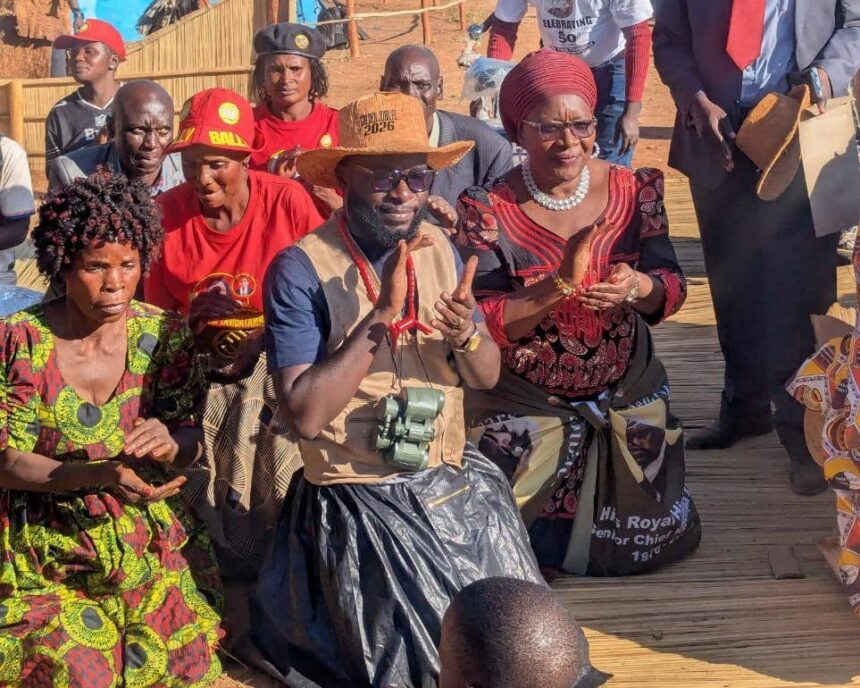
The Zambian government has renewed its call for the preservation of traditional ceremonies, highlighting their importance in safeguarding the country’s cultural identity and national pride. North-Western Province Deputy Permanent Secretary Luckson Mulumbi emphasized this message during the Juba Ja Nsomo golden jubilee ceremony of Senior Chief Kasempa of the Kaonde people. The event brought together traditional leaders, government officials and local communities in a celebration of culture and heritage. It also reflected on the long history of the chiefdom and its role in shaping community life. The occasion served as a reminder that cultural traditions remain central to Zambia’s identity in an evolving modern society.
Mulumbi stressed that the preservation and promotion of culture is essential for maintaining Zambia’s identity and pride. He noted that traditional ceremonies are not just symbolic events but living expressions of history, values and community belonging. According to him, every citizen has a responsibility to ensure that cultural heritage is protected and passed on. He encouraged communities to take an active role in safeguarding customs that define who they are as a people. His remarks reinforced the idea that culture is a shared national asset that must be preserved with care and consistency.
A key focus of the message was the role of young people in learning and carrying forward traditional customs. Mulumbi underscored that it is everyone’s responsibility to teach the younger generation about the beauty and significance of cultural practices. He highlighted that Zambia’s strength lies in its diversity and that unity can be achieved through understanding different traditions. He reminded citizens of the national principle of One Zambia One Nation, which promotes harmony among different ethnic groups. By learning about each other’s cultures, communities can reduce division and strengthen national cohesion. This approach, he noted, builds respect and peaceful coexistence across the country.
Traditional ceremonies were also described as important platforms for promoting unity in diversity and preserving skills that are at risk of being lost. Cultural practices such as artisanal crafts, songs and rituals were highlighted as essential elements that must be transmitted to future generations. The government official emphasized that continuous teaching and participation will ensure that these traditions remain relevant in the modern world. He further commended Senior Chief Kasempa for his leadership and his contribution to social and economic development over his 50 years on the throne. The golden jubilee celebration was seen as a reflection of stability, continuity and community progress under his leadership. It also showcased how traditional leadership can support development alongside cultural preservation.
The event concluded with a strong message about the need to keep cultural heritage alive through active participation and education. Leaders and communities were reminded that without deliberate effort, important traditions risk being weakened or forgotten over time. The celebration of the Juba Ja Nsomo golden jubilee served as both a reflection on the past and a call to protect cultural identity for the future. It highlighted the role of traditional ceremonies in strengthening unity, identity and national pride in Zambia. The overall message reinforced that cultural preservation is not optional but essential for sustaining the country’s shared heritage for generations to come.