






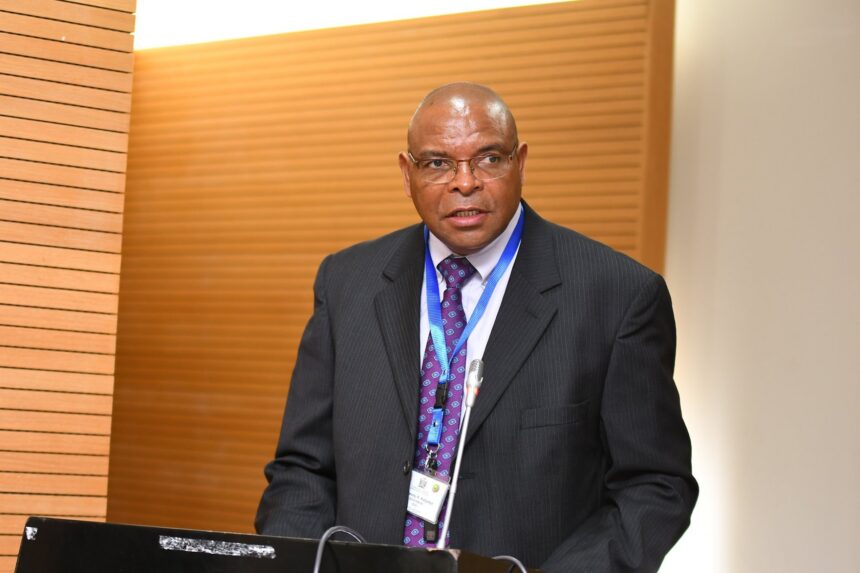
Bank of Zambia Governor Dr Denny Kalyalya has provided clarity on the country’s exchange rate outlook, stating that it is difficult to predict whether the Kwacha will continue to appreciate because the Central Bank does not forecast currency movements. His remarks were made during the Monetary Policy Rate briefing held on Wednesday, where he addressed key economic questions affecting inflation, trade and currency stability. Dr Kalyalya explained that the Bank of Zambia’s mandate is not to target or predict exchange rate levels, but to maintain overall macroeconomic stability through monetary policy tools. He emphasized that exchange rates are influenced by a wide range of external and internal factors, making precise forecasting unreliable. His comments come at a time when businesses and citizens are closely monitoring the Kwacha’s performance against major global currencies.
Dr Kalyalya stressed that the Central Bank’s focus remains on creating conditions that support economic stability rather than controlling the exchange rate directly. He noted that the exchange rate responds to market forces such as demand for foreign currency, export earnings, import levels and global economic conditions. According to him, the Bank of Zambia does not set a target for where the Kwacha should trade, but instead monitors inflation and financial stability as core objectives. He clarified that any short term movement in the currency should not be interpreted as a fixed policy direction. This approach reflects a broader economic strategy that prioritizes flexibility and responsiveness over rigid exchange rate control.
A key point raised by the Governor was the importance of strengthening non traditional exports as a way to improve foreign exchange inflows. He specifically mentioned products such as avocados, chilli and beef as examples of commodities that can help diversify Zambia’s export base. By expanding production and export capacity in these sectors, the country can increase the amount of foreign currency entering the economy. This, in turn, can help stabilize the Kwacha by improving supply in the foreign exchange market. Dr Kalyalya highlighted that relying heavily on a narrow range of exports exposes the economy to external shocks, especially fluctuations in global commodity prices. Diversification is therefore seen as a practical strategy for long term currency resilience.
The Governor also announced that government will introduce an Import Tracking Framework aimed at improving transparency and data collection on goods entering the country. This system will provide detailed information on the volume and nature of imports, helping policymakers better understand trade flows. According to Dr Kalyalya, accurate import data is essential for shaping effective economic policy and managing foreign exchange demand. The framework is expected to support better planning by identifying sectors with high import dependency and areas where local production could be strengthened. Improved data collection is also expected to enhance fiscal planning and support efforts to reduce unnecessary import pressure on the Kwacha.
During the Monetary Policy Rate briefing, Dr Kalyalya reiterated that the Central Bank does not use exchange rate forecasting as a policy anchor. He stated clearly that the institution’s role is not to predict where the currency will move, but to ensure that inflation remains within manageable levels. This distinction is important for managing public expectations around currency movements and economic policy decisions. He emphasized that economic stability depends on a combination of sound fiscal management, export growth and efficient import control. By focusing on these areas, the Bank of Zambia aims to support a more balanced and resilient economy.
In his broader message, Dr Kalyalya underscored the need for structural changes that can strengthen Zambia’s foreign exchange position over time. He pointed to export diversification and improved trade monitoring as key pillars of this strategy. The introduction of the Import Tracking Framework is expected to complement ongoing efforts to enhance economic transparency and accountability. As Zambia continues to navigate global economic pressures, these measures are intended to support long term currency stability and growth. The Governor’s remarks highlight a policy direction centered on productivity, data driven decision making and economic resilience as essential tools for managing the Kwacha and supporting national development.