







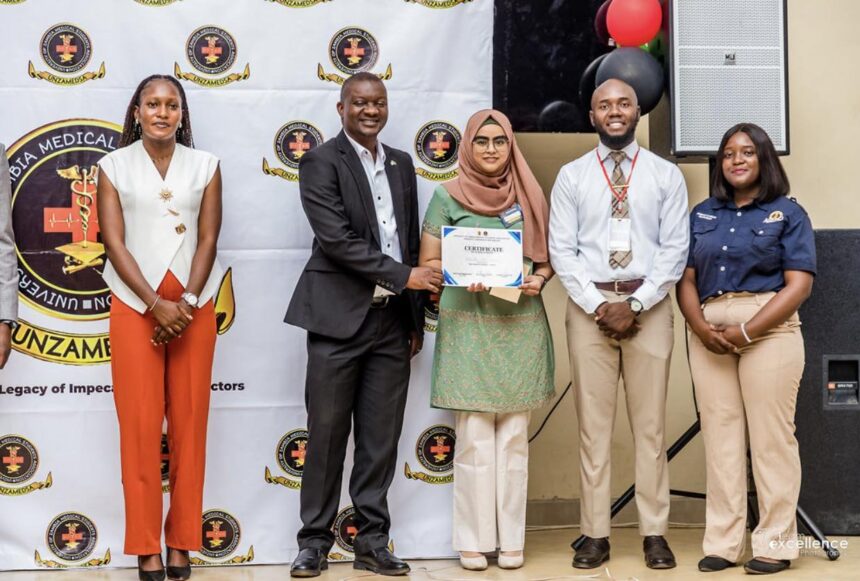
The Ministry of Health has reaffirmed its commitment to building a stronger research-driven healthcare system in Zambia during the University of Zambia Medical Students Association Scientific Conference and Annual General Meeting held in Lusaka. The event brought together medical students, lecturers, researchers and healthcare stakeholders to discuss the future of healthcare innovation and medical education in Africa. Held under the theme “Priming a resilient and adaptable African medical student: bridging research, leadership, and clinical excellence,” the conference focused on the role of research in improving healthcare delivery and strengthening health systems. Government representatives used the platform to encourage a shift toward practical, impact focused medical research that directly benefits communities. The gathering also highlighted the growing importance of collaboration between academia, healthcare institutions and policymakers in shaping the future of Zambia’s healthcare sector.
Minister of Health Alex Katakwe, represented by National Health Research Authority Chief Executive Officer Victor Chalwe, addressed participants during the conference and stressed the importance of turning research into practical healthcare solutions. He acknowledged that Zambia continues to produce valuable medical research through universities, hospitals and student initiatives. However, he noted that many research findings often remain limited to conference presentations and academic publications without being fully implemented within the healthcare system. The government emphasized that this gap between research and implementation must be addressed to improve patient care and strengthen national health outcomes. Officials stated that Zambia’s healthcare future depends not only on producing knowledge but also on applying that knowledge effectively within communities and medical institutions.
The Ministry of Health outlined its broader vision of moving from what it described as “research for knowledge” to “research for impact.” This approach places greater emphasis on ensuring that evidence based findings influence national health policy, improve clinical practice and support decision making across the healthcare sector. According to the government, this direction aligns with priorities contained in the National Health Strategic Plan, which promotes innovation, implementation science and stronger healthcare systems. Authorities believe that practical research can play a major role in solving persistent health challenges while improving efficiency within public healthcare services. The message delivered during the conference reinforced the idea that healthcare research must produce measurable improvements in people’s lives rather than remaining confined to academic spaces.
Medical students and lecturers attending the event were encouraged to see research as a tool for solving real world health problems affecting local communities. Government representatives challenged young researchers to focus on practical projects capable of improving patient outcomes and addressing barriers to healthcare delivery. Students were also urged to develop scalable solutions that can be implemented within communities and health facilities across Zambia. The conference highlighted the importance of preparing future medical professionals who are not only clinically skilled but also innovative and solution driven. Officials stressed that Africa’s healthcare challenges require adaptable medical practitioners who can combine research, leadership and clinical excellence to strengthen healthcare systems on the continent.
Innovation and technology also formed a major part of discussions during the conference. The Ministry of Health emphasized the need for greater adoption of digital health technologies and interdisciplinary collaboration to modernize healthcare delivery. Government officials highlighted the growing role of student led innovations and partnerships between universities, healthcare providers and industry stakeholders. Such collaborations are expected to help improve access to healthcare services, strengthen disease monitoring systems and support evidence based treatment approaches. Authorities also reaffirmed their commitment to supporting innovation through policy development, strategic partnerships and improved collaboration between research institutions and healthcare systems. These efforts are intended to create an environment where innovative ideas can move from research stages into practical implementation.
The conference concluded with a strong call for collective action among students, lecturers, researchers and cooperating partners to strengthen healthcare research and implementation in Zambia. Government representatives emphasized that the true value of research should be measured by the positive impact it creates within communities and healthcare institutions. The Ministry of Health reiterated its dedication to supporting initiatives that improve patient care and strengthen national health systems through research and innovation. The event also reinforced the importance of empowering young medical professionals to become leaders in healthcare transformation. As Zambia continues to invest in healthcare reform and innovation, the focus on research driven solutions is expected to play an increasingly important role in improving lives and building a more resilient healthcare system.