







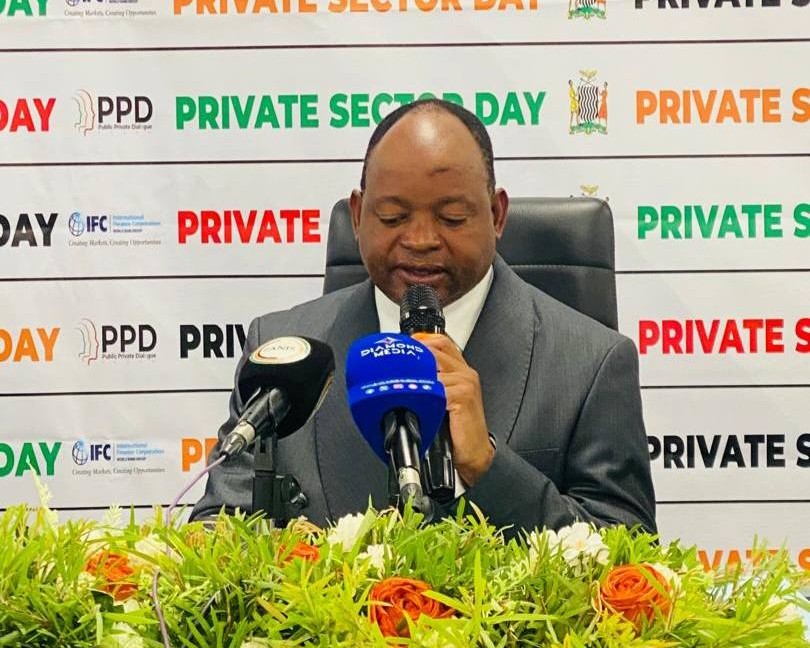
Zambia has intensified its focus on private sector-led economic growth as Minister of Information and Media and Chief Government Spokesperson Hon. Cornelius Mweetwa officiated at a media engagement under the Public-Private Dialogue Forum ahead of the 2026 Mid-Year Private Sector Day scheduled for June. The event is anchored on the theme “Driving Jobs and Shared Prosperity: Private Sector Steering Development and Growth,” which reflects the country’s renewed commitment to inclusive economic transformation. The engagement brought together key stakeholders from government, business, and the media to discuss progress on reforms and strengthen collaboration in driving national development. Hon. Mweetwa used the platform to emphasize that Zambia’s economic future depends on strong partnerships between the public and private sectors. He also underscored the importance of communication in ensuring that citizens understand ongoing policy changes. The meeting set the tone for deeper engagement ahead of one of the country’s key economic dialogue events.
Hon. Mweetwa reaffirmed Government’s commitment to placing the private sector at the center of Zambia’s economic transformation agenda. He stated that the private sector remains the backbone of economic growth, innovation, industrialization, and employment creation. According to him, sustainable national development cannot be achieved by Government alone but requires strong collaboration with businesses, the media, and citizens. He emphasized that Government has deliberately created an environment that allows private enterprises to thrive, expand, and contribute meaningfully to national development. The Minister added that policy direction is now focused on enabling growth rather than controlling it. He highlighted that this shift is designed to unlock investment potential and improve economic competitiveness.
The Minister called on the media to play a more active role in helping citizens understand the impact of ongoing reforms. He stressed that journalists and media institutions are essential in bridging the gap between Government policies and public understanding. Hon. Mweetwa noted that many reforms are already driving jobs, attracting investment, and promoting shared prosperity, but require clearer communication to the public. He urged the media to move beyond basic reporting and instead develop compelling narratives that explain how policy changes affect everyday lives. He further stated that informed citizens are better positioned to take advantage of economic opportunities created through reforms. The media, he said, remains a cornerstone of national dialogue and development communication.
During the engagement, Hon. Mweetwa highlighted a series of reforms and policy interventions that Government has implemented to support economic growth and private sector participation. Among these are visa waiver reforms that have significantly increased tourist arrivals and boosted the tourism sector. He also pointed to streamlined investment licensing procedures aimed at reducing bureaucratic delays and improving the ease of doing business. The Minister further cited landmark energy sector reforms that have opened electricity generation and transmission to private sector participation. He explained that these reforms are part of a broader strategy to modernize key sectors of the economy. According to him, these interventions are already delivering measurable economic benefits.
Hon. Mweetwa further noted that Government’s open access policy in the energy sector has created significant opportunities for independent power producers and power purchasers. He explained that this policy has helped address electricity supply challenges caused by drought-induced power shortages. By allowing private sector participation in electricity generation, Government has expanded capacity and improved energy security. He stated that these reforms are critical in supporting industrial growth and stabilizing production costs across sectors. The Minister emphasized that energy remains a key driver of economic transformation. He also noted that continued investment in this sector will be essential for long-term economic stability.
In the mining sector, Hon. Mweetwa highlighted that reforms introduced since 2021 have attracted billions of dollars in investment. He stated that this growth demonstrates increasing investor confidence in Zambia’s economic policies and governance framework. The Minister explained that the mining sector continues to play a vital role in foreign exchange earnings, job creation, and infrastructure development. He added that policy consistency and transparency have been key factors in attracting long-term investment. According to him, the sector’s performance reflects the success of Government’s reform agenda. He encouraged continued collaboration between Government and mining stakeholders to sustain growth momentum.
The Minister also urged the private sector to actively participate in apprenticeship programmes and work-based learning initiatives. He explained that these programmes are essential in bridging skills gaps and improving employability among young people. Hon. Mweetwa emphasized that youth empowerment remains a national priority and requires active participation from both employers and training institutions. He stated that equipping young people with practical skills will help drive productivity and innovation across industries. The Minister further encouraged businesses to invest in human capital development as part of their corporate responsibility. He noted that a skilled workforce is critical for sustaining economic growth.
In addition, Hon. Mweetwa challenged the private sector to increase investment in hospitality and conferencing infrastructure. He noted that Zambia’s growing profile as a host of international conferences presents significant business opportunities. While acknowledging concerns about Government dominance in conference hosting facilities, he stated that this situation also creates space for private investors. He encouraged the development of world-class infrastructure capable of competing with existing public facilities. According to him, such investments would enhance Zambia’s competitiveness as a regional conferencing hub. He also highlighted the potential for job creation and tourism growth in this sector.
The Minister described the media as a critical bridge between Government, the private sector, and citizens. He called on journalists to take a more proactive role in educating the public about key policy changes across sectors such as tourism, mining, energy, and investment promotion. Hon. Mweetwa emphasized the need for increased public awareness on reforms related to investment licensing, energy liberalisation, net metering, and private participation in electricity generation. He stated that informed reporting helps citizens and businesses fully understand available opportunities. The Minister also proposed that the Public-Private Dialogue Forum consider introducing awards for journalists who effectively report on economic reforms. He said this would encourage high-quality reporting that supports national development goals.
Hon. Mweetwa further reaffirmed Government’s support for the creative industry, describing it as an important pillar of national economic renewal. He stated that the sector has strong potential to create jobs, generate income, and promote cultural identity. The Minister emphasized that Government is committed to supporting creative enterprises through enabling policies and partnerships. He encouraged financial institutions and cooperating partners to support the upcoming Mid-Year Private Sector Day. According to him, broader participation in such platforms will strengthen Zambia’s economic transformation agenda. He added that shared responsibility among all stakeholders is essential for achieving sustainable development.
The Public-Private Dialogue Forum engagement reflects Zambia’s ongoing efforts to build a more inclusive and collaborative economic model. By strengthening partnerships between Government, business, and the media, the country aims to accelerate job creation and improve living standards. The focus on reforms across key sectors demonstrates a clear commitment to unlocking investment potential and enhancing competitiveness. As Zambia prepares for the 2026 Mid-Year Private Sector Day, expectations are high that continued dialogue will translate into practical solutions for economic growth. The Government’s emphasis on communication, reform implementation, and private sector empowerment signals a structured approach to national development.