

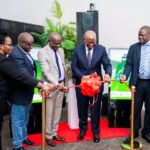






President Hakainde Hichilema has officially commissioned the Hakainde Hichilema Mini Hospital in Mongu District, Western Province, marking a significant milestone in efforts to expand healthcare services in Zambia. The new facility is expected to improve access to medical care for communities that have long faced challenges related to distance and limited health infrastructure. The hospital was constructed using resources from the First Family as a gesture of goodwill aimed at supporting local development. After its completion, the facility was formally handed over to the Ministry of Health for operation as a public health institution. The commissioning reflects a broader national focus on strengthening healthcare delivery across underserved regions.
During the commissioning ceremony, President Hakainde Hichilema emphasized the importance of ensuring that the facility operates efficiently and meets the needs of the surrounding population. He directed the Ministry of Health to assess the hospital thoroughly and address any additional requirements that may be necessary for smooth operations. His remarks highlighted the need for functional healthcare systems that go beyond infrastructure to include staffing, equipment, and reliable service delivery. The President stressed that health facilities must be fully prepared to serve patients with dignity and consistency. His directive also reinforced government accountability in ensuring that new facilities are not only built but fully operational.
The hospital handover to the Ministry of Health places responsibility on the government to integrate the facility into the public healthcare system. This step ensures that the hospital will be managed under national health standards and supported through existing administrative structures. The Ministry is expected to oversee staffing, medical supplies, and operational readiness to guarantee quality care for patients. The integration also allows the facility to benefit from national health programs and funding frameworks. This approach strengthens coordination within the health sector and improves service delivery at community level.
Minister of Health Dr. Alex Katakwe expressed appreciation for the President’s continued investment in the health sector. He acknowledged the importance of such initiatives in improving healthcare access across the country. Dr. Katakwe noted that the government has also been using the Constituency Development Fund to construct maternity annexes and additional health facilities nationwide. These projects are designed to reduce pressure on existing hospitals while expanding access to essential services. His remarks highlighted the growing role of decentralized funding in addressing local health needs.
Dr. Katakwe further explained that these combined efforts are already making a measurable difference in underserved communities. The expansion of health infrastructure is helping to reduce travel distances for patients seeking care. It is also improving maternal health services, which remain a key priority in national health planning. By strengthening facilities at community level, the government aims to reduce overcrowding in major hospitals. These developments are part of a wider strategy to build a more responsive and inclusive health system.
The commissioning of the Mongu Mini Hospital also reflects broader national efforts to improve healthcare equity across regions. Western Province has historically faced gaps in access to specialized medical services due to its geographic size and population distribution. The introduction of new facilities in such areas helps bridge these gaps and ensures more consistent access to care. It also supports early diagnosis and treatment, which can improve health outcomes significantly. The government continues to prioritize infrastructure development as a foundation for better health service delivery.
Community impact is expected to be significant as the hospital begins full operations under the Ministry of Health. Residents in Mongu and surrounding areas will benefit from closer access to medical services, reducing the need for long-distance travel to larger health centers. This is particularly important for emergency cases, maternal care, and child health services. Improved access is also expected to ease pressure on existing regional hospitals. Over time, the facility is likely to contribute to improved public health indicators in the district.
The role of partnerships in healthcare development was also highlighted through the construction of the facility using First Family resources. This contribution reflects a collaborative approach to national development where both public leadership and private goodwill play a role. It demonstrates how targeted investments can support government efforts in expanding essential services. The handover to the Ministry of Health ensures that the facility is fully integrated into the public system for long term sustainability. This model supports continuity and structured service delivery.
The commissioning of the Hakainde Hichilema Mini Hospital in Mongu represents a meaningful step in Zambia’s ongoing efforts to strengthen healthcare infrastructure. It combines leadership commitment, community-focused investment, and government coordination to address critical service gaps. With the Ministry of Health now tasked to operationalize the facility fully, expectations are high for improved healthcare access in Western Province. The initiative also reinforces the importance of expanding health services to underserved areas across the country. As the facility begins serving the public, it stands as a key addition to Zambia’s growing network of healthcare institutions aimed at improving quality of life for all citizens.