


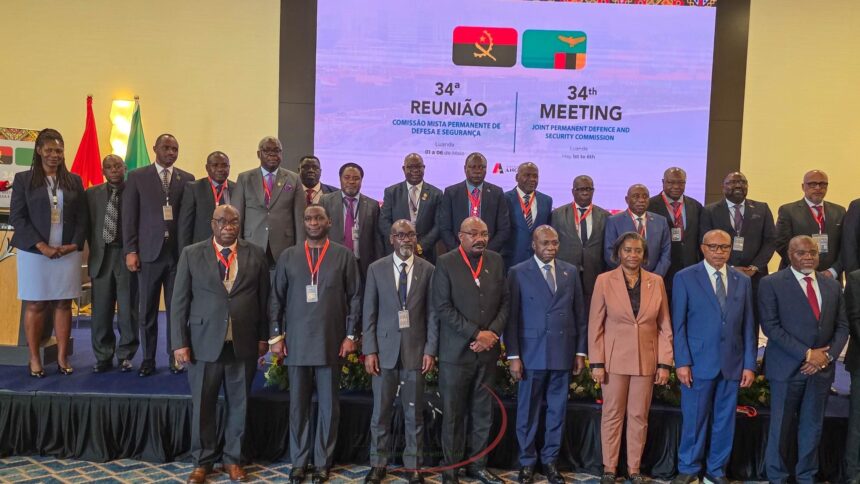
The Republic of Angola and the Republic of Zambia have reinforced their long standing partnership through the successful hosting of the 34th Session of the Joint Permanent Commission on Defence and Security held in Luanda from 1 to 6 May 2026. The meeting took place in an atmosphere defined by trust, cooperation, and shared purpose, reflecting the deep historical ties between the two neighbouring nations. This high level engagement marks a new phase in bilateral relations, with both countries seeking to strengthen coordination in defence, security, and regional stability. The session also highlighted the importance of structured dialogue in addressing evolving threats that affect both nations and the wider Southern African region. By bringing together senior officials and experts, the commission created a platform for practical solutions and long term collaboration.
The Angolan delegation was led by General Lúcio Gonçalves Amaral, Minister of National Defence, Former Combatants and Veterans of the Homeland, supported by senior officials responsible for defence, interior, and state security. Zambia’s delegation was headed by Minister of Defence Ambrose Lwiji Lufuma and included Ambassador Dr. Elias Munshya along with other senior government representatives. Both sides expressed appreciation to João Lourenço and Hakainde Hichilema for their leadership and commitment to advancing bilateral cooperation. Their support has played a key role in sustaining regular engagements under the commission. The meeting also reflected alignment at the highest political level, which continues to guide cooperation between the two countries. Strong leadership backing has ensured continuity and progress in joint initiatives.
Zambia used the platform to congratulate Angola on its 50th anniversary of independence celebrated in 2025, recognizing the country’s role in promoting peace and stability across Africa. Angola’s recent leadership roles in regional and continental organizations were acknowledged as evidence of its growing influence. In return, Angola extended goodwill to Zambia ahead of its general elections scheduled for August 2026, emphasizing the importance of democratic processes in strengthening regional stability. These exchanges reinforced mutual respect and highlighted shared values between the two nations. Both delegations recognized that political stability is a foundation for effective security cooperation. This mutual support continues to strengthen diplomatic ties.
The commission reaffirmed its role as a critical platform for addressing defence and security challenges, especially along the shared border between Angola and Zambia. Delegates reviewed progress made since the 33rd session held in Chilanga in 2022 and noted continued cooperation between security institutions in both countries. The overall assessment showed that the political and security environment along the border remains stable and peaceful. This stability has allowed both nations to focus on long term planning and coordination. Regular engagement through the commission has improved communication and reduced the risk of misunderstandings. It has also strengthened joint responses to emerging challenges.
Despite the stable environment, both countries acknowledged the ongoing threat of cross border and transnational crime. Issues such as illegal migration, smuggling, livestock theft, poaching, illegal fishing, drug trafficking, and the movement of small arms remain areas of concern. The commission also highlighted newer threats including cybercrime and the impact of climate related disasters. These challenges require coordinated action and shared intelligence to manage effectively. Both nations committed to strengthening joint operations and improving information sharing. Addressing these risks is essential for maintaining security and protecting economic activities in border regions.
A significant development from the session was the upgrading of the Joint Permanent Commission on Defence and Security into a Bi National Commission. This change elevates the level of cooperation and creates a more structured framework for addressing bilateral issues. Efforts are already underway to develop updated terms of reference that will guide the new structure and its sub committees. This transition reflects a strategic decision to deepen collaboration across multiple sectors. It also signals a long term commitment to institutionalizing cooperation between Angola and Zambia. The new structure is expected to improve efficiency and accountability in joint initiatives.
The commission also agreed to expand cooperation in training and capacity building for defence and security personnel. This includes joint military and police training programs, academic exchanges, and the sharing of technical expertise. Strengthening human capacity is seen as a key factor in improving operational effectiveness. Both countries aim to build a skilled workforce capable of responding to complex security challenges. Enhanced collaboration at regional and provincial levels will further support timely responses to emerging issues. These measures will improve coordination on the ground and strengthen overall security systems.
Border management remained a priority area, with both countries agreeing to establish a Joint Technical Verification Group to advance the demarcation process. This initiative will be guided by experts from both sides and follow a structured roadmap. Clear and well defined borders are essential for reducing disputes and improving cooperation. In addition, both countries reaffirmed their commitment to improving customs and migration systems. This includes fully implementing existing agreements and promoting the smooth movement of people and goods. Efficient border management supports both security and economic growth.
Environmental protection and community engagement also formed part of the discussions. Both nations committed to combating poaching, illegal logging, and the trafficking of protected species through joint efforts and awareness campaigns. Engaging border communities is seen as critical in preventing illegal activities and building trust. The commission emphasized the need for clear communication to avoid misunderstandings related to security operations near the border. These efforts aim to create a cooperative environment where communities play an active role in maintaining stability. Protecting natural resources remains a shared responsibility.
At the regional level, Angola and Zambia reaffirmed their commitment to peacekeeping and security initiatives across Africa. Both countries continue to contribute personnel to missions under the United Nations, the Southern African Development Community, and the African Union. The commission also welcomed progress in peace efforts in the eastern Democratic Republic of Congo, including agreements reached in 2025. These developments reflect a broader commitment to African led solutions for African challenges. Participation in regional initiatives strengthens both countries’ roles in promoting stability. It also enhances their capacity to respond to continental security issues.
The 34th Session of the Joint Permanent Commission on Defence and Security concluded in a spirit of cooperation and shared vision. The discussions reinforced the strong historical and cultural ties between Angola and Zambia while setting clear priorities for future collaboration. The decisions taken during the session are expected to improve coordination, enhance security, and support sustainable development in both countries. By addressing both traditional and emerging threats, the two nations have demonstrated a proactive approach to regional stability. The continued evolution of their partnership reflects a commitment to peace, security, and mutual progress.