







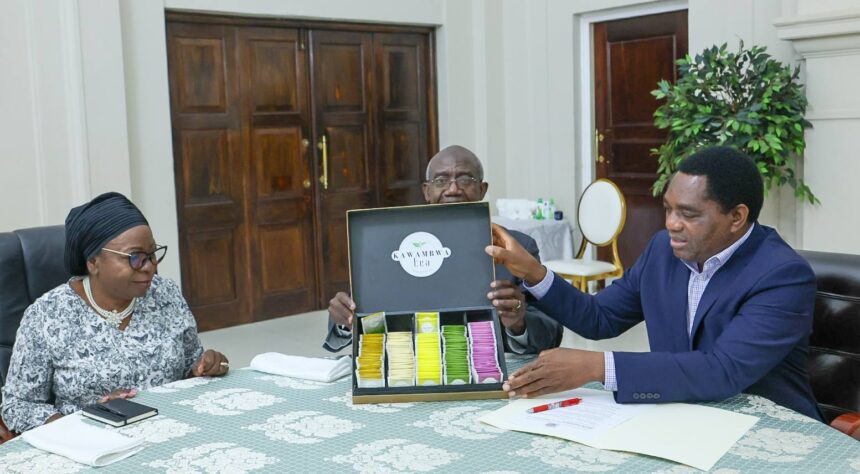
Zambia is placing stronger focus on faster decision-making and practical delivery in key economic sectors, following a recent high-level coffee catch-up involving selected ministries. The meeting brought together senior government officials to accelerate progress on major infrastructure projects within the energy and mining sectors. The discussion highlighted a leadership approach that values speed, efficiency and direct engagement over prolonged administrative delays. It also reinforced the government’s intention to remove barriers that slow down national development projects. The tone of the engagement reflected urgency in turning plans into action while maintaining coordination across ministries.
A key outcome of the meeting was a renewed commitment to reduce bureaucratic delays that often affect infrastructure development. Government leadership emphasized that formal processes should not become obstacles when clear decisions are needed to move projects forward. The discussion pointed to the importance of flexibility in governance, especially in sectors like energy and mining where investment timelines and operational demands are critical. Officials explored practical ways to ensure that approvals, coordination and implementation happen faster without compromising accountability. The approach signals a shift toward more responsive governance that prioritizes delivery on the ground.
Another important development during the engagement was the presentation of a newly packaged assortment of Kawambwa tea by the Secretary to the Cabinet. The product was introduced as part of broader efforts to strengthen local production and promote homegrown industries. Kawambwa tea represents agricultural value creation within Zambia and is positioned as a product that can support rural livelihoods and job creation. The presentation created space for discussion on how government procurement can directly influence local industry growth. It also highlighted how small policy decisions in state institutions can have a wider economic impact.
Following the presentation, government leadership directed that public offices and parastatals should begin procuring Kawambwa tea as part of their procurement systems. This guidance is intended to strengthen demand for locally produced goods and encourage domestic industrial expansion. By prioritizing local products within government supply chains, the initiative is expected to support farmers, processors and distributors connected to the tea value chain. The move also reflects a broader strategy to keep economic benefits within the country while reducing dependence on imports. It demonstrates how procurement policy can be used as a tool for economic empowerment.
The coffee catch-up format itself reflects a leadership style focused on informal but purposeful engagement. Instead of lengthy formal meetings, the discussion allowed for quicker alignment on national priorities and immediate decision-making. This method was used to ensure that critical issues in energy and mining receive focused attention from relevant ministries. It also created space for direct communication between leadership and technical officials responsible for implementation. The approach aims to improve efficiency in government coordination while maintaining clear direction on national objectives.
President Hakainde Hichilema emphasized the government’s commitment to delivering tangible results for citizens through such engagements. The focus remains on ensuring that infrastructure projects in key sectors move forward without unnecessary delays. Energy and mining were identified as central pillars of economic growth and job creation, making their efficient development a priority. The meeting also reinforced the importance of aligning government operations with national development goals. Leadership underscored that progress must be visible in improved services, stronger industries and expanded employment opportunities.
The decision to promote Kawambwa tea through government procurement also ties into a wider economic strategy centered on supporting local production. By integrating local products into state supply chains, the government aims to stimulate demand and encourage scaling of domestic enterprises. This approach can help small and medium producers gain stable markets and improve long-term sustainability. It also strengthens the link between public spending and local economic growth. Over time, such policies can contribute to a more resilient and self-sustaining economy.
The coffee catch-up between government leaders and selected ministries reflects a practical approach to accelerating national development priorities. The meeting focused on reducing bureaucratic delays, improving coordination and fast-tracking infrastructure projects in the energy and mining sectors. It also introduced a targeted push to support local industry through the procurement of Kawambwa tea by government offices and parastatals. These decisions highlight a governance style that prioritizes action, efficiency and local economic empowerment. The overall direction signals continued commitment to delivering development outcomes that directly benefit the people of Zambia.