






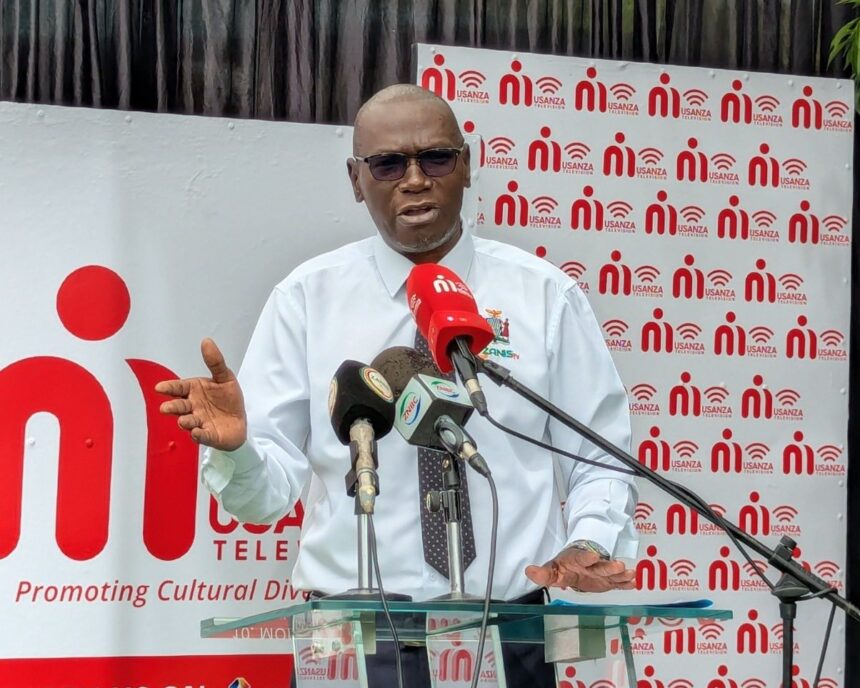
Zambia has taken a significant step toward inclusive media development with the official relaunch of Musanza TV, a rebranded broadcasting platform focused on delivering content in local languages. The event was officiated by the Minister of Information and Media and Chief Government Spokesperson Hon. Cornelius Mweetwa, who was represented by Information and Media Permanent Secretary Mr. Thabo Kawana. The relaunch signals a renewed commitment to making information more accessible to all citizens regardless of language background. It also reflects a broader national effort to strengthen media diversity and improve communication across communities. The initiative is being viewed as an important milestone in the evolution of the country’s broadcasting landscape.
Musanza TV has been positioned as Zambia’s first major broadcaster with a strong focus on local language content. The platform is expected to operate as a private commercial entity in partnership with Diamond Media Group, which already has a strong reputation in the media industry. This partnership is designed to ensure that Musanza TV benefits from established production standards and professional expertise. The station is expected to build on the quality associated with Diamond TV, ensuring consistent and reliable programming. At launch, Musanza TV has begun operations with three local languages, Tonga, Nyanja and Bemba, with plans to expand to seven widely spoken languages across the country. This phased approach allows for structured growth while maintaining quality output.
Government officials highlighted the importance of broadcasting in languages that people understand easily. The Permanent Secretary expressed confidence that the same level of excellence demonstrated by Diamond Media platforms will be reflected in Musanza TV’s operations. He noted that communication becomes more effective when audiences can engage with content in their native languages. This approach is expected to improve the reach and impact of news, education and public information campaigns. It also strengthens trust between media institutions and communities. By breaking language barriers, the platform is expected to play a key role in increasing public participation in national dialogue.
The relaunch has been widely welcomed as part of a broader agenda focused on inclusivity and national development. Officials emphasized that local language broadcasting supports cultural preservation by keeping indigenous languages active in modern media spaces. It also helps communities stay informed about national issues in a way that is clear and relatable. This is expected to improve understanding of government programs and policy communication. The initiative is also seen as a way to empower rural and underserved populations who may have limited access to mainstream media content. By expanding linguistic accessibility, Musanza TV is expected to strengthen social cohesion.
At the same time, concerns around media responsibility were strongly highlighted during the event. Mr. Mweetwa urged media institutions to maintain high levels of professionalism, especially in an environment where misinformation and divisive content are becoming more common. He warned that failure to uphold ethical standards could pose risks to national unity and stability. This warning comes at a time when the country is preparing for an election period, where accurate and responsible reporting becomes even more critical. Media organisations were encouraged to prioritise factual reporting and avoid content that fuels division. The relaunch of Musanza TV therefore carries both opportunity and responsibility, as it enters the media space with a clear mandate to inform, educate and unify through accessible and ethical broadcasting.