





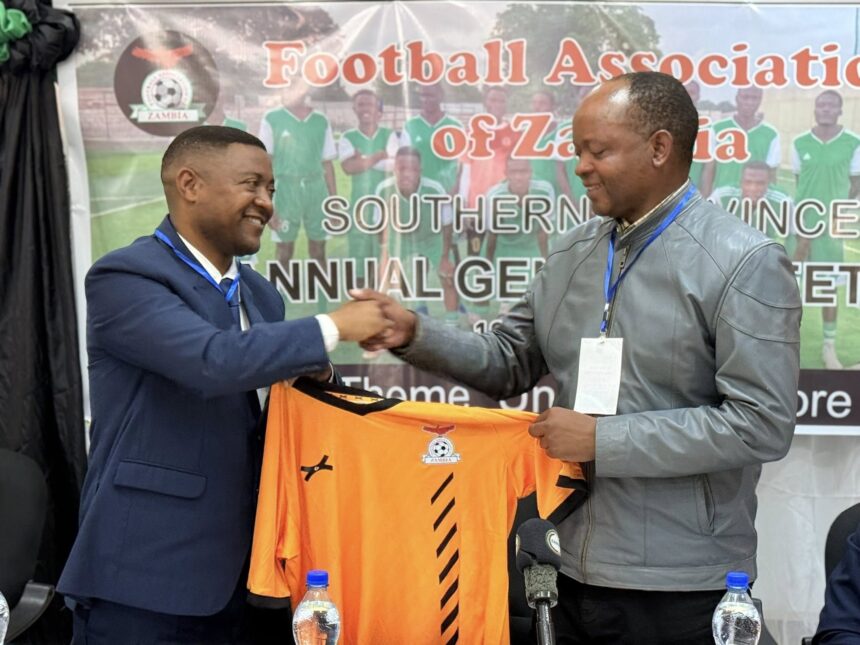
The Zambian government has announced plans to increase investment in football as the national economy continues to show signs of recovery. Officials say the sport is no longer just a form of entertainment but a growing source of employment and income for many citizens. Information and Media Minister Cornelius Mweetwa delivered this message during the Football Association of Zambia Southern Province Annual General Meeting held in Choma. He emphasized that football must be treated as a serious platform for job creation and economic participation. His remarks reflect a wider government approach that links sports development with national economic growth.
Mweetwa stated that as the economy rebounds, more resources will be directed toward strengthening football structures across the country. He explained that improved economic conditions will allow government to invest in facilities, player development, and competition structures that support long-term growth of the sport. He stressed that football has already proven its ability to create employment opportunities for both players and support staff. Coaches, referees, medical teams, and administrative personnel all benefit from a stronger football ecosystem. This growing network of jobs shows that investment in sport can have a direct impact on livelihoods.
One of the key points highlighted by the minister was the increasing number of Zambian players securing professional contracts abroad. He pointed to the women’s game in particular, where more athletes are joining clubs in Europe and the United States. These opportunities provide stable incomes for players while also supporting their families back home through remittances. This trend demonstrates how football has become a pathway out of unemployment for many young people. It also shows that talent development in Zambia can translate into global opportunities when properly supported.
Mweetwa also called on the private sector to play a stronger role in financing football development in the country. He explained that corporate investment in sport helps build unity and strengthens national identity. According to him, supporting football is not only a financial contribution but also a contribution to peace and social cohesion. Businesses that invest in the game help create shared national experiences that bring communities together across regions. His message encouraged companies to view football as a long-term social and economic investment rather than a short-term sponsorship opportunity.
The minister welcomed ongoing efforts by the Football Association of Zambia to improve financial management and ensure sustainability within the sport. He said that cooperation between government and FAZ remains essential for raising standards from grassroots level to elite competition. Strengthening youth development systems was highlighted as a key priority for producing future talent. He also praised FAZ for organizing international friendly matches, including a recent fixture against Argentina in Buenos Aires. Such matches, he noted, provide valuable exposure for players and help market Zambia on the global stage.
According to Mweetwa, international fixtures also contribute to tourism promotion by showcasing Zambia to global audiences. Even when results on the pitch are not favorable, the long-term benefits include increased visibility and stronger international recognition. He stressed that football should be seen as part of a broader national branding strategy that supports economic growth. Exposure from high-profile matches can attract interest from scouts, investors, and sports development partners. This creates additional opportunities for local players and strengthens the country’s sporting reputation.
The government’s renewed focus on football reflects a growing understanding of sport as an economic driver. By linking investment in football to job creation and national development, officials aim to expand opportunities for young people across the country. Increased support is expected to improve infrastructure, training programs, and competitive structures at all levels. With collaboration between government, private sector, and football authorities, the sport could become a stronger pillar of Zambia’s economy. The long-term goal is to build a sustainable football system that not only produces talent but also generates income and national pride.