







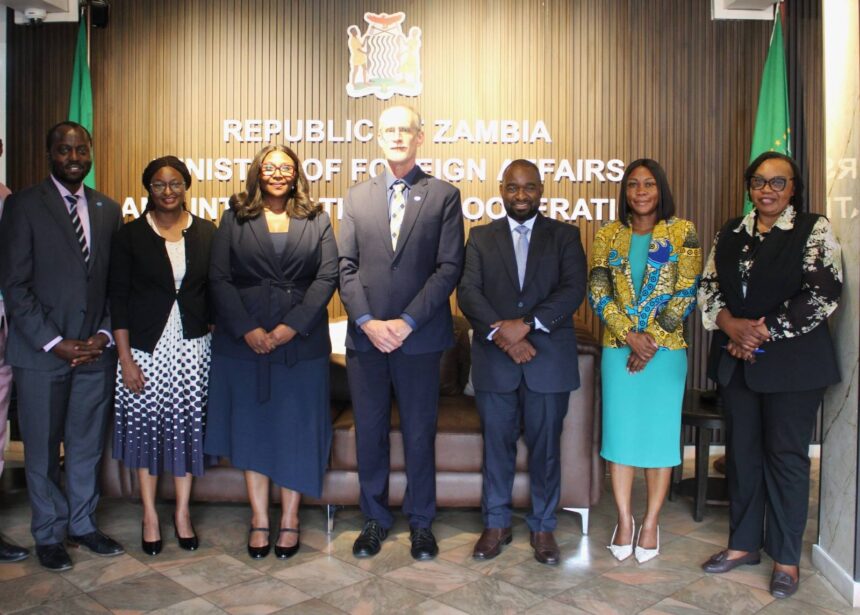
Yesterday at Charter House in Lusaka, Ms Etambuyu Anamela Gundersen, Permanent Secretary for International Relations and Cooperation at the Ministry of Foreign Affairs and International Cooperation, hosted a high level delegation from the International Vaccine Institute led by Dr Douglas Shaffer, Deputy Director General. The meeting focused on expanding cooperation between Zambia and the International Vaccine Institute in areas that directly support global health security. It also reflected Zambia’s growing ambition to position itself as a key player in vaccine research and production on the African continent. The discussions were framed around long term capacity building and strategic investment in human capital development. The engagement marked another step in Zambia’s efforts to strengthen its role in global health partnerships.
A major focus of the discussions was capacity building and human resource development within Zambia’s health and scientific sectors. Both sides explored practical ways to strengthen technical skills, research capability and institutional knowledge transfer. The International Vaccine Institute delegation, led by Dr Douglas Shaffer, highlighted opportunities for deeper collaboration that could support Zambia’s scientific ecosystem. The conversations also emphasized the importance of training local professionals to support sustainable vaccine development systems. This approach is intended to reduce reliance on external expertise while building a stronger domestic health innovation base.
One of the key strategic ideas raised during the meeting was Zambia’s potential to host a Vaccine Industrial Park. This facility would serve not only national needs but also position Zambia as a regional hub for vaccine manufacturing and distribution. The concept aligns with broader continental goals of improving health security and reducing dependency on imported vaccines. It also supports efforts to strengthen supply chain resilience across Africa. The proposal reflects a long term vision of integrating industrial capacity with public health priorities.
The International Vaccine Institute Deputy Director General acknowledged the leadership role of Hakainde Hichilema in advancing global vaccine initiatives. He referenced the President’s participation in the ACHIEVE Africa Initiative Launch held on the margins of the 39th African Union Summit in Addis Ababa in February 2026. The ACHIEVE Africa Initiative aims to increase Africa’s vaccine manufacturing capacity from 1 percent to 60 percent by 2040. This goal directly addresses a major gap in global health equity and vaccine access. Zambia’s involvement in these discussions signals its alignment with continental and global health transformation efforts.
Ms Gundersen emphasized Zambia’s broader ambition to expand its participation in global vaccination systems and strengthen local manufacturing capacity. She also highlighted the importance of integrating International Vaccine Institute knowledge into Zambian institutions of higher learning. This includes universities and training institutions that can help develop future scientists, researchers and health professionals. The approach aims to create a pipeline of skilled experts who can sustain vaccine innovation over time. The meeting concluded with a shared understanding that collaboration between Zambia and the International Vaccine Institute could play a significant role in shaping Africa’s health security future.