







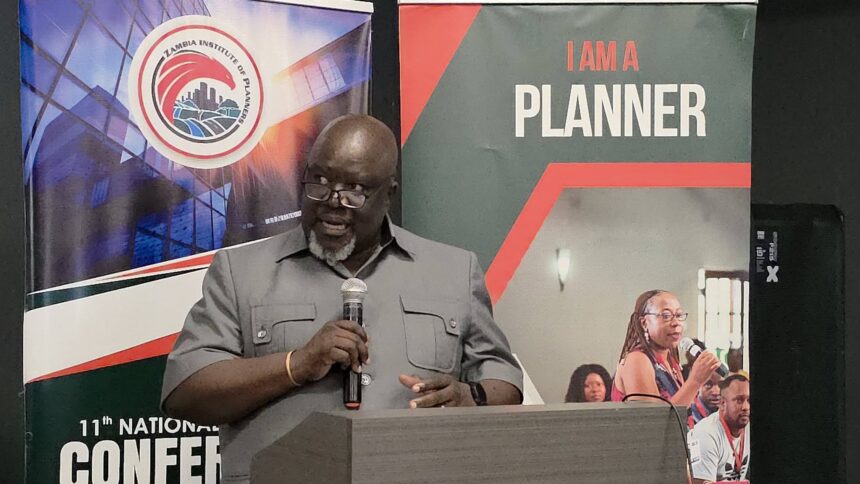
The Zambian Government has issued a firm warning against illegal planning practices, making it clear that only registered and accredited professionals will be allowed to operate in the planning sector. This announcement was made during the official opening of the 11th National Planning Conference in Kitwe, a key gathering of stakeholders in the country’s development space. The directive reflects a growing commitment to improving standards, accountability, and professionalism within the planning industry. Authorities aim to eliminate uncertified practices that often lead to poor infrastructure outcomes and uncoordinated urban growth. This move signals a decisive step toward building a more structured and efficient development framework across Zambia.
Minister of Local Government and Rural Development Gift Sialubalo emphasized that the enforcement of proper registration and accreditation is not optional but mandatory under the law. He stated clearly that no individual or firm will be permitted to practice planning without meeting the required legal standards. This directive is designed to protect the integrity of the profession and ensure that all planning activities align with national policies and technical requirements. The Minister stressed that professionalism in planning directly impacts the quality of infrastructure, housing, and public services delivered to citizens. By tightening regulations, the Government seeks to raise the overall standard of development across both urban and rural areas.
To strengthen enforcement, the Minister has authorized the appointment of Provincial Planners as Planning Inspectors. These inspectors will play a critical role in monitoring compliance and ensuring that all practitioners adhere to established regulations. Their presence is expected to curb illegal practices and promote accountability within the sector. This measure also aims to create a more transparent environment where only qualified professionals can influence development decisions. With increased oversight, the Government intends to close gaps that have previously allowed unregulated activities to persist.
The Minister also commended planners for their dedication and acknowledged their central role in shaping Zambia’s development trajectory. He highlighted that planners are responsible for coordinating land use, guiding infrastructure development, and implementing key national programmes. Their work supports orderly urbanisation and ensures that investments align with broader economic and social priorities. Effective planning helps address major challenges such as informal settlements, infrastructure shortages, and disorganized growth patterns. By reinforcing the importance of professional standards, the Government aims to empower planners to deliver more sustainable and impactful outcomes.
The success of major initiatives such as the Constituency Development Fund relies heavily on the expertise and coordination provided by planners. Their technical input ensures that projects are well designed, properly executed, and aligned with community needs. Zambia Institute of Planners President Busiku Sulwe acknowledged progress in strengthening planning systems, particularly through the development of Integrated Development Plans across all districts. These plans serve as essential tools for guiding local development and ensuring consistency in project implementation. Sulwe also emphasized that human settlements are key drivers of economic activity, where infrastructure development and job creation take place. He warned that uncoordinated development can undermine efficiency and slow national progress.
The Government has called on all practitioners to regularize their operations and comply fully with the law as enforcement efforts intensify nationwide. This directive aims to create a disciplined and professional planning environment that supports sustainable growth and national development goals. By eliminating illegal practices and strengthening oversight, Zambia is positioning itself to achieve more organized and efficient development outcomes. The focus on professionalism, accountability, and coordination will play a crucial role in addressing current challenges and unlocking future opportunities. As these measures take effect, the planning sector is expected to become a stronger foundation for the country’s long term development agenda.