






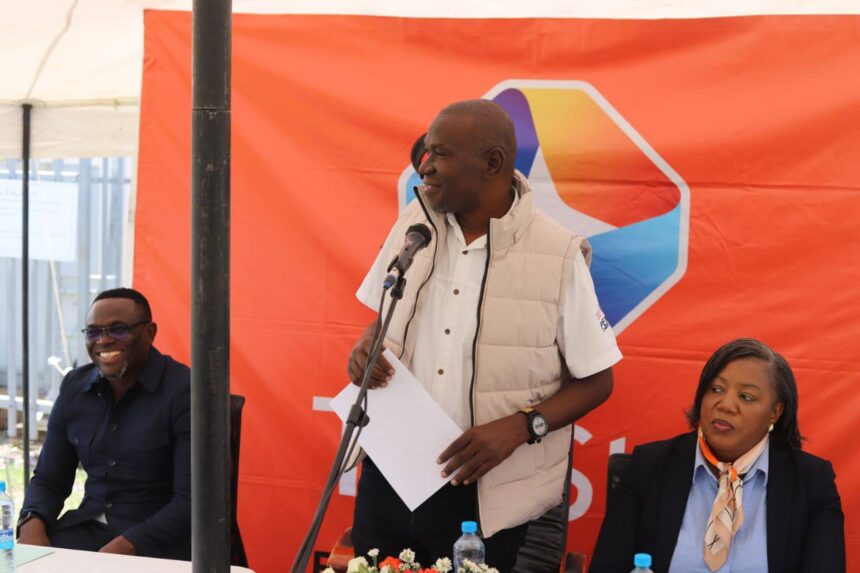
Zambia is making strides in renewable energy and communication infrastructure as TopStar’s solar power back-up solution was commissioned at Kaloko Hill Transmission Site in Ndola. The event, officiated by Minister of Information and Media and Chief Government Spokesperson Honourable Cornelius Mweetwa, MP, highlighted the government’s commitment to public-private partnerships in national development. Information and Media Permanent Secretary Mr Thabo Kawana represented the Minister during the commissioning, emphasizing the importance of innovative technological solutions in driving socio-economic growth. This initiative aims to address power challenges affecting signal transmission, ensuring that residents in Ndola, Luanshya, and surrounding areas have uninterrupted access to information, education, and entertainment. By integrating renewable energy into the communication sector, Zambia demonstrates its commitment to sustainable development and technological advancement.
TopStar’s solar back-up solution aligns with the government’s objectives to promote innovation in the ICT sector. Stable signal transmission is critical for broadcasting services, and this project ensures continuity even during power interruptions. Government representatives underscored the role of private sector initiatives like TopStar in enhancing service delivery while supporting national development goals. The project also complements Zambia’s energy diversification policy, which emphasizes renewable energy adoption and energy security. With a target to achieve universal energy access by 2030, the government is encouraging collaboration with private companies to expand energy infrastructure, streamline service delivery, and foster economic growth.
The initiative also demonstrates the impact of renewable energy on community development. TopStar’s efforts since 2018 have supported over 20,000 households with sustainable energy solutions, showing a consistent commitment to improving access to electricity across Zambia. The project has immediate benefits for residents in Ndola and Luanshya, providing stable digital TV signals that enhance access to news, educational content, and entertainment. Government officials stressed the importance of reliable access to information as a pillar for informed citizenry and social inclusion. They encouraged TopStar and other service providers to continue innovating, offering affordable digital TV services while leveraging local expertise to expand renewable energy adoption.
Government policies and initiatives provide a supportive environment for such innovations. Liberalization of the energy market, scaling renewable energy capacity to 10,000 MW, and the Presidential Constituency Energy Initiative for small solar farms nationwide all aim to improve energy access and promote local economic development. By encouraging private sector investment, Zambia is creating opportunities for sustainable growth while addressing long-standing energy challenges. Officials also called on mobile service providers to emulate TopStar’s model, linking improved service delivery with renewable energy adoption to enhance access to communication nationwide. These efforts reflect a coordinated approach to infrastructure development that integrates technology, sustainability, and socio-economic progress.
TopStar’s collaboration with government, regulators, financial institutions, and communities signals a long-term commitment to renewable energy and national development. By ensuring stable broadcast signals and expanding energy access, the initiative directly contributes to socio-economic growth, educational outreach, and informed communities. Government leaders highlighted that such projects are essential for building a sustainable, technology-driven future, emphasizing continuous innovation and quality service delivery. With TopStar leading by example, other service providers are encouraged to adopt similar models, strengthening Zambia’s ICT and energy sectors. This milestone marks a significant step toward a digitally connected and energy-secure nation, reinforcing the government’s vision of inclusive, sustainable, and innovation-led development.