






Four Zambian football coaches have achieved a significant milestone after successfully completing the FIFA Coach Educator Diploma in Kigali, Rwanda. The accomplishment places them among a select group of qualified coach educators on the African continent. The Zambian quartet includes Lyson Zulu, Chris Chibuye, Philip Munkombwe and Franklin Malambo, all of whom have spent several years preparing for this important qualification. Their graduation followed the FIFA Coach Educators On Site Assessment Practice, which evaluated participants on their ability to train and mentor football coaches. This achievement strengthens Zambia’s role in developing coaching expertise and improving the quality of football education in the country.
The FIFA Coach Educator Diploma program is part of the broader FIFA Coach Educator Pathway designed to build high level instructor capacity across the world. Participants in the program spent between three and five years undergoing structured training and mentorship. The training process included e learning modules, online classes, field based education and practical mentoring sessions. This approach allowed instructors to develop strong technical and leadership skills required to guide coaching courses. By the time participants reached the final stage, they had already gained extensive knowledge in modern coaching methods and football development strategies.
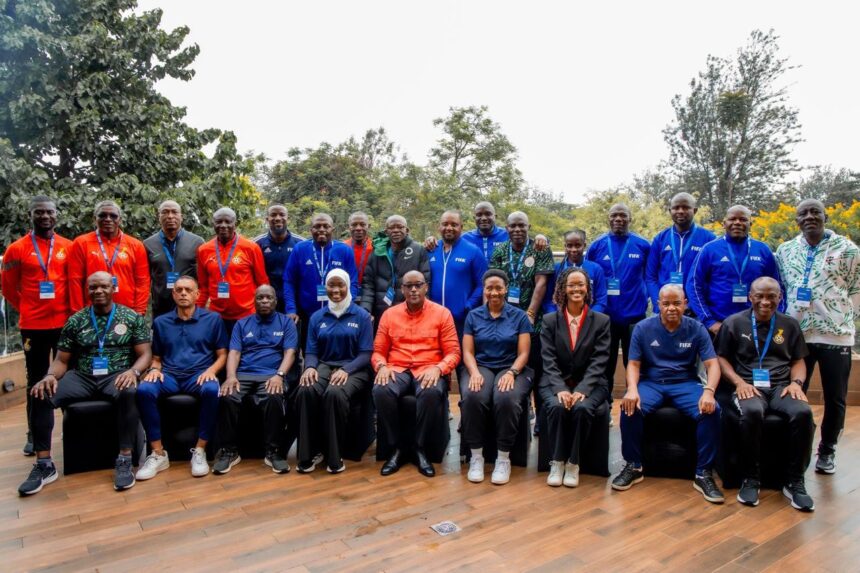
The final assessment stage in Kigali brought together 38 coach educators from 13 member associations under the Confederation of African Football. The evaluations were conducted in two groups from 23 to 27 February and from 2 to 6 March. During this period, participants were assessed on their ability to deliver coaching courses through both theory presentations and practical demonstrations. Assessors examined several competencies that define the work of a coach educator. These included leadership ability, management skills, technical understanding of the game, teaching capability, mentoring effectiveness and the ability to evaluate coaches in training.
The program attracted experienced football professionals from across Africa. Among the notable participants was Augustine Eguavoen, a former coach of Nigeria’s Super Eagles national team. Nigeria also had representation through Godwin Fuludu Edema, while Ghana was represented by Evans Augustine Adotey and Nana Kweku Agyemang. Zimbabwe sent Joseph Sibindi, Tafadzwa Mashiri and Wilson Mutekede to the program. Other countries involved included Kenya, Ethiopia, South Sudan, Eritrea, Mauritius, Rwanda, Uganda, Gambia and Sierra Leone, highlighting the continental scope of the initiative.
The program was supervised by a team of FIFA coaching experts led by Giovanni Fernandes, FIFA Coaching Development Senior Manager. He was supported by Keneilwe Matibela, Coaching Development Delivery Manager, together with technical experts Frans Mokashoa, John Kaputa and Zunaid Mall. Their role was to guide the training process, evaluate performance and ensure the program met FIFA’s global coaching standards. The instructors provided mentoring and feedback to participants to help them refine their approach to teaching and developing football coaches. Their oversight ensured that the final graduates met the high standards required to deliver professional coaching education.
For Zambia, the successful graduation of Lyson Zulu, Chris Chibuye, Philip Munkombwe and Franklin Malambo represents a major step forward in strengthening the country’s football development structures. Coach educators play a critical role in shaping the next generation of football coaches by designing training courses and mentoring instructors across different levels of the game. With more qualified educators, Zambia can improve coaching standards at grassroots, youth and professional levels. This development supports long term growth in the sport and creates opportunities for better player development nationwide. The achievement also demonstrates Zambia’s commitment to investing in football education and aligning its coaching systems with international standards.