



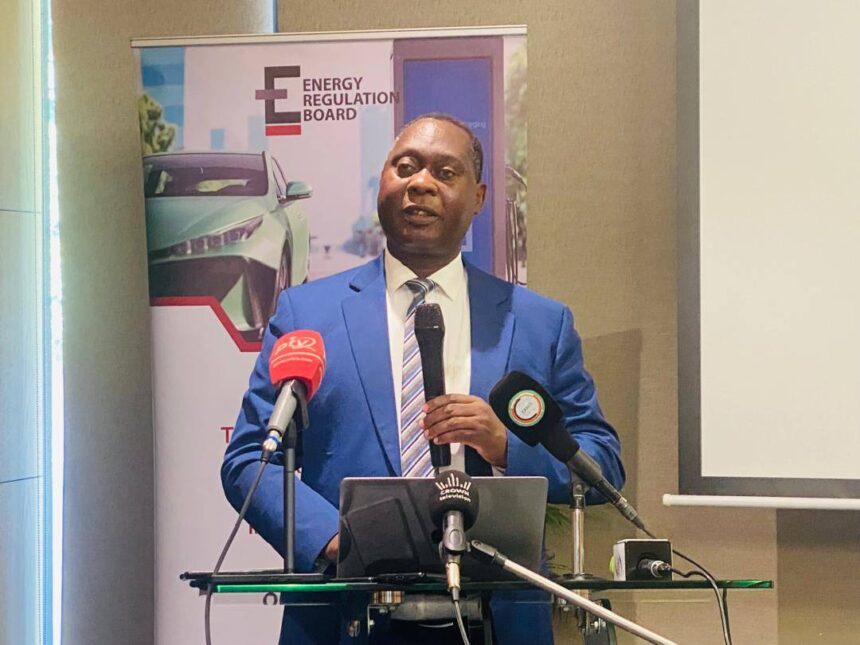
Today, the Energy Regulation Board (ERB) conducted its first quarter media engagement for 2026, led by Director General Mr. Elijah Sichone, providing clarity on electricity tariffs and consumer concerns. The engagement aimed to address widespread reports of rapidly depleting prepaid electricity units, reaffirming the regulator’s role in ensuring transparency and accountability in the energy sector. Mr. Sichone confirmed that there has been no increase in electricity tariffs since the approval of ZESCO’s application in October 2025, effective from 1 November 2025. He emphasized that all tariff determinations fall strictly under the mandate of the ERB, dismissing claims of external influence in adjustments. The session also highlighted the importance of accurate reporting to maintain investor confidence and support Zambia’s broader development objectives.
The Director General attributed the fast depletion of prepaid units partly to increased electricity consumption following improvements in power supply. As households and businesses experienced more consistent electricity access, usage naturally rose, leading to quicker consumption of prepaid credits. The ERB has already commenced investigations to verify these trends, aiming to provide timely and factual explanations for consumers. Mr. Sichone reassured the public that the regulator is committed to addressing concerns while ensuring that electricity management remains fair, efficient, and sustainable. By engaging directly with the media, the ERB seeks to foster informed reporting and strengthen public understanding of energy dynamics in Zambia.
A key factor influencing electricity supply remains Zambia’s heavy reliance on hydropower, which accounts for over 80 percent of installed generation capacity. The country recently faced a severe drought that significantly depleted water levels in major reservoirs, affecting overall generation potential and raising concerns about supply stability. Mr. Sichone highlighted that these conditions underscore the need for diversification and investment in alternative energy sources to mitigate hydropower dependency. The ERB continues to monitor environmental impacts on energy generation, ensuring that electricity provision remains resilient despite climatic and operational challenges. This approach reflects a proactive regulatory framework designed to maintain reliability while supporting national energy security.
The engagement also underscored the ERB’s commitment to transparency and accountability. Mr. Sichone encouraged media practitioners to verify information directly with the regulator before publishing reports, promoting balanced and factual coverage of energy issues. He noted that responsible reporting not only informs the public accurately but also fosters investor confidence and strengthens Zambia’s development agenda. The ERB’s open-door policy ensures that stakeholders, including consumers, industry players, and journalists, have access to timely information and can participate meaningfully in dialogue on energy management. By maintaining open communication channels, the regulator reinforces its role as an impartial and authoritative body in the sector.
The ERB’s first quarter media engagement reaffirmed that electricity tariffs have remained unchanged since November 2025 and clarified factors behind the rapid depletion of prepaid units. The regulator’s ongoing investigations, combined with its focus on transparency and stakeholder engagement, demonstrate a proactive approach to energy governance. Highlighting Zambia’s hydropower reliance and the impact of recent droughts, the session also reinforced the importance of sustainable planning and diversification in energy supply. By encouraging factual reporting and collaboration with the media, the ERB strengthens public trust and investor confidence, ensuring that the country’s energy sector continues to support economic growth and development.