




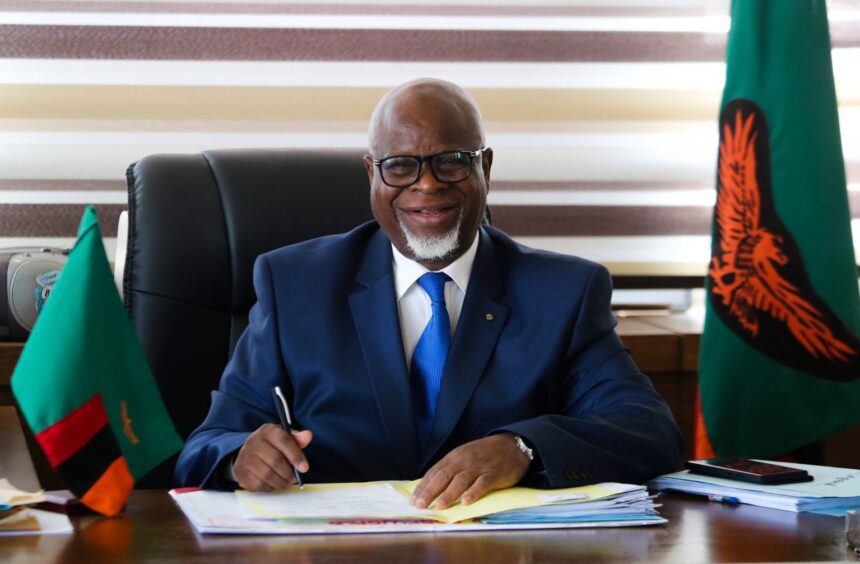
Health Minister Dr. Elijah Muchima has confirmed that Zambia is actively responding to a cholera outbreak first identified on 5 August 2025 in Mpulungu District, Northern Province. Since the initial detection, 20 districts across eight provinces have reported cases, while Luapula and Eastern Provinces remain free of confirmed infections. Speaking during a press briefing at Ndeke House, Dr. Muchima reported that as of 3 February 2026, the country has recorded a cumulative total of 861 cholera cases and 16 deaths. Seven fatalities occurred in health facilities, with nine in community settings, highlighting the need for early symptom recognition and prompt medical care.
Northern Province continues to be the epicentre of the outbreak, particularly Mpulungu District, which accounts for about 70% of all reported cases with 570 infections across five districts. The region has experienced prolonged transmission, with periods of decline followed by resurgences, including a second wave in Mpulungu. Dr. Muchima attributed this pattern to residual environmental contamination, cross-border population movement, fishing-related activities, and persistent gaps in water, sanitation, and hygiene. From November 2025, transmission shifted southwards, with outbreaks reported in Monze District and later in Lusaka Province. This movement reflects urban and peri-urban spread linked to population mobility, informal settlements, and sanitation challenges.
Currently, seven districts are experiencing active cholera transmission: Mpulungu, Lusaka, Chilanga, Nakonde, Solwezi, Nkeyema, and Choma. In the last 24 hours, 20 new cases were reported across four districts: Lusaka (11), Mpulungu (2), Nakonde (4), and Choma (3), with no deaths recorded. The three new cases in Choma mark a fresh outbreak, making it the third affected district in Southern Province nearly 70 days after Monze reported its last case. Lusaka District remains the primary driver of national transmission, recording 170 cases and two deaths, resulting in a case fatality rate of about 1.2%. Nakonde District, although reporting fewer cases, shows a disproportionately high fatality rate, pointing to late detection and community-level vulnerabilities.
To curb the outbreak, the Ministry of Health and partners have intensified surveillance, community engagement, and support to frontline health workers. Targeted interventions include the deployment of oral cholera vaccines (OCV) in high-risk areas such as Chainda. So far, 35,396 people received the first dose, representing 99.1% of the eligible population, and 32,987 individuals (93.2%) have received the second dose. These measures are designed to supplement ongoing efforts to improve water, sanitation, and hygiene infrastructure and reduce transmission risks.
Dr. Muchima emphasized that while some districts have achieved the 28-day zero-reporting threshold, Lusaka Province remains the main focus due to low-level, geographically widespread cases across multiple sub-districts and health facilities. The ongoing response highlights the importance of early detection, rapid intervention, and public awareness in controlling cholera outbreaks. Authorities continue to monitor affected regions closely, aiming to prevent further spread and reduce fatalities through coordinated public health actions.