






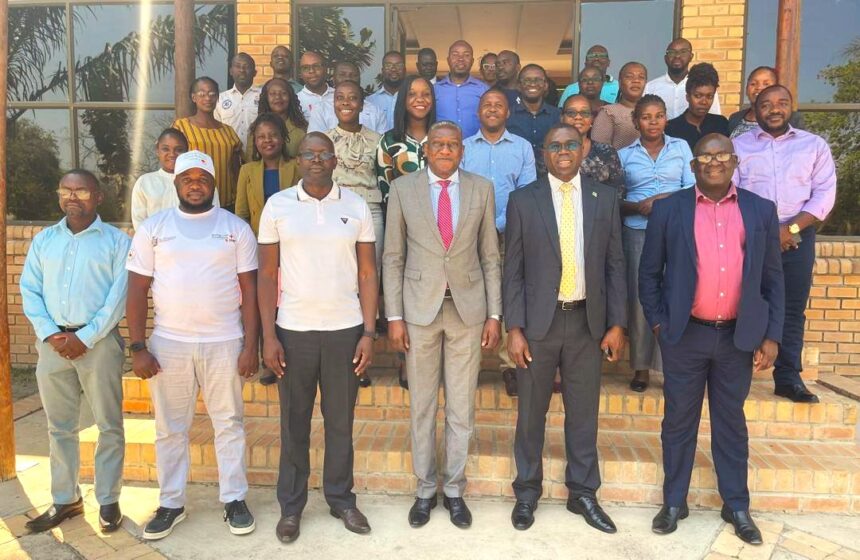
Yesterday, the Ministry of Health held the National Meeting on Public Health Risk Assessment Using the STAR Tool in Kafue District, officiated by Permanent Secretary–Technical Services, Dr Kennedy Lishimpi. The workshop focused on strengthening Zambia’s capacity to anticipate, prevent, and respond to public health emergencies.
Dr Lishimpi highlighted the need for proactive preparedness in addressing health threats. He urged stakeholders to adopt measures that identify and mitigate risks before they escalate, noting Zambia’s recent experiences with cholera, anthrax, COVID-19, and antimicrobial resistance. He emphasized that climate-induced events continue to strain public health systems, making preparedness even more critical.
The Permanent Secretary stressed that effective preparedness relies on reliable data, cross-sector collaboration, and a comprehensive understanding of health risks. He assured participants that the Ministry will use the STAR Tool to develop a national risk profile, which will guide policy, planning, and resource allocation.
Dr Lishimpi further advocated for a One Health approach, integrating human, animal, and environmental health to build resilience against public health threats. He reaffirmed the Ministry’s commitment to strengthening Zambia’s public health architecture and called on stakeholders to ensure that risk assessments translate into concrete policies and actions.
ZNPHI Director General Dr Roma Chilengi described the workshop as a critical milestone in institutionalizing risk assessment and preparedness within Zambia’s national health framework. He commended the World Health Organization for its technical and financial support and reiterated ZNPHI’s commitment to building systems that can anticipate, detect, and respond to health threats before they escalate.
The STAR Tool workshop marks a key step in Zambia’s strategy to enhance national health security, improve cross-sector coordination, and create a more resilient public health system.