






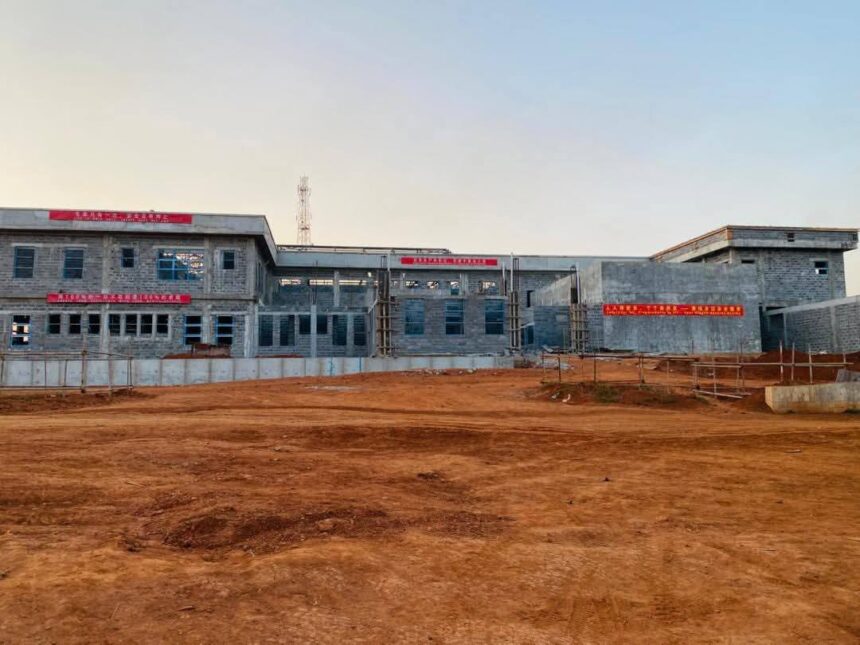
The Copperbelt Province is on the verge of a major healthcare breakthrough as construction of its first-ever Cancer Diseases Hospital nears completion. The project, which is now 75 percent complete, is expected to be finalized by December 2025, according to the Ministry of Health.
Principal infrastructure officer Joackim Longwe confirmed that equipment for the facility has already begun arriving in Zambia, with some items being stored on-site and others secured at the contractor’s yard. The hospital, valued at K305 million, is a significant step forward in decentralizing cancer treatment services in the country and bringing critical healthcare closer to people in the region.
During a recent inspection tour, Copperbelt Province Minister Elisha Matambo expressed satisfaction with the pace of construction and encouraged the contractor, AVIC International, to stay on track with the agreed timeline. He praised President Hakainde Hichilema’s government for prioritizing healthcare development, noting that the facility will transform the region’s ability to manage non-communicable diseases.
“This project is a game-changer for the Copperbelt and for Zambia as a whole. We are grateful for the leadership and vision that has brought us this far,” said Matambo.
Resident engineer Raymond Mupela provided technical updates, stating that the remaining works include internal finishes such as flooring, ceilings, and wall fittings, as well as external developments like access roads, parking areas, and landscaping.
But the hospital’s development doesn’t stop at treatment. The Ministry of Health has broader plans to transform the site into a comprehensive health hub. This includes constructing an isolation hospital, expanding general medical wards, building staff accommodation, and potentially developing a school of oncology to train future specialists. There are also plans to incorporate a solar energy field to ensure sustainable power supply to the facility.
Once completed, the Cancer Diseases Hospital in the Copperbelt will significantly ease the pressure on the existing cancer treatment center in Lusaka, which currently serves patients from across the country. It also aligns with Zambia’s broader goal to improve access to specialized healthcare services and reduce the burden of traveling long distances for treatment.
With the arrival of medical equipment and civil works progressing steadily, hope is building for a future where more Zambians can access world-class cancer care closer to home.