




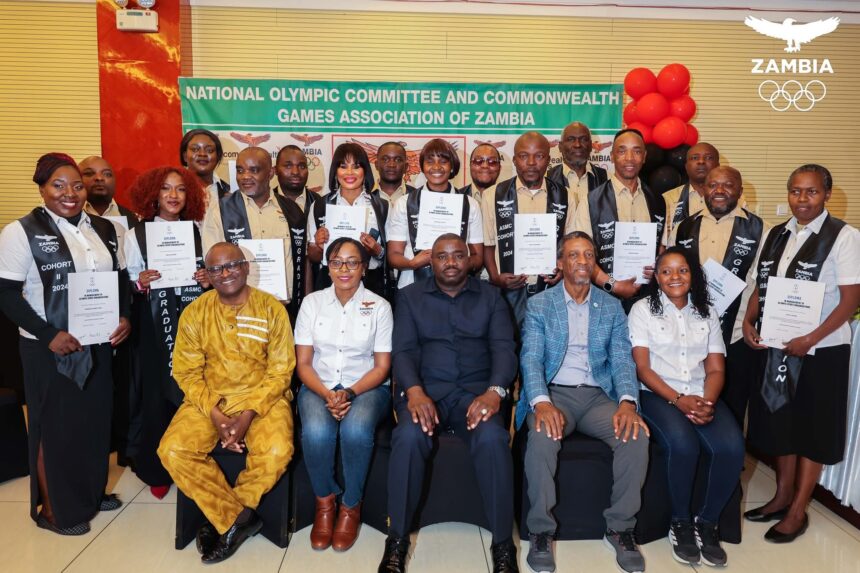
The National Olympic Committee of Zambia (NOCZ), in partnership with the International Olympic Committee (IOC) through Olympic Solidarity, has reaffirmed its commitment to strengthening the capacity of sports professionals across the country. This dedication to professional growth was highlighted during the graduation ceremony of the second cohort of the Advanced Sports Management Course (ASMC), held in Lusaka.
In a vibrant and emotional event attended by family members, friends, and dignitaries, 22 participants were awarded diplomas, marking the successful completion of the intensive program designed to equip sports administrators with modern management skills. The ASMC program focuses on key areas such as strategic planning, governance, financial management, and event organization, all tailored to the Zambian sports context.
Speaking at the ceremony, NOCZ president Alfred Foloko described the graduation as more than just a personal achievement for the graduates. He emphasized that it represents a critical step toward the collective development and professionalization of sports in Zambia.
“We desire to see more sports organizations in Zambia adopt world-class management standards. This graduation is not the end but the beginning of a new chapter where you, the graduates, will apply the knowledge gained to transform sports administration in the country,” Foloko said.
The NOCZ president also thanked the IOC for its continued support through Olympic Solidarity, a program that has been instrumental in providing resources and technical expertise to help build administrative capacity in developing nations like Zambia.
Several of the graduates shared their gratitude and reflected on how the course had transformed their understanding of sports leadership. Many expressed readiness to implement new management strategies within their respective sports federations and community organizations.
The event also saw encouragement from guest speakers representing the Ministry of Youth, Sport and Arts, who praised the NOCZ and IOC for investing in human capital development. They called for continued collaboration between government bodies and sports organizations to ensure that the knowledge and skills gained from such programs translate into tangible growth and improved governance across all sports disciplines.
The Advanced Sports Management Course remains one of the flagship educational initiatives under Olympic Solidarity in Zambia, aimed at equipping sports administrators with the tools necessary to navigate the increasingly complex world of sports management.
As the 22 new graduates step into their roles as trained sports leaders, Zambia’s sports sector looks poised for stronger governance, better resource management, and a more professional approach to athlete development and event organization.