





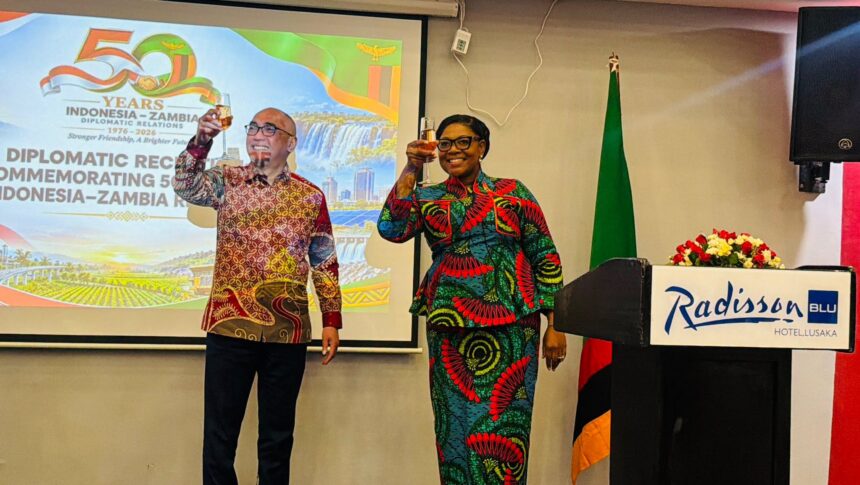
Zambia is seeking to strengthen tourism cooperation with Indonesia as part of its ambitious plan to attract five million international tourist arrivals annually by 2031. Minister of Tourism Honourable Princess Kasune, MP, has called for stronger partnerships between the two countries, particularly in community-based tourism development and cooperation between tour operators. The proposed collaboration is expected to create new opportunities for tourism businesses, support local communities and contribute to Zambia’s broader economic development ambitions. Speaking at Indonesia’s National Day diplomatic reception in Lusaka, Kasune emphasised the importance of transforming the longstanding diplomatic relationship between Zambia and Indonesia into practical partnerships that deliver measurable economic benefits. Her remarks come as Zambia continues to position tourism as an important driver of investment, employment creation and sustainable economic growth.
The Minister noted that the 50 years of diplomatic relations between Zambia and Indonesia provide a valuable opportunity to deepen cooperation across several sectors. Over the years, the two countries have maintained diplomatic relations based on friendship and mutual understanding. However, Kasune believes that the anniversary should also mark a renewed commitment to expanding practical cooperation in tourism, trade, investment and economic development. She encouraged both countries to identify opportunities that can strengthen business relationships and create lasting benefits for their citizens. According to the Minister, strong diplomatic relations should translate into partnerships that support economic activity and improve livelihoods.
Tourism cooperation was among the key priorities highlighted during the diplomatic reception. Kasune stressed the importance of developing community-based tourism experiences that allow local people to participate directly in the tourism industry. Community-based tourism provides opportunities for communities to benefit from visitors through locally managed accommodation, cultural experiences, traditional activities, crafts and other tourism-related services. This approach can help ensure that tourism income reaches people living in and around popular destinations. It can also encourage communities to protect their cultural heritage and natural resources while creating sustainable sources of income.
The Minister also called for stronger partnerships between tour operators in Zambia and Indonesia. Such cooperation could help tourism businesses in both countries explore new markets, exchange industry knowledge and develop travel packages that attract visitors. Stronger business connections could also improve destination marketing and encourage tourism professionals to understand the attractions and travel experiences available in each country. For Zambia, greater international collaboration could help increase awareness of its tourism products beyond traditional source markets. Indonesia could also benefit from stronger engagement with Zambia’s tourism industry through opportunities for business partnerships and travel promotion.
Zambia has significant tourism potential, with its natural attractions, wildlife, cultural heritage and adventure tourism experiences offering opportunities to attract visitors from different parts of the world. The country’s ambition to welcome five million international tourists annually by 2031 reflects the Government’s intention to expand the sector and increase its contribution to the economy. Achieving this target will require sustained investment, effective marketing, improved tourism services and stronger international partnerships. It will also require greater participation by local communities and private-sector businesses. Cooperation with Indonesia could form part of these efforts by opening additional channels for tourism promotion, business engagement and knowledge exchange.
Kasune linked Zambia’s tourism development ambitions to President Hakainde Hichilema’s Grow Zambia Agenda, which focuses on expanding productive capacity, creating employment opportunities and ensuring that economic growth benefits ordinary citizens. The Minister explained that Government remained committed to building an economy that creates opportunities across different sectors. Tourism has an important role to play because it supports businesses operating in accommodation, transport, hospitality, food production, entertainment and other related industries. Growth in visitor numbers can increase demand for local products and services while creating opportunities for small and medium-sized enterprises. Strengthening tourism partnerships is therefore part of a wider effort to promote inclusive economic growth and improve livelihoods.
Beyond tourism, the Minister identified several other sectors where Zambia and Indonesia could expand their economic cooperation. These include agriculture, agro-processing, mining, mineral value addition, renewable energy and manufacturing. She also highlighted education and skills development as important areas for collaboration. These sectors offer opportunities for investment, technology exchange and the development of stronger business relationships. By broadening cooperation beyond traditional diplomatic engagement, Zambia and Indonesia can explore partnerships that support economic diversification and strengthen their respective productive sectors.
Agriculture and agro-processing present important opportunities for cooperation between the two countries. Zambia has considerable agricultural potential, and greater investment in processing can help increase the value of locally produced goods. Cooperation in this area could support technology transfer, skills development and stronger connections between producers and markets. Agro-processing can also create employment opportunities while reducing reliance on the export of unprocessed agricultural commodities. Stronger partnerships could therefore contribute to Zambia’s efforts to expand domestic production and build a more competitive agricultural sector.
Mining and mineral value addition were also identified as important areas for potential cooperation. Zambia’s mining industry remains a major part of its economy, making investment in processing and related industries important for long-term development. Mineral value addition allows countries to capture more economic benefits from their natural resources rather than relying mainly on the export of raw materials. Cooperation with Indonesia could create opportunities for sharing industrial knowledge, exploring investment partnerships and developing skills. Such engagement would support Zambia’s broader ambition to strengthen local industries and increase the contribution of its natural resources to national development.
Renewable energy and manufacturing also offer opportunities for stronger bilateral engagement. Reliable and sustainable energy supplies are important for industrial development, business growth and improved productivity. Cooperation in renewable energy could support efforts to expand energy solutions while promoting investment in sustainable technologies. Manufacturing partnerships could help strengthen local production capacity, create jobs and improve the availability of goods within domestic and regional markets. These areas are particularly relevant to Zambia’s economic diversification ambitions and its efforts to build a more resilient economy.
Kasune also welcomed the progress made during the Zambia-Indonesia Foreign Office Consultations held in Lusaka on 10 June 2026. The consultations provided an opportunity for officials from both countries to discuss bilateral relations and identify areas for closer cooperation. The Minister stressed that the next priority should be turning the understandings reached during diplomatic engagements into practical outcomes. She noted that agreements and discussions become meaningful when they produce visible improvements in economic activity and opportunities for citizens. Her remarks highlighted the importance of implementation, accountability and continued communication between the two governments.
“Our task now is to turn the understandings reached into visible results,” Honourable Kasune said. The statement reflects Zambia’s desire to move beyond diplomatic discussions towards partnerships that deliver measurable benefits. For the tourism sector, this means creating stronger connections between businesses, improving cooperation in destination marketing and supporting community-based tourism initiatives. In other sectors, it means identifying investment opportunities, encouraging private-sector participation and strengthening technical cooperation. Translating diplomatic commitments into practical programmes will be essential to ensuring that the 50-year relationship between Zambia and Indonesia continues to produce meaningful results.
Indonesian Ambassador to Zambia, His Excellency Arief Hidayat, also reaffirmed his country’s commitment to strengthening bilateral cooperation. He highlighted trade, investment, education and technology transfer as important areas for future engagement. Ambassador Hidayat said Indonesia was interested in exploring opportunities that promote local production, skills development and employment creation. He also emphasised the importance of building stronger business partnerships between the two countries. His remarks demonstrated Indonesia’s willingness to deepen economic engagement and explore areas where cooperation can deliver mutual benefits.
The Ambassador’s emphasis on technology transfer and skills development is particularly relevant to Zambia’s long-term development priorities. Access to technical knowledge and specialised skills can help local businesses improve productivity, adopt modern production methods and compete more effectively. Partnerships in education and vocational training can also support the development of a skilled workforce capable of meeting the needs of growing industries. Stronger cooperation between educational institutions and businesses could create opportunities for knowledge exchange and professional development. These initiatives would complement Zambia’s efforts to expand its productive sectors and create sustainable employment opportunities.
The 50th anniversary of diplomatic relations between Zambia and Indonesia therefore represents more than a celebration of historical friendship. It provides an opportunity for both countries to reassess their cooperation and identify new areas of shared interest. Tourism offers an immediate opportunity for stronger engagement, particularly through community-based tourism and partnerships between tour operators. At the same time, cooperation in agriculture, mining, renewable energy, manufacturing and education could broaden the economic relationship. A practical approach to bilateral cooperation can help ensure that the partnership responds to the development needs of both countries.
Zambia’s ambition to attract five million international tourists annually by 2031 will require commitment from Government, private-sector investors, tourism operators and local communities. International partnerships can help expand market access, improve tourism promotion and introduce new business opportunities. Indonesia’s interest in strengthening cooperation provides an opportunity to explore new connections between the two tourism industries. However, achieving meaningful progress will depend on translating discussions into investment, business partnerships and initiatives that produce measurable results. Ensuring that local communities benefit from tourism growth will also remain important to building a sustainable and inclusive industry.
Honourable Princess Kasune has reaffirmed Zambia’s commitment to deepening its longstanding relationship with Indonesia and ensuring that the partnership delivers meaningful economic opportunities. Her call for stronger tourism cooperation reflects the Government’s wider ambition to use international relationships to support investment, employment creation and national development. With five million annual international tourist arrivals targeted by 2031, Zambia will need to strengthen its tourism products, expand international partnerships and ensure that communities benefit from the sector’s growth. The cooperation opportunities identified during Indonesia’s National Day reception provide a foundation for taking this relationship forward. As Zambia and Indonesia celebrate 50 years of diplomatic relations, the priority will be to turn their shared commitment into practical achievements that promote economic growth and prosperity for the people of both nations.