







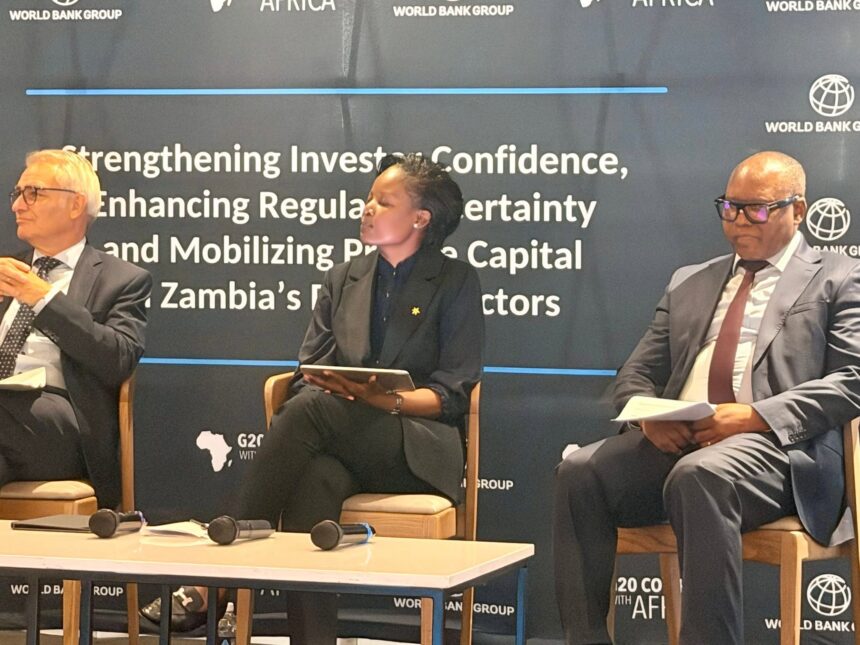
Zambia is stepping up efforts to attract private sector investment in tourism, improve the business environment and expand its international visitor market, with the government targeting five million international tourist arrivals by 2031. The strategy focuses on developing tourism infrastructure, increasing accommodation capacity, improving road access and promoting destinations beyond the country’s most famous attractions. Speaking during a high-level panel discussion on the G20 Compact with Africa (CwA) 2.0 initiative, Ministry of Tourism Permanent Secretary Evans Muhanga said achieving the target would require stronger cooperation between government and private investors. He emphasised that tourism has the potential to drive economic growth, create employment and support businesses across the country. The discussions also highlighted the importance of regulatory reforms, digitalisation and institutional accountability in making Zambia a more competitive destination for tourism investment.
The government’s ambition to attract five million international visitors by 2031 reflects its broader efforts to position tourism as a key contributor to national development. Zambia offers a range of attractions, including Victoria Falls, national parks, waterfalls, wildlife areas and cultural heritage sites. These resources provide opportunities to attract visitors interested in nature, wildlife, adventure, culture and other tourism experiences. However, increasing international arrivals will require more than promoting existing attractions. The country must also ensure that visitors can access destinations conveniently, find suitable accommodation and enjoy reliable services throughout their journeys. Developing a stronger tourism industry will therefore depend on coordinated investment in infrastructure, visitor facilities, marketing and the overall quality of the tourism experience.
Mr. Muhanga said President Hakainde Hichilema had provided clear policy direction on positioning tourism as a driver of economic growth, job creation and private sector development. The government’s approach recognises that private businesses play an important role in building accommodation facilities, developing tourism products and delivering services to visitors. Public investment and policy support can help create the conditions needed for these businesses to operate, while private capital can expand the range and quality of tourism offerings. A stronger partnership between government and investors could also help identify commercially viable destinations that have not yet attracted significant development. For this approach to succeed, investors need confidence that regulations will remain predictable and that essential infrastructure will support their projects. A stable and practical investment environment can help encourage long-term commitments to Zambia’s tourism sector.
The five million international tourist arrivals target will require careful assessment of Zambia’s existing tourism capacity and the investments needed to expand it. Mr. Muhanga explained that the country must identify investment opportunities and work with the private sector to develop tourism products that attract more visitors and encourage them to stay longer. Visitor numbers alone do not determine the economic value of tourism, since spending patterns and length of stay also influence the benefits generated by each trip. Tourists who remain in the country for several days may spend money on accommodation, transport, food, guided activities, cultural experiences and local products. Expanding the range of experiences available could therefore increase tourism revenue while creating more opportunities for local businesses. The government’s challenge is to develop a tourism offering that appeals to different visitor markets while maintaining the quality of Zambia’s natural and cultural attractions.
Victoria Falls remains Zambia’s flagship tourism attraction and an important part of the country’s international tourism identity. However, Mr. Muhanga noted that Zambia has many other tourism assets that could attract investment and support the development of new destinations. National parks, waterfalls and cultural heritage sites offer opportunities to diversify the visitor experience beyond established tourism centres. Developing these attractions could help distribute tourism activity across different parts of the country and create economic opportunities in communities that have limited access to formal employment. New destinations may also appeal to visitors seeking wildlife experiences, outdoor activities, cultural encounters and less crowded travel options. Unlocking this potential will require suitable accommodation, reliable transport links, visitor information and well-planned tourism facilities. Investment must also consider conservation needs and the protection of cultural heritage to ensure that tourism development remains sustainable.
Tourism infrastructure will be central to achieving Zambia’s international arrivals target. Investors need access to destinations, reliable accommodation options and supporting services that allow visitors to travel safely and comfortably. Better access roads can reduce travel difficulties and make attractions more accessible to tour operators and independent travellers. Accommodation investment is equally important because limited lodging options can restrict the number of visitors a destination can host, particularly during busy periods. Other complementary products, including guided excursions, cultural activities, local food experiences and adventure tourism services, can help visitors make more of their trips. Improving these elements together can make emerging destinations more attractive to investors and tourists. It can also help extend the economic benefits of tourism to communities beyond the country’s main visitor centres.
Mr. Muhanga also highlighted the government’s IMMACULATE Strategy, particularly its emphasis on incentives, marketing and Meetings, Incentives, Conferences and Exhibitions, commonly known as MICE tourism. Incentives can help make investment opportunities more attractive when they are designed clearly and implemented predictably. Destination marketing is important for informing potential visitors about Zambia’s attractions and helping the country compete with other tourism markets. MICE tourism offers another avenue for growth by attracting business travellers, conference delegates, exhibition participants and organised corporate groups. These visitors may support demand for hotels, conference facilities, restaurants, transport services and other businesses. Developing this market requires suitable venues, reliable connectivity and coordinated services that meet the needs of event organisers. By combining leisure tourism with business and event travel, Zambia can broaden its tourism offering and create additional opportunities for private investment.
The G20 Compact with Africa 2.0 initiative was another major focus of the discussions, particularly its potential to improve investment conditions and strengthen cooperation between governments, development partners and the private sector. The initiative seeks to support economic transformation by encouraging policy reforms that make participating African economies more attractive to private investment. For Zambia, this approach is relevant to tourism because investors need clear rules, efficient administrative processes and confidence that government commitments will be implemented. Reforms can have limited impact if they remain policy statements without practical changes in how businesses obtain licences, secure approvals or access investment support. Effective implementation is therefore essential to turning improved investment conditions into new projects and employment opportunities. Strong coordination between public institutions and investors can help ensure that reforms address the challenges businesses actually face.
German Ambassador to Zambia Sonke Siemon commended Zambia’s commitment to economic reforms under the G20 Compact with Africa initiative. He stressed that the Compact should become more operational, maintain stronger links with the business community and translate government reform efforts into concrete investment decisions and job creation. His remarks highlighted the importance of connecting policy discussions with the practical needs of investors. Businesses need to understand which reforms are taking place, how the changes affect their operations and what steps they must follow when establishing or expanding projects. Regular engagement can help government institutions identify barriers that may not be obvious during policy development. It can also provide investors with a clearer picture of opportunities, responsibilities and procedures. A more practical approach to the Compact could help strengthen confidence and encourage investment in tourism and other productive sectors.
Ambassador Siemon also expressed optimism about Zambia’s investment prospects, pointing to the country’s natural resources, its commitment to economic reforms and continued support from international cooperating partners. These factors can contribute to investor interest, but turning opportunities into successful projects requires effective implementation and commercially sound planning. Tourism investors must assess demand, operating costs, infrastructure requirements and the long-term viability of proposed developments. They also need confidence that relevant public institutions will apply regulations consistently and process applications within reasonable periods. International cooperation can support these efforts through policy engagement, technical assistance and partnerships that strengthen the investment environment. The broader objective is to create conditions in which private capital can support productive activity, generate jobs and contribute to sustainable economic growth.
Head of the Presidential Delivery Unit Kusobile Kamwambi said the government was strengthening institutional accountability, digitalisation and coordination to accelerate reforms across priority economic sectors, including tourism. She explained that the unit was working to remove administrative bottlenecks, improve public service efficiency and ensure that government institutions deliver measurable results. These priorities are important because delays and complicated procedures can increase business costs and make investment decisions more difficult. Digital platforms can improve access to information, support application tracking and reduce the need for repeated in-person visits to government offices. Streamlined licensing procedures can also make it easier for businesses to understand their obligations and complete the required steps. However, these reforms must be implemented consistently across institutions to produce meaningful improvements for investors and the public.
Ms. Kamwambi emphasised that making it easier and more affordable to do business in Zambia requires practical changes rather than policies that exist only on paper. This means that government agencies must coordinate their responsibilities, apply clear procedures and monitor whether reforms are producing the intended results. Performance management systems can help institutions track progress, identify delays and improve accountability for service delivery. Better coordination can also reduce situations where businesses must navigate overlapping requirements or provide similar information to several public bodies. For tourism operators, these improvements could simplify the process of developing accommodation facilities, establishing tour businesses and expanding tourism services. Consistent implementation would help create a more predictable environment in which investors can make informed decisions and plan for long-term growth.
The Ministry of Commerce, Trade and Industry is also working with other government institutions to simplify regulatory processes and improve the environment for private sector investment. Director of Technical Regulations Brian Moonga said reforms involving licensing and investment facilitation were important for reducing the cost of doing business and strengthening Zambia’s attractiveness to investors. He explained that the ministry was collaborating with the Ministry of Tourism and other stakeholders to address overlapping licensing requirements and streamline procedures affecting tourism businesses. Such coordination can help clarify which approvals are required, which institutions are responsible and how applications should be processed. Reducing unnecessary duplication can save time and resources for businesses while allowing regulators to focus on their core responsibilities. These changes are particularly relevant to small and medium-sized tourism enterprises, which may have limited administrative capacity compared with larger companies.
Mr. Moonga also emphasised the importance of sustained dialogue between government and the private sector. Investors and business operators can provide practical information about the obstacles they face when applying for licences, developing projects or managing daily operations. Government institutions can use this feedback to identify rules that need clarification, procedures that require simplification and areas where administrative coordination could improve. Dialogue is most effective when it leads to clear decisions, assigned responsibilities and measurable changes. Businesses must also understand their obligations and comply with the rules that protect public safety, workers and the environment. A balanced approach can reduce unnecessary barriers without weakening legitimate regulatory oversight. This cooperation can help Zambia build a more competitive business environment that supports investment across tourism and other economic sectors.
The potential benefits of tourism investment extend beyond hotels and major attractions. Increased visitor spending can create demand for agricultural products, transport services, handicrafts, entertainment, construction and other locally supplied goods and services. Small businesses can benefit when tourism operators purchase locally and visitors have opportunities to experience products and services provided by communities. Employment can arise in accommodation, food services, guiding, maintenance, travel management and related occupations. However, these benefits depend on the extent to which local people and businesses can participate in the tourism value chain. Training, access to finance, business development support and stronger connections between tourism operators and local suppliers can help expand these opportunities. Responsible destination development can therefore support both private sector growth and improved livelihoods.
Sustainable tourism development will remain important as Zambia seeks to increase international arrivals and expand its tourism infrastructure. Natural attractions and wildlife areas are valuable assets, but poorly planned development can place pressure on ecosystems, water resources and local communities. Investors and public authorities must consider environmental management, waste disposal, land use and the long-term maintenance of tourism facilities. Communities should also have opportunities to participate in decisions that affect local resources and development priorities. Protecting natural and cultural heritage can help preserve the qualities that make destinations attractive to visitors in the first place. A balanced approach to tourism growth can support economic opportunities while maintaining the environmental and cultural assets on which the industry depends.
Zambia’s ambition to attract five million international tourist arrivals by 2031 will require sustained investment, effective economic reforms and stronger coordination across government. The priorities outlined by Evans Muhanga, Sonke Siemon, Kusobile Kamwambi and Brian Moonga highlight the importance of infrastructure development, destination marketing, digitalisation and simpler regulatory procedures. Victoria Falls will remain an important attraction, but developing national parks, waterfalls and cultural heritage sites could help diversify the tourism sector and spread its benefits more widely. The G20 Compact with Africa 2.0 initiative offers a framework for linking policy reforms with private investment, provided that commitments lead to practical improvements in the business environment. By strengthening public-private partnerships and ensuring that tourism projects are commercially viable and environmentally responsible, Zambia can improve its competitiveness and create more opportunities for employment and local enterprise. Achieving the 2031 target will depend not only on attracting more visitors but also on delivering a better visitor experience and ensuring that tourism growth produces lasting benefits for the country and its people.