




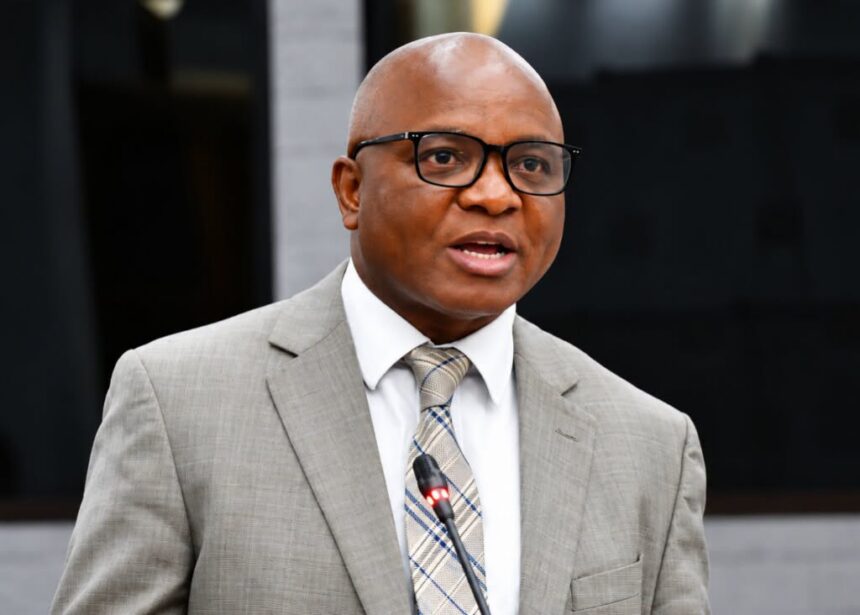
Zambia is preparing its 2027 National Budget with a stronger focus on spending discipline, economic opportunity and measurable results as Government moves from economic stabilisation toward higher and more inclusive growth. Secretary to the Treasury Felix Nkulukusa has called for tighter prioritisation of public spending, stressing that limited resources must be directed toward programmes that create jobs, expand economic activity and improve living standards. The call comes as Zambia seeks to protect the macroeconomic gains achieved in recent years while creating conditions for stronger economic growth. Economic growth is projected at 5.3 percent in 2026 and is expected to average 7 percent between 2027 and 2029. Despite the improved growth outlook, Nkulukusa said fiscal discipline must remain central to the preparation and implementation of the 2027 National Budget.
Opening the 2027 Budget Hearings, Nkulukusa said the country is entering a different phase of its economic programme under the Grow Zambia Agenda. The shift from stabilisation toward higher growth creates new opportunities, but it also requires Government to make careful choices about how public money is allocated. Stronger economic growth does not automatically remove fiscal pressures because Government must continue meeting existing obligations while financing programmes that support future development. Ministries, Provinces and Agencies therefore face the challenge of delivering more results without assuming that additional resources will always be available. Nkulukusa captured this approach with a simple message that Government must “do more with less.”
The Secretary to the Treasury directed Ministries, Provinces and Agencies to remain within their approved expenditure ceilings and demonstrate measurable results from proposed spending. This approach places greater emphasis on the effectiveness of public expenditure rather than simply the size of individual institutional budgets. Government programmes are expected to show how their proposed allocations contribute to national priorities and produce tangible outcomes. The requirement for measurable results can also help strengthen accountability by linking public resources to specific development objectives. For the 2027 Budget, the quality of spending decisions will therefore be as important as the total amount of money allocated.
Permanent Secretary for Budget and Resource Mobilization Mwaka Mukubesa told delegates that total resources for 2027 are projected at approximately K271.9 billion. This represents an increase of K18.8 billion compared with the approved 2026 level. At face value, the higher resource envelope provides additional room for Government to finance national programmes and respond to development needs. However, the increase does not mean that all Government institutions will have significant additional funds available for new initiatives. Existing commitments and priority programmes will absorb a substantial share of available resources, creating pressure on institutional spending ceilings.
The projected discretionary budget is expected to increase from K67.8 billion to K86.8 billion in 2027. Despite this increase, competing commitments are expected to leave only about K6.9 billion for other programmes. This relatively limited amount highlights the difficult choices facing Government as it prepares the 2027 National Budget. Ministries and agencies will need to carefully assess proposed programmes and determine which initiatives can deliver the greatest economic and social value. The figures also reinforce the Treasury’s argument that budget planning must focus on prioritisation rather than simply increasing expenditure across all areas.
Several major programmes are already expected to account for significant allocations in the 2027 Budget. The projected allocation includes K10.2 billion for the Social Cash Transfer programme, K9.0 billion for the Constituency Development Fund, K2.8 billion for free education and K1.0 billion for school feeding. Government also plans to allocate K15.0 billion toward dismantling arrears. These commitments cover social protection, education, community development and outstanding financial obligations, all of which place demands on the available fiscal resources. Their inclusion demonstrates why the Government must balance immediate needs with investments designed to strengthen future economic capacity.
The planned allocation for the Social Cash Transfer programme reflects the continued importance of social protection in supporting vulnerable households. Social assistance can help eligible beneficiaries meet essential needs and manage economic pressures. Free education and school feeding similarly represent spending areas with direct implications for access to education and the welfare of children. The Constituency Development Fund provides resources for development activities at constituency level, while the allocation toward arrears is aimed at addressing outstanding obligations. Together, these commitments illustrate the wide range of demands that the national budget must accommodate within a finite resource envelope.
Government also intends to create additional fiscal space by strengthening domestic revenue mobilisation and reducing reliance on borrowing. Domestic revenue is projected to rise from K206.5 billion in 2026 to K290.1 billion by 2029. Increasing domestic revenue can give Government greater capacity to finance public services and development programmes using resources generated within the economy. Reducing dependence on borrowing can also help manage fiscal risks and protect the sustainability of public finances. Achieving the projected revenue growth will require continued efforts to strengthen revenue collection and support economic activity that expands the tax base.
The focus on domestic revenue is closely connected to Zambia’s broader economic growth ambitions. A growing economy can create more businesses, jobs, incomes and transactions that contribute to public revenue. Government therefore wants spending decisions to support activities that increase productivity and stimulate private investment. Programmes that strengthen productive capacity can potentially generate wider economic benefits than expenditure that does not contribute to future economic activity. The Treasury’s approach places this relationship between public spending, economic productivity and future revenue generation at the centre of the 2027 Budget process.
The Treasury has called for a One-Government approach to budget management. Under this approach, Government institutions are expected to coordinate their spending, protect priority programmes and consider the broader national impact of their expenditure decisions. Individual institutions may have specific mandates, but their budget choices also affect the Government’s overall fiscal position. Greater coordination can help reduce duplication, improve the use of public resources and ensure that related programmes work toward common national objectives. The approach also encourages institutions to assess spending based on its contribution to productivity, investment, economic activity and future revenue generation.
This means the central question in the 2027 Budget process will not simply be how much money each institution needs. Government wants institutions to explain what their proposed expenditure will achieve and how it will contribute to national priorities. A programme that requires substantial funding but produces limited economic or social results may face greater scrutiny under a tighter prioritisation framework. Conversely, initiatives that improve productivity, attract investment, create employment or strengthen future revenue generation could receive greater attention. This results-based approach seeks to make public spending more closely aligned with Zambia’s long-term development objectives.
The projected economic growth figures provide a positive backdrop to the budget discussions, but the Treasury remains cautious about fiscal management. Growth is projected at 5.3 percent in 2026 and an average of 7 percent between 2027 and 2029. These projections suggest stronger economic activity could provide a foundation for improved employment opportunities, investment and government revenue. However, the benefits of growth will depend on how effectively resources are used and whether economic expansion reaches a broad section of the population. The Government’s emphasis on inclusive growth therefore places job creation, productivity and improved living standards alongside macroeconomic stability as important measures of economic progress.
The 2027 Budget Hearings also provide an opportunity for stakeholders outside Government to participate in the national budget process. The 2027–2029 Medium Term Budget Plan, presented in the Green Paper, is open for public consultation. Businesses, civil society organisations, professional bodies, development partners, academia and individual citizens have been encouraged to review the proposals and provide comments and recommendations. Public participation can help bring different perspectives into the budget process and highlight economic and social priorities that may require further consideration. The feedback received will be considered alongside contributions from the ongoing Budget Hearings as Government develops the final policy choices for the 2027–2029 Medium Term Budget Plan and the 2027 National Budget.
The deadline for public comments and recommendations is Friday, October 9, 2026. Stakeholders seeking to influence the final budget priorities have therefore been given a defined opportunity to examine the proposed medium-term framework and communicate their views. Contributions from the private sector can highlight issues affecting investment, business growth and job creation, while civil society and professional organisations can provide perspectives on public services and social development. Citizens can also contribute by identifying priorities that affect communities and households. Meaningful participation can help strengthen the connection between budget policy and the needs of the wider population.
The preparation of the 2027 National Budget comes at a point when Zambia must balance several competing objectives. Government needs to maintain fiscal discipline while funding social programmes, meeting existing obligations and supporting economic growth. It must also create enough fiscal space to respond to future needs without placing excessive pressure on public finances. The Treasury’s emphasis on domestic revenue mobilisation, reduced borrowing and better spending coordination reflects an attempt to manage these competing demands. The success of the approach will ultimately depend on whether budget allocations translate into effective programmes and measurable improvements for citizens.
The central test of Zambia’s 2027 National Budget will therefore be the value generated from every Kwacha of public money. Higher allocations alone will not guarantee stronger economic growth or better living standards if resources do not produce measurable results. Government institutions will need to demonstrate discipline, coordinate their programmes and focus available funding on initiatives that support productivity, investment, employment and inclusive development. At the same time, stronger domestic revenue mobilisation will be important for creating the fiscal space needed to sustain national priorities. As the public consultation process continues, the decisions made during the 2027 Budget preparation will help determine how effectively Zambia can protect its macroeconomic gains while moving toward stronger, broader and more sustainable economic growth.