







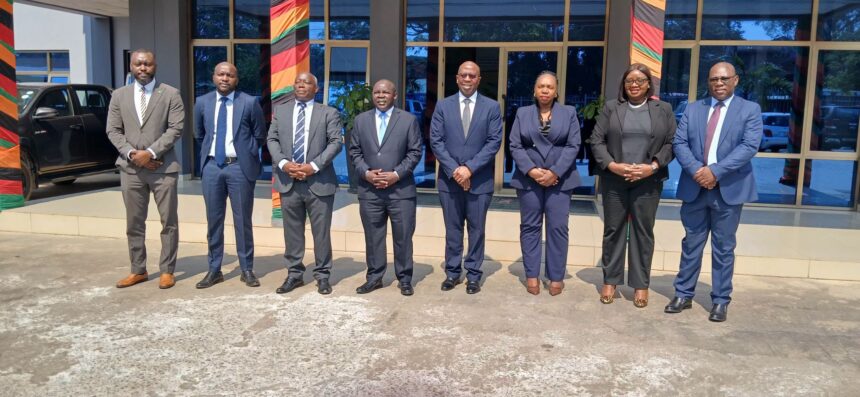
Zambia has appointed a new nine-member Board of Directors for the Zambia Environmental Management Agency (ZEMA) in a move aimed at strengthening environmental governance, improving regulatory efficiency and supporting sustainable economic development. The Minister of Green Economy and Environment, Hon. Dr. Gilbert Siame, MP, announced the appointments on Monday, 19 October 2026, under the powers vested in him by Chapter 204 of the Laws of Zambia. The newly appointed board members will serve a three-year term, with their appointments taking effect immediately. Professor Felix Masiye has been appointed Board Chairperson, leading a team of representatives from government institutions, professional bodies and environmental organisations. The Minister expressed confidence that the board’s combined experience and technical expertise would improve ZEMA’s operations, promote accountability and ensure that environmental regulation supports Zambia’s national development priorities.
The appointment of the new ZEMA Board comes at an important time for Zambia as the country seeks to attract investment, create jobs and manage its natural resources responsibly. ZEMA plays a central role in environmental regulation, including reviewing environmental assessments, administering relevant environmental approvals and monitoring compliance with applicable environmental requirements. Its work helps ensure that development projects consider their potential effects on land, water, air, biodiversity and surrounding communities. Effective environmental regulation is particularly important in sectors such as mining, manufacturing, agriculture, infrastructure and energy, where projects can create economic opportunities but may also present environmental risks. A well-functioning regulatory agency can help investors understand their obligations, reduce unnecessary delays and encourage responsible business practices. The new board is therefore expected to provide strategic direction that supports both environmental protection and sustainable economic growth.
Professor Felix Masiye will chair the new board, which includes Freddie Siangulube, representing the Ministry of Green Economy and Environment, and Engineer Dalitso Mhango, representing the Ministry of Mines and Minerals Development. Darious Shachinda has been appointed as the representative of the Attorney General, while Engineer Sharon Musonda will represent the Engineering Institute of Zambia. The other members are Charity Kalombo of the Zambia Institute of Planners, Agness Chinyama of the World Wide Fund for Nature, Victor M. Siamudala of WorldFish and Rabecca Hichilo Silolezya of the Zambia Institute of Chartered Accountants. Their appointments bring together perspectives from environmental conservation, engineering, public administration, legal affairs, planning, fisheries and financial management. This range of professional backgrounds is intended to support informed decision-making and strengthen the board’s ability to oversee the agency’s responsibilities.
The Minister congratulated the newly appointed board members and expressed confidence that their diverse experience, technical knowledge and commitment would strengthen ZEMA’s operations. He called on the board to provide effective strategic leadership and ensure that the agency operates efficiently, transparently and accountably. Strong board oversight is important for setting institutional priorities, monitoring performance and ensuring that management delivers on its responsibilities. It can also help strengthen internal controls, improve decision-making and ensure that regulatory processes remain consistent with the law. For ZEMA, these responsibilities include maintaining public confidence in environmental decisions while helping businesses understand and meet the requirements that apply to their projects. The board’s effectiveness will depend on its ability to translate its mandate into measurable improvements in service delivery, compliance monitoring and environmental management.
Dr. Siame also urged the board to support the Government’s Grow Zambia Agenda by promoting responsible natural resource management while balancing environmental sustainability with economic growth. This approach recognises that Zambia needs investment and employment opportunities but must also protect the natural systems that support communities and economic activity. Poorly managed development can damage ecosystems, affect water quality, degrade land and create long-term costs for local communities and businesses. Responsible environmental management can help prevent these outcomes while giving investors clearer expectations about the standards they must meet. By strengthening environmental oversight, ZEMA can contribute to development that generates economic benefits without overlooking environmental risks. The board is expected to help ensure that environmental protection remains an essential part of Zambia’s development planning.
One of the Minister’s key directives is the digitisation of all licence applications and approvals handled by the agency. Digital systems can make it easier for applicants to submit documents, monitor the progress of applications and receive decisions through more transparent processes. They can also help ZEMA maintain accurate records, improve communication with applicants and identify delays that require attention. For businesses planning mining, infrastructure, industrial or other development projects, predictable application procedures can improve investment planning and reduce uncertainty. Digitisation may also strengthen accountability by creating clearer records of decisions and the stages through which applications pass. However, successful implementation will require reliable information technology systems, trained staff, secure data management and clear procedures for applicants who need assistance. The board will need to oversee these practical requirements to ensure that digital transformation produces real improvements in regulatory services.
The Minister further directed the board to ensure that licence applications and related approvals are processed and signed within stipulated timelines. Timely decisions are important because delays can affect project schedules, increase costs and create uncertainty for businesses considering investment in Zambia. At the same time, environmental approvals must receive adequate technical assessment to ensure that proposed projects comply with applicable laws and adequately address potential environmental impacts. Improving efficiency should therefore mean eliminating avoidable administrative delays rather than weakening environmental safeguards. Clear processing standards, effective coordination between departments and regular monitoring of pending applications can help the agency meet its responsibilities more consistently. By improving turnaround times while maintaining proper scrutiny, ZEMA can strengthen public trust and support responsible investment across the country.
Another major priority identified by the Minister is a comprehensive skills audit to establish whether ZEMA has the expertise required to fulfil its mandate effectively. Environmental regulation involves technical disciplines such as ecology, pollution control, environmental assessment, water quality, waste management and environmental monitoring. As industries develop and new technologies emerge, regulatory agencies need staff who can assess increasingly complex projects and apply relevant standards consistently. A skills audit can help identify existing strengths, critical staffing gaps and areas where additional training or recruitment may be necessary. Its findings could also guide professional development, workforce planning and the allocation of technical resources across the agency. Strengthening staff capacity will be essential if ZEMA is to process applications efficiently, monitor compliance effectively and provide sound technical guidance to government, investors and communities.
The Minister also emphasised a zero-tolerance approach to corruption within the agency. Environmental regulators exercise important responsibilities that can influence investment decisions, project approvals and the management of natural resources. Any misuse of these responsibilities can undermine public confidence, create unfair advantages and weaken environmental protection. A credible anti-corruption approach requires clear rules, transparent decision-making, effective internal controls and appropriate mechanisms for reporting and investigating suspected misconduct. Digitised application systems can support these efforts by improving traceability and reducing unnecessary opportunities for informal interference in administrative processes. However, technology alone cannot eliminate corruption, so strong leadership, ethical conduct and consistent enforcement of institutional standards remain essential. The new board will be expected to promote an organisational culture in which integrity and accountability guide the agency’s work.
The appointment also highlights the importance of cooperation between environmental regulators, government institutions and professional organisations. Environmental decisions often involve complex technical, legal and economic considerations that benefit from input across several disciplines. Engineering expertise can help assess infrastructure and industrial projects, while planning professionals can contribute to land-use considerations and development coordination. Environmental organisations can provide perspectives on conservation and ecosystem protection, while legal and financial expertise can strengthen governance and institutional accountability. Representatives from government ministries can also help align environmental regulation with broader national priorities and sector-specific requirements. Effective collaboration among these stakeholders can support more balanced decisions and improve the quality of environmental oversight. The board will need to use this range of expertise constructively while ensuring that decisions remain impartial and consistent with ZEMA’s legal responsibilities.
Environmental governance is particularly relevant as Zambia pursues investment in mining, infrastructure, energy and other productive sectors. These activities can contribute to economic growth and job creation, but their long-term value depends partly on how well environmental risks are managed. Mining operations, for example, require careful attention to waste management, water use, land disturbance and rehabilitation obligations. Industrial development can create similar challenges involving emissions, wastewater and the disposal of hazardous materials. Effective regulation helps identify risks before projects proceed and supports monitoring throughout their operating life. By improving the consistency and efficiency of environmental approvals, ZEMA can help responsible investors plan their projects while protecting communities and natural resources. This balance is central to the Government’s stated commitment to sustainable development.
The Minister reiterated that the Government remains committed to protecting the environment while promoting investment, creating employment opportunities and improving livelihoods. These objectives are closely connected because sustainable economic activity depends on natural resources, functioning ecosystems and healthy communities. Environmental damage can impose costs on households, businesses and public institutions, while unpredictable regulatory processes can discourage legitimate investment. A stronger ZEMA can help address both concerns through timely decisions, effective compliance monitoring and transparent administration. The new board’s three-year term provides an opportunity to establish priorities, assess institutional performance and oversee improvements in service delivery. Its success will depend on whether the announced directives lead to practical results that investors, communities and the wider public can recognise.
The appointment of Professor Felix Masiye and the eight other board members marks a significant leadership development for Zambia Environmental Management Agency. The new board faces clear expectations to digitise licence applications and approvals, assess staffing capabilities, strengthen anti-corruption measures and ensure that decisions are made within stipulated timelines. These reforms are intended to improve efficiency and accountability without compromising the agency’s responsibility to protect the environment. By combining effective regulation with responsible investment, ZEMA can contribute to job creation, sustainable resource management and the wider goals of the Grow Zambia Agenda. The coming three years will provide an important opportunity to demonstrate how stronger institutional leadership can improve environmental governance and public service delivery. Ultimately, the board’s impact will be measured by its ability to protect Zambia’s natural resources while helping create the conditions for inclusive and sustainable national development.