




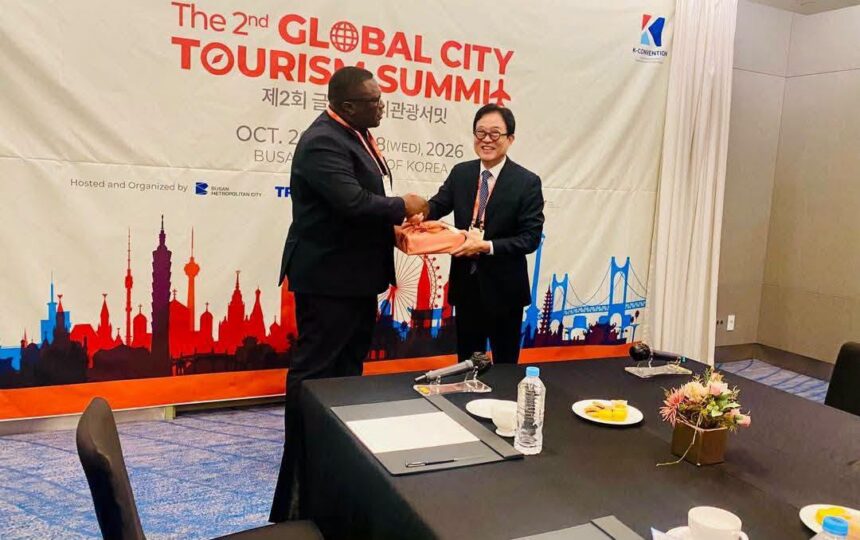
Lusaka Mayor Chitambala Mwewa has called on international partners to invest in smart city solutions, modern waste management systems and digital tourism promotion to strengthen Zambia’s capital as a tourism destination. Speaking at the Global City Tourism Summit 2026 in Busan, South Korea, Mr Mwewa highlighted the importance of sustainable urban development in attracting visitors and creating economic opportunities. He stressed that a successful tourism sector depends on more than attractive destinations, noting that clean streets, reliable infrastructure, environmental protection and well-maintained public spaces are equally important. His appeal reflects Lusaka’s ambition to improve its urban environment while making tourism a stronger contributor to local economic growth. By encouraging international cooperation, the Mayor hopes to create opportunities for investment, innovation and partnerships that can support the city’s long-term development.
Mr Mwewa emphasised that sustainable tourism requires cities to manage their resources responsibly and provide an environment in which residents and visitors can enjoy public spaces. Effective waste management remains a key part of this effort because poorly managed rubbish can affect public health, damage the urban environment and reduce the appeal of tourist destinations. Reliable roads, accessible public facilities and well-maintained recreational areas also influence how visitors experience a city. These services require consistent planning, investment and cooperation between local authorities, businesses and communities. Lusaka’s efforts to improve these areas could help create a more welcoming environment for tourists while also improving the daily lives of residents.
The Mayor reaffirmed the Lusaka City Council’s commitment to building a clean, green and healthy city through the Keep Lusaka Clean, Green and Healthy Campaign. The initiative provides a framework for encouraging better environmental practices and promoting shared responsibility for the cleanliness of public spaces. Its success depends on sustained public participation, effective waste collection and the responsible disposal of rubbish by households, businesses and institutions. Stronger waste management systems could also help the city identify opportunities to recycle materials and reduce the amount of waste sent to disposal sites. By connecting environmental protection with tourism development, Lusaka can work towards an urban environment that supports both public well-being and economic activity.
Smart city solutions are another important part of the Mayor’s appeal to international investors. These technologies can help local authorities manage services more efficiently, improve access to information and make urban infrastructure more responsive to the needs of residents and visitors. Digital systems may support waste collection planning, traffic management, public service reporting and the sharing of information about tourism attractions. When properly implemented, such solutions can help councils make better use of available resources and identify problems before they become more difficult to address. For Lusaka, international partnerships could provide access to technical expertise, investment and practical experience from cities that have introduced similar systems.
Digital tourism promotion could also help Lusaka reach a wider audience and improve the visibility of its attractions. Online platforms allow cities to present information about places to visit, cultural activities, local businesses and services to people planning their trips. Clear and regularly updated digital information can help travellers discover destinations, understand transport options and identify suitable accommodation and restaurants. Social media campaigns, digital maps and online tourism directories could also provide local businesses with additional ways to connect with potential customers. By investing in effective digital marketing, Lusaka could strengthen its profile as a destination for visitors interested in Zambia’s culture, food, creative industries and urban experiences.
Mr Mwewa also highlighted the importance of strengthening connections between tourism attractions and the wider local economy. Tourism generates benefits when visitors spend money across different sectors, including restaurants, accommodation providers, transport operators, market traders and creative businesses. Better coordination between these businesses can make it easier for visitors to access services while helping local entrepreneurs benefit from increased tourism activity. For example, tourism promotion can direct visitors towards local markets, cultural experiences and restaurants, creating opportunities for small businesses to attract new customers. Stronger links between attractions and local suppliers can therefore help tourism spending reach more communities and support employment across the city.
The Mayor’s call for collaboration in waste-to-value innovation offers another opportunity to connect environmental sustainability with economic development. Waste-to-value approaches focus on recovering useful materials from waste and turning them into products or resources that can be reused or sold. Depending on local conditions, these approaches may include recycling plastics and metals, composting suitable organic waste or developing other recovery systems. Such initiatives require appropriate infrastructure, reliable collection arrangements and markets for the recovered materials. International partners could help Lusaka explore suitable technologies, develop business partnerships and strengthen the skills needed to establish practical waste recovery programmes.
Cooperation with international cities and organisations could also support the exchange of knowledge on sustainable tourism and urban management. Cities face different challenges, but many share concerns about waste disposal, environmental quality, infrastructure maintenance and the need to attract visitors. Partnerships can create opportunities for local officials to learn from established approaches and adapt them to Lusaka’s circumstances. The Mayor’s proposal for exchange programmes involving creative entrepreneurs could be particularly valuable in helping local talent develop new skills and reach wider markets. Artists, designers, performers and other creative professionals could benefit from opportunities to collaborate with international counterparts, develop new products and introduce visitors to Lusaka’s cultural identity.
For these ambitions to produce lasting results, investment will need to be supported by clear priorities, effective implementation and measurable progress. Smart city projects should address practical needs rather than introduce technology without a defined purpose. Waste management initiatives require dependable collection services, appropriate facilities and public awareness programmes that encourage responsible disposal and recycling. Digital tourism campaigns must provide accurate information and present destinations in ways that reflect the experiences visitors can expect. Cooperation between the council, private investors, tourism operators, community groups and international partners will be important in ensuring that projects deliver benefits beyond their initial launch.
The Global City Tourism Summit 2026 in Busan provided an opportunity for Lusaka to present its development priorities and seek partnerships that could help advance them. Mr Mwewa’s message linked tourism growth with environmental responsibility, digital innovation and stronger participation by local businesses. His proposals recognise that a competitive tourism destination needs not only attractions but also reliable services, clean surroundings and effective ways of connecting visitors with local experiences. Turning these priorities into practical improvements will depend on investment, coordination and sustained commitment from all stakeholders. If Lusaka can build on its clean city campaign, strengthen waste management, adopt suitable smart city solutions and expand digital tourism promotion, it could create a more attractive destination while supporting local enterprise and improving the quality of life for its residents.