






The Government of the Republic of Zambia and the Food and Agriculture Organization of the United Nations (FAO) are strengthening their partnership to mobilise approximately USD 300 million in climate finance for climate-resilient agrifood systems. The initiative aims to protect agricultural production from climate change, improve food security, support sustainable livelihoods and promote green economic growth. It reflects Zambia’s commitment to building a stronger agricultural sector that can withstand environmental challenges while creating new economic opportunities for farmers and rural communities. Through collaboration with international partners and climate finance institutions, the country seeks to attract investment that supports sustainable agricultural development across the entire value chain. The initiative also highlights the growing importance of climate finance in helping African countries protect their food systems and strengthen their economies against the effects of climate change.
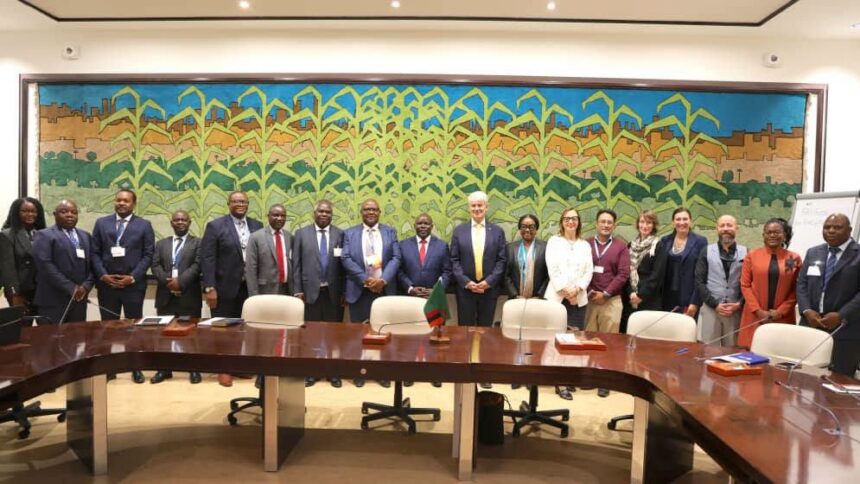
The commitment emerged from high-level bilateral discussions between Zambia’s Minister of Green Economy and Environment, Gilbert Siame, and Piedad Martin, Deputy Director of the FAO Office of Climate Change, Biodiversity and Environment. The discussions received support from representatives working with the Global Environment Facility (GEF), including Executive Coordinator Jeff Griffin, Natural Resources Officer Sergio Hinojosa, Senior Energy Team Lead Michela Morese and Fouad Bergigui of the GEF Small Grants Programme. Their participation reflects the importance of cooperation between governments, international organisations and climate finance institutions in developing investment opportunities for sustainable agriculture. The discussions focused on identifying financing mechanisms that could help Zambia address climate-related challenges while improving agricultural productivity and environmental protection. This collaboration is intended to strengthen the country’s ability to develop investment proposals that respond to national priorities and attract funding for long-term agricultural resilience.
A central objective of the initiative is to mobilise funding through the Green Climate Fund and other international climate finance mechanisms. These financing channels can help countries invest in projects that reduce vulnerability to climate change and support sustainable development. For Zambia, the proposed USD 300 million initiative represents an opportunity to strengthen agricultural systems that remain essential to rural livelihoods, employment and national food security. The funding target is intended to support a range of interventions, including climate-smart agriculture, sustainable land management, renewable energy solutions and climate-resilient infrastructure. Access to finance and stronger agricultural markets also form part of the discussions, reflecting the need to address both production challenges and the economic barriers that farmers face.
Climate change presents significant challenges for agricultural production because farming depends heavily on reliable rainfall, suitable temperatures and healthy soils. Droughts, floods and changing weather patterns can damage crops, reduce livestock productivity and disrupt food supplies. These pressures can also increase production costs, weaken household incomes and make it more difficult for farming communities to recover from extreme weather events. Climate-resilient agrifood systems aim to reduce these risks by improving agricultural practices, strengthening infrastructure and helping farmers adapt to changing environmental conditions. Zambia’s proposed climate finance initiative seeks to support this transition by encouraging investments that protect agricultural resources while maintaining the capacity to produce food and generate income.
Climate-smart agriculture is expected to be an important part of the initiative’s broader approach. This approach focuses on improving agricultural productivity, strengthening resilience to climate change and reducing environmental pressures where practical and appropriate. Farmers can benefit from improved soil management, efficient water use, drought-tolerant crop varieties and farming methods suited to local conditions. Investments in agricultural knowledge, suitable technologies and extension services can also help farmers make informed decisions about planting, water management and crop protection. By supporting these measures, Zambia can work towards a farming sector that is better prepared for climate shocks while improving the stability of food production.
Sustainable land management is another important area of focus because soil health, vegetation cover and water resources directly influence agricultural performance. Poor land management can contribute to soil erosion, declining soil fertility and reduced productivity, particularly in areas exposed to drought or heavy rainfall. Investments in soil conservation, improved land-use practices and the sustainable management of natural resources can help protect the productive capacity of farmland. These measures can also support biodiversity and reduce pressure on ecosystems that provide essential resources to rural communities. Integrating sustainable land management into agricultural investment plans can therefore deliver benefits for food production, environmental protection and long-term rural development.
Renewable energy solutions could also strengthen Zambia’s agrifood value chains by improving access to reliable and affordable energy. Energy supports many agricultural activities, including irrigation, food processing, refrigeration, storage and transportation. Where energy services are unreliable or expensive, farmers and agricultural businesses may struggle to preserve produce, process raw materials or reach higher-value markets. Appropriate renewable energy technologies could help reduce some of these barriers while supporting a transition towards lower-emission economic activities. The success of such investments will depend on local needs, affordability, reliable maintenance and the ability of farmers and businesses to access the technologies.
Climate-resilient infrastructure and stronger agricultural markets are equally important to the proposed investment programme. Roads, irrigation facilities, storage centres and processing infrastructure can help farmers manage weather-related risks and reduce losses between harvest and sale. Infrastructure designed to withstand climate hazards can also support the movement of agricultural products during periods of extreme weather. Better access to markets can improve opportunities for farmers to sell their produce, increase household incomes and encourage investment in agricultural businesses. When these improvements are combined with access to appropriate financial services, farmers and agribusinesses can become better positioned to invest in equipment, improve production and expand their operations.
Speaking ahead of Zambia’s investment pitch at the FAO Hand-in-Hand Investment Forum, Minister Gilbert Siame emphasised the government’s commitment to using climate finance to transform agricultural production and advance sustainable economic growth. He said the country had secured high-level collaboration to advance its climate financing agenda and climate-proof its agrifood systems. He also highlighted the importance of partnerships with FAO and international climate finance institutions in positioning Zambia to attract investment. According to the minister, these efforts are intended to strengthen agricultural production, create opportunities for farmers and build resilience against climate shocks. His remarks underline the government’s intention to treat climate action and agricultural development as connected priorities rather than separate policy objectives.
The FAO Hand-in-Hand Investment Forum provides an important platform for presenting investment opportunities and encouraging cooperation between governments, development partners and potential investors. Zambia’s investment pitch is intended to communicate the country’s priorities and demonstrate how climate finance could support agricultural transformation. Attracting investment requires more than identifying a funding target, however, because proposed projects also need clear objectives, credible implementation plans and measurable development benefits. Strong coordination between government institutions, technical partners and financing organisations can help translate investment priorities into projects that are ready for funding. Effective project preparation will therefore be important to turning the proposed USD 300 million mobilisation effort into tangible benefits for farmers and agricultural businesses.
The initiative also aligns with Zambia’s wider vision of green economic growth. Green growth seeks to expand economic opportunities while protecting natural resources and reducing environmental risks. In the agricultural sector, this means improving productivity without undermining the soil, water and ecosystems on which future production depends. Investments that combine climate adaptation, sustainable resource management and stronger value chains can help create opportunities for rural enterprises while supporting long-term food security. This approach recognises that a healthy environment is essential to maintaining agricultural production and that a productive agricultural sector can contribute to more inclusive economic development.
For rural communities, the potential benefits extend beyond crop production. Stronger agrifood systems can create opportunities in processing, storage, transportation, equipment services and agricultural marketing. Improved resilience can also help households protect their livelihoods when adverse weather conditions affect harvests or livestock. Women and young people could benefit from expanded economic opportunities if investment programmes provide accessible financing, relevant training and fair participation in agricultural markets. To achieve these outcomes, project design and implementation will need to consider the different needs of smallholder farmers, rural businesses and other groups that depend on agriculture for their incomes.
Mobilising the proposed USD 300 million will require continued cooperation, careful planning and effective use of available financing mechanisms. International climate finance can support national development priorities, but access to funding depends on the preparation and approval of suitable projects and compliance with the requirements of relevant financing institutions. Transparent financial management, clear accountability and reliable monitoring will be important for demonstrating that investments deliver their intended results. It will also be necessary to identify the communities and value chains most exposed to climate risks so that resources can respond to practical needs. While the collaboration establishes an important direction for Zambia’s climate finance agenda, the mobilisation target should be distinguished from funding already approved or disbursed, as the discussions concern efforts to attract the proposed investment.
The partnership between the Government of Zambia and FAO represents a significant step towards strengthening the country’s approach to climate-resilient agriculture and sustainable development. By pursuing approximately USD 300 million in climate finance, Zambia aims to support agricultural productivity, improve food security, protect natural resources and expand opportunities across agrifood value chains. The proposed focus on climate-smart agriculture, sustainable land management, renewable energy, resilient infrastructure and agricultural market development reflects the need for a coordinated response to climate-related challenges. Continued cooperation with international climate finance institutions will be important in turning these priorities into funded projects with measurable results. Ultimately, the initiative’s success will depend on how effectively investment reaches farmers and communities, strengthens agricultural resilience and supports sustainable economic growth across Zambia.