






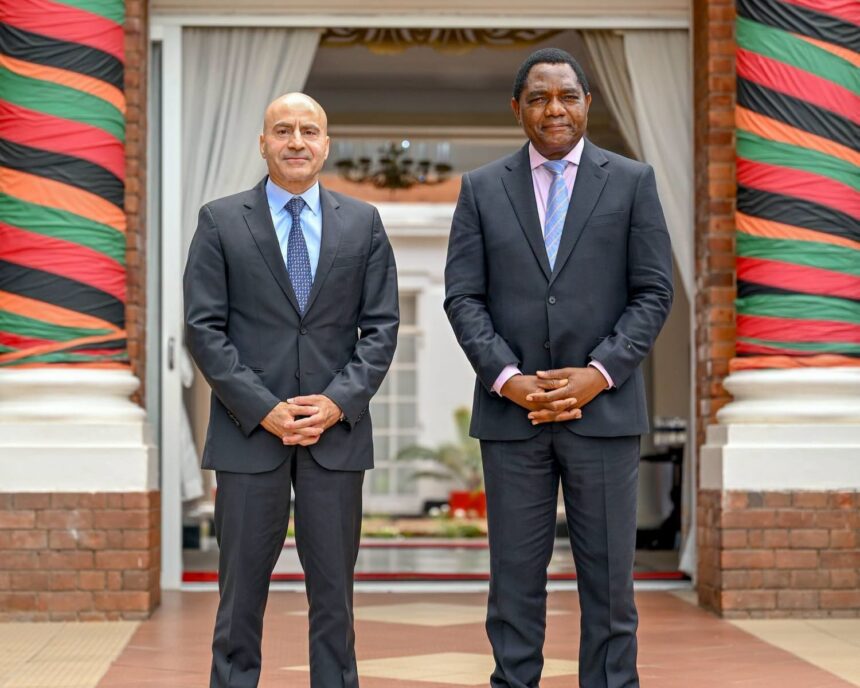
President Hakainde Hichilema has confirmed that Zambia is engaging with the International Monetary Fund (IMF) on a possible successor economic programme. The discussions took place with the IMF Mission Chief for Zambia, Edward Gemayel, and his team during their visit to the country. The engagement comes after Zambia successfully concluded its previous IMF programme in January 2026. The new discussions are focused on determining how continued cooperation with the IMF can support Zambia’s economic priorities while advancing the country’s broader development agenda. At the centre of this approach is the government’s emphasis on economic growth as a critical requirement for improving livelihoods and strengthening the Zambian economy.
The conclusion of Zambia’s previous IMF programme marked an important stage in the country’s economic reform process. The programme was designed to support economic stability, strengthen public finances and help address challenges affecting Zambia’s economy. Its successful conclusion in January 2026 provided a basis for the government to consider the next phase of its economic relationship with the IMF. The proposed successor programme is therefore being discussed within the context of Zambia’s ongoing economic priorities rather than as an isolated policy decision. The government’s engagement with the IMF reflects the importance it places on maintaining economic stability while creating conditions that can support stronger and more sustainable growth.
President Hichilema has stressed that growth must remain central to Zambia’s economic strategy. This emphasis is significant because economic growth can create opportunities for businesses, increase employment and expand the resources available for public services and development. A stronger economy can also improve the ability of households and businesses to withstand economic pressures when supported by sound economic management. For Zambia, the challenge is to achieve growth while maintaining fiscal discipline and protecting economic stability. The government therefore sees a potential new IMF programme as complementary to its Grow Zambia Agenda rather than as a replacement for its own national development priorities.
The Grow Zambia Agenda places economic growth at the centre of the government’s approach to national development. President Hichilema has called on the IMF to support this agenda as discussions over a successor programme continue. This position highlights the government’s intention to ensure that international financial cooperation contributes to Zambia’s domestic economic objectives. A successful programme would need to align financial and economic reforms with the practical need to expand productive activity across the country. The focus on growth also reflects the broader question of how economic reforms can translate into better opportunities and improved living standards for Zambians.
The IMF plays an important role in supporting countries that are working to strengthen their economies and manage financial challenges. Its programmes can involve economic reforms, fiscal measures and policies aimed at improving macroeconomic stability. However, the effectiveness of any programme depends on how well its measures fit the economic conditions and development priorities of the country involved. Zambia’s current discussions therefore carry significance beyond the financial aspects of an IMF agreement. They also involve determining how external support can work alongside national policies designed to encourage investment, production, job creation and long-term economic growth.
The meeting with Edward Gemayel and his team also demonstrates that Zambia’s relationship with the IMF remains active following the completion of the previous programme. The mission’s presence in Zambia provides an opportunity for both sides to assess economic conditions and discuss the objectives of a possible successor arrangement. Such discussions can help establish the priorities, expectations and policy framework that would guide future cooperation. Any final programme would depend on the outcome of negotiations and the agreements reached between Zambia and the IMF. For this reason, the current engagement should be understood as part of an ongoing process rather than as confirmation of a completed new IMF agreement.
The transition within the IMF’s representation in Zambia was another important part of the engagement. President Hichilema bade farewell to Eric Lautier, the outgoing IMF Resident Representative, following the conclusion of his tour of duty. The President thanked Lautier for his service to Zambia and acknowledged his contribution during his time in the country. Reginald Darius was welcomed as the new IMF Resident Representative. The change in representation ensures continuity in the IMF’s engagement with Zambian authorities as discussions about the country’s economic future continue.
The role of an IMF Resident Representative is important because the position provides a direct link between the IMF and national authorities. A resident representative can contribute to ongoing dialogue about economic developments, policy implementation and cooperation between the institution and the government. The arrival of Reginald Darius comes at a significant point in Zambia’s economic policy discussions. With the country considering a successor IMF programme, continued communication between the Zambian government and the Fund will remain important. The transition also provides an opportunity to maintain institutional continuity while new economic priorities are considered.
Zambia’s engagement with the IMF must also be viewed against the wider need to strengthen the foundations of economic growth. Economic growth requires more than financial support because it depends on productive investment, business activity, infrastructure, human capital and confidence in the economic environment. Government policy can help create conditions that encourage businesses to invest and expand, while financial institutions and private companies also play important roles in economic development. The agricultural, mining, manufacturing, energy and services sectors can all contribute to broader economic activity when supported by appropriate conditions. A national growth strategy therefore needs to connect macroeconomic stability with policies that expand productive capacity and create opportunities for citizens.
For ordinary Zambians, the importance of economic policy ultimately depends on its effect on everyday economic conditions. Growth becomes meaningful when it contributes to employment, business opportunities, household incomes and access to essential services. Fiscal reforms and economic programmes can affect these areas through government spending, taxation, investment conditions and public sector management. At the same time, reforms can involve difficult decisions that require careful implementation and communication. The challenge for policymakers is to maintain economic stability while ensuring that growth becomes broad-based and creates tangible opportunities for people across Zambia.
The proposed successor IMF programme also highlights the importance of maintaining confidence in Zambia’s economic direction. Investors, businesses and households benefit from greater predictability when economic policies are clear and consistently implemented. Strong institutions, responsible public financial management and credible economic policies can help create an environment in which private investment can grow. International partnerships can support these efforts, but national leadership and domestic implementation remain essential. Zambia’s long-term economic progress will therefore depend on how effectively the government combines international cooperation with policies that address the country’s own development needs.
President Hichilema’s statement that the IMF remains a key partner in Zambia’s development agenda signals the government’s intention to continue working with the institution. The relationship is being positioned as part of a broader development strategy rather than as the sole source of solutions to Zambia’s economic challenges. The proposed successor programme is expected to complement the Grow Zambia Agenda and support the government’s focus on economic growth. The success of this approach will depend on the policies eventually agreed upon and how effectively they are implemented. It will also depend on whether the resulting economic environment creates stronger conditions for investment, production, employment and sustainable development.
The discussions between Zambia and the IMF represent an important moment in the country’s economic policy direction following the successful conclusion of the previous programme in January 2026. The government has made clear that economic growth is a central priority and that any new IMF engagement should support the Grow Zambia Agenda. The arrival of new IMF representation, together with the ongoing discussions led by Mission Chief Edward Gemayel, provides a framework for continued dialogue between Zambia and the Fund. A successor IMF programme could support Zambia’s economic objectives if its policies align with national priorities and contribute to sustainable economic stability and growth. As negotiations progress, the key issue will be ensuring that international cooperation strengthens Zambia’s capacity to build a more productive economy and deliver meaningful opportunities for its citizens.