





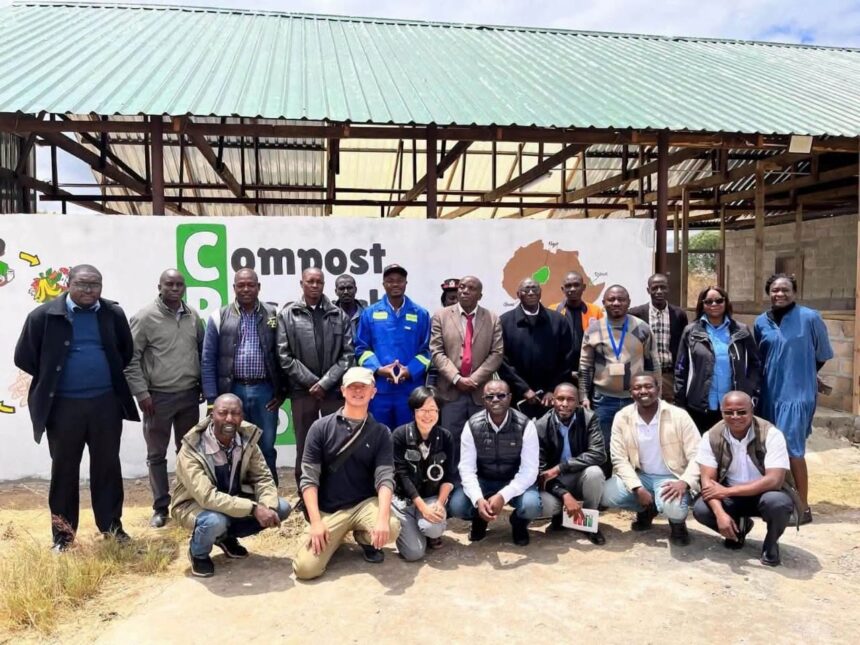
A new Compost Research and Resource Centre at St Mwaangali Training Institute in Choma is creating a practical approach to organic waste management, soil restoration and sustainable agriculture in Zambia. The centre combines composting with Black Soldier Fly (BSF) technology to transform organic waste into useful agricultural products. Food remains and agricultural residues that would otherwise be discarded can be processed into protein-rich feed for poultry and fish as well as nutrient-rich organic fertiliser. The initiative also provides an opportunity to improve soil health while reducing the amount of organic waste sent to dumpsites. Its establishment comes as communities and farmers face the need for affordable, sustainable and climate-resilient ways to manage resources and increase food production.
The Compost Research and Resource Centre uses Black Soldier Fly larvae as part of its waste recycling process. Organic materials such as food remains and agricultural residues are fed to the larvae, which grow rapidly by consuming the waste. Once the larvae reach the appropriate stage, they can be harvested and processed as a protein-rich feed ingredient for poultry and fish. The remaining material, known as frass, is then processed together with chicken manure to produce organic fertiliser. This process creates multiple agricultural uses from materials that would otherwise have been treated as waste.
The centre represents a shift away from viewing organic waste simply as refuse that needs to be removed. Choma District Commissioner Funds Mubele said waste from markets, households and business centres has presented a growing management challenge for many years. He described the new initiative as a change in the way communities perceive organic waste, with discarded materials being recognised as resources that can support productive activities. This approach can help connect waste management with agriculture rather than treating the two issues separately. It also demonstrates how local institutions can develop practical solutions that address environmental and economic needs at the same time.
Waste management is one of the key challenges the project seeks to address. Diverting organic waste away from open dumpsites can improve sanitation in surrounding communities and reduce the amount of material requiring disposal. It can also help extend the useful lifespan of existing dumpsites by reducing the volume of organic material entering them. According to Mr Mubele, the initiative could also reduce the district’s long-term municipal waste management costs. The environmental benefits are linked to the broader objective of reducing the carbon footprint associated with poor waste management while encouraging productive reuse of organic materials.
The project also has an important soil health component. Organic fertiliser produced through composting can add organic matter to soils and support their ability to retain nutrients and moisture. This is particularly relevant in areas where farmers face declining soil quality or need to improve the productivity of existing agricultural land. Mr Mubele said composting can help reduce soil erosion, increase biodiversity, improve resilience to heat and drought and restore degraded soils. The project therefore connects organic waste recycling with the broader goal of improving agricultural productivity. Better soil management can help farmers build more resilient production systems over time.
The initiative is also being implemented at a time when climate conditions are an important concern for farmers in Zambia’s Southern Region. Mr Mubele said the project is particularly timely as Zambia prepares for a projected El Niño-induced dry spell during the 2026/2027 rainy season, which is expected to bring below-normal rainfall and increased heat to the region. He identified the use of organic manure as an important adaptation strategy for farmers facing these conditions. Organic matter in soil can support water retention and contribute to improved soil structure, although the effectiveness of any adaptation measure depends on how it is applied and on local conditions. The centre can therefore provide practical knowledge and materials that may help farmers strengthen their resilience to climate-related pressures.
Choma Mayor-elect Honest Mweemba described the centre as a practical example of the circular economy. A circular economy seeks to keep resources in productive use for as long as possible rather than treating materials as waste after a single use. In this case, organic waste becomes an input for producing compost and other agricultural resources. The approach creates a connection between households, institutions, waste management systems and farmers. By transforming organic waste into useful products, the centre demonstrates how environmental management can support local economic activity.
The potential benefits extend to farmers who depend on fertiliser to maintain crop production. ZARI Mochipapa Research Station programmes officer Kafula Chisenga said the project presents an opportunity to reduce fertiliser costs for farmers. Producing organic fertiliser from locally available materials could provide another option for farmers seeking to manage input expenses. The actual savings will depend on production costs, availability of organic waste and the scale at which the fertiliser is produced and distributed. Nevertheless, developing locally produced organic inputs can strengthen the range of resources available to farmers and support more sustainable agricultural practices.
The centre is also expected to provide practical benefits to St Mwaangali Training Institute. Principal Pascal Chola said the project will make gardening more economical while reducing the harmful effects associated with unmanaged waste. Staff and students will begin by separating organic waste from the institute’s canteen and hostels so that suitable material can enter the recycling process. This approach gives students direct experience with waste sorting, composting, organic fertiliser production and sustainable gardening. The centre can therefore serve both as a production facility and as an educational resource.
Training is an important part of the project’s potential long-term impact. Mr Chola said the centre will provide practical training for students and serve as a demonstration site for women’s groups, young people and other organisations. Demonstration facilities can help participants understand how organic waste can be collected, sorted and processed into useful agricultural products. Practical training can also help communities develop skills that can be applied beyond the institute. If these skills lead to wider adoption of composting and BSF technology, the project could contribute to improved waste management and agricultural practices across the district.
The project brings together several institutions and technical partners, reflecting the need for cooperation in developing sustainable agricultural technologies. Japanese researchers Dr Noda Kentaro and Dr Aoike Utako are participating alongside the University of Zambia, Choma Municipal Council, Zambia Agriculture Research Institute and GIZ. Each partner brings a different institutional or technical perspective to the initiative. Collaboration can help support research, training, local implementation and the assessment of how the technology performs under local conditions. The partnership also gives the centre a broader role as a research and resource facility rather than simply a waste processing site.
The project also aligns with the Grow Zambia agenda, which Choma District Commissioner Funds Mubele linked to President Hakainde Hichilema’s second-term economic blueprint. The agenda focuses on economic growth, job creation, wealth generation and increased food production for local consumption and export. Organic waste recycling can contribute to these objectives by creating agricultural inputs from locally available resources and developing practical skills among students, young people and community groups. The BSF component also introduces an opportunity to produce protein-rich feed for poultry and fish, potentially supporting livestock and aquaculture activities. These connections show how environmental initiatives can contribute to wider economic and agricultural goals when they form part of productive local systems.
The centre’s expected first outcomes within six months will provide an opportunity to assess its early performance. During this period, staff and students will begin sorting organic waste from the institute’s canteen and hostels and applying it within the project’s processing system. The results can help demonstrate how much organic material can be diverted from disposal and how effectively it can be converted into agricultural products. They can also provide practical lessons about operating the facility and training participants. Continued monitoring will be important for understanding the project’s effectiveness and identifying areas that may require improvement.
The Compost Research and Resource Centre in Choma represents an approach that connects waste management, agriculture, education and climate resilience. By using Black Soldier Fly larvae and composting, the project aims to turn organic waste into protein-rich feed and nutrient-dense organic fertiliser rather than allowing valuable materials to become refuse. Its potential benefits include improved sanitation, healthier soils, more sustainable gardening practices and additional agricultural resources for farmers. The involvement of research institutions, government bodies, development partners and local organisations provides a foundation for testing and expanding the approach. If the centre delivers its intended results, it could offer Choma a practical model for converting organic waste into resources that support food production, environmental protection and local economic opportunities.